The Year the Wires Started Pushing Back
Transmission expansion is widely supported in principle, but local opposition makes it difficult to build. The result is a transmission bottleneck that now determines whether the energy transition stays on schedule, whether clean energy gets connected, and whether electricity prices remain manageable.
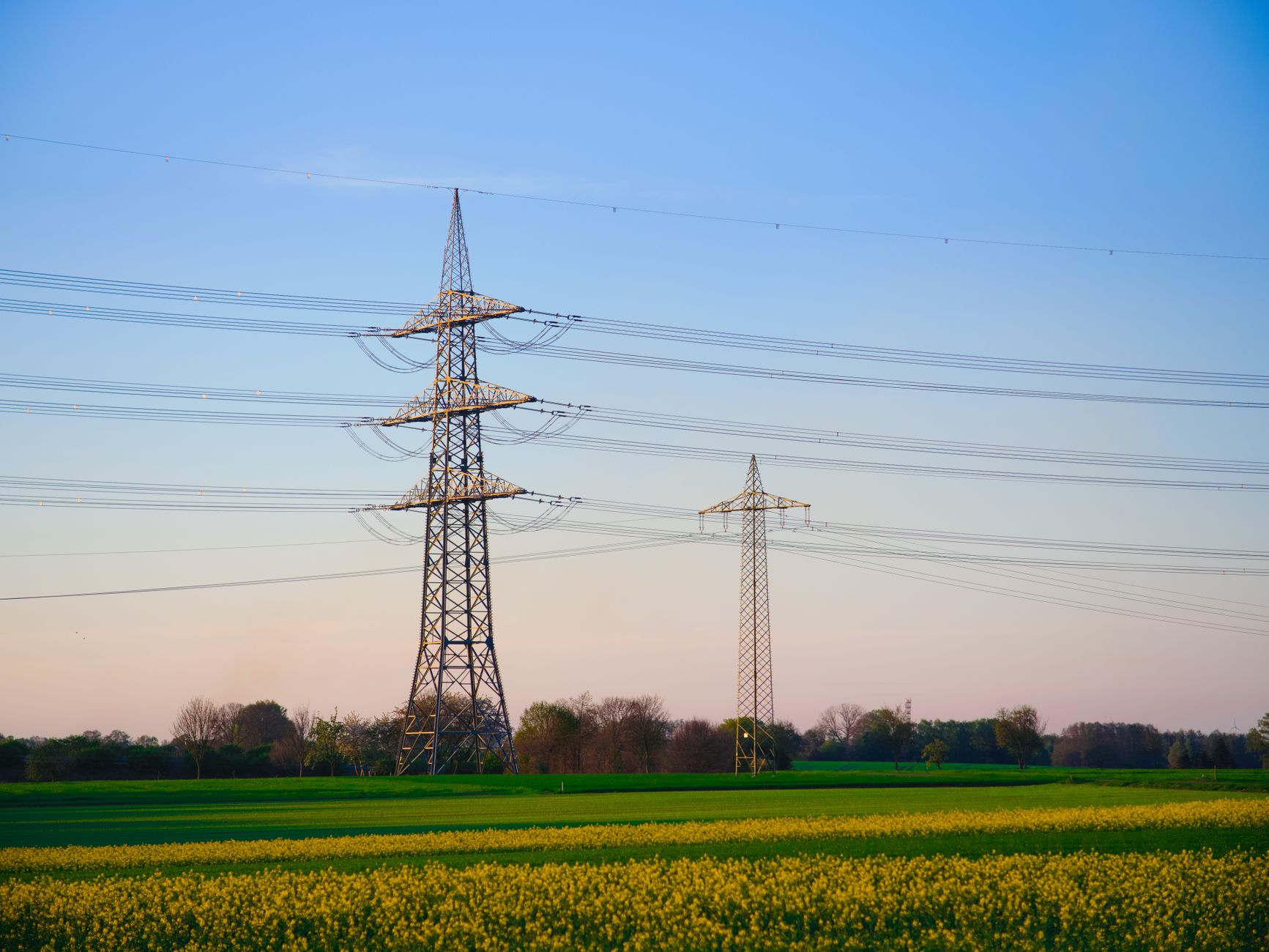
Transmission networks were not designed for the world they are now being asked to serve. Most of today’s high-voltage backbone was laid down decades ago, built around large centralised generators delivering power in one direction: from big plants to cities and industrial loads. The shift to renewables has turned that model inside out. Wind and solar farms are scattered across remote areas, often far from where electricity is consumed. They deliver variable output, need new collection points and depend on transmission corridors that frequently did not exist when the projects were conceived.
The consequences are now rippling through every electricity market. Grid connection queues stretch to years, sometimes more than five, in markets as different as the United States, Germany and Australia. Developers secure land, equipment and financing only to discover that the physical wire to carry their power cannot be built or even approved on the same timeline. For governments watching decarbonisation targets drift further away, the message is becoming uncomfortable: generation ambition means nothing without a grid that can accept it.
Where the Bottleneck Actually Sits
The transmission problem is not simply about a shortage of lines. It is about a chain of constraints that reinforce each other. Permitting remains the best-known obstacle, but it is only one link. Even if every permit were issued tomorrow, the industry would immediately hit shortages in high-voltage equipment, specialist engineering teams and construction capacity. Supply chains for large power transformers, for example, now run to three years or more in some regions.
On top of that, many existing lines are reaching the end of their design life. In North America, much of the high-voltage system was built between the 1950s and 1980s with a nominal forty-year lifespan. Replacing that capacity while simultaneously adding new corridors means the sector is attempting a dual build-out with the same workforce and the same balance sheets. That reality does not attract the same attention as a hydrogen announcement, but it sits at the core of why interconnection timelines are stretching further every year.
The interconnection queue itself has become a symbol of the bottleneck. In the United States, projects totalling over 2,000 gigawatts of capacity were waiting for grid studies as of 2024, more than the entire existing generating fleet. Many of those proposals will never be built, but the sheer volume overwhelms planning processes that were developed when utilities evaluated a handful of large thermal plants each decade, not thousands of distributed renewable projects.
Where Did This Come From and Why?
The transmission bottleneck did not appear suddenly. It grew quietly over thirty years while the industry focused elsewhere. During the 1990s and 2000s, electricity market liberalisation was the dominant priority. Regulators designed wholesale markets, unbundled utilities and introduced retail competition. Transmission investment, by contrast, was often treated as a peripheral issue. Regulators kept transmission tariffs low to contain consumer prices, which sent a clear signal to network owners: avoid large capital programmes.
That underinvestment coincided with the rise of renewables. When wind and solar moved from demonstration projects to terawatt-hour-scale generation, they exposed a gap that had been widening for a generation. The best renewable resources are often hundreds of kilometres from the nearest suitable connection point. Connecting them requires new lines across jurisdictions, landscapes and community objections that no process had been designed to handle quickly.
Compounding this, planning frameworks in many countries were built around the principle of avoiding excess capacity — the gold-plating argument. Regulators would only approve transmission projects once the need was already proven and acute, creating a reactive cycle. By the time a line was clearly justified, the generation projects waiting for it had already been delayed, and the economic case for building had been eroded by rising costs and uncertainty.
The Unexpected Detail That Changes How the Problem Looks
When most people think of the transmission bottleneck, they picture a map with missing lines between windy regions and big cities. But the hidden complication is that many of the highest-value projects involve not just building new corridors but also upgrading and re-conductoring existing ones. Replacing the physical cables on an existing tower with advanced conductors can sometimes double capacity without needing a new right-of-way. That sounds like a shortcut. In practice, it is often nearly as difficult as starting from scratch.
Re-conductoring requires taking a live line out of service for months, something system operators are increasingly reluctant to allow as grid margins shrink. It is rarely the solution to a simple capacity shortage; it typically requires coordinated outages, complex compensation arrangements and the same level of environmental review as new construction because taller poles or wider corridors may still be needed. The result is a technical option that gets praised in policy papers but remains stubbornly difficult to execute at scale — a quiet bottleneck inside the larger one.
What Happens When the Market Tries to Fix It Alone
Markets alone have proved insufficient to solve the transmission problem. Unlike generation, where private capital readily finances wind and solar farms, transmission investment sits uncomfortably between commercial risk and regulatory control. A transmission line can take ten years from conception to operation. During that time, government policy may change, wholesale prices may shift and public opposition may intensify. Few private investors want to carry that exposure without strong regulatory backing or a guaranteed revenue model.
This has led to a variety of approaches. Some jurisdictions, including the United Kingdom, have moved toward anticipatory investment, approving network expansion before specific generation projects commit, based on a strategic view of where the system needs to go. Others continue to require firm connection commitments, which creates a chicken-and-egg problem: developers will not build new generation without a line, and regulators will not approve a line without confirmed generation. The European Union has tried to accelerate cross-border interconnection through its Projects of Common Interest framework, but the physical construction timelines remain stubbornly long.
The economic tension is real. Every year of delay on a major transmission project pushes costs upward, not linearly but in jumps. Steel prices, converter station equipment and specialist labour all compete with demand from other infrastructure sectors. A 500-kilometre HVDC link that might have cost $1 billion a decade ago can now approach $3 billion, not because the technology changed, but because the world’s supply chains are stretched thinner across more simultaneous large projects.
The Practical Outlook for the Industry
None of this means the transmission bottleneck will break the energy transition. But it does mean the next decade will be shaped by which countries succeed in building wires faster than they build generation, and which do not. The difference will show up in electricity prices, reliability metrics and the pace at which coal and gas plants can retire.
Near-term improvements are possible. Digitalisation of interconnection studies, cluster-based connection approaches and streamlined environmental permitting are already cutting queue times in pockets. The more fundamental shift, however, is cultural. In the countries making the most headway, regulators and governments treat transmission as a public infrastructure priority rather than a cost line on a network company’s balance sheet. That shift is politically difficult because it usually means accepting higher transmission charges in the short term, but the alternative is even more costly in the form of curtailment, congestion and delayed decarbonisation.
The transmission bottleneck is, in effect, a test of how seriously societies view their electricity infrastructure. For decades, the industry operated with modest, predictable grids that rarely made headlines. That period is over. The wires that keep the lights on are now among the most important contested assets in the global economy, and getting them built is becoming the defining infrastructure challenge of the energy transition.
References
- IEA — Electricity Grids and Secure Energy Transitions (2023), which provided data on global grid investment needs and interconnection queue trends.
- ENTSO-E — Ten-Year Network Development Plan data on European transmission project timelines and cost escalation over the past decade.
- BloombergNEF — Analysis of US interconnection queues and total capacity awaiting connection, highlighting 2,000 GW of projects in 2024.
- Federal Energy Regulatory Commission (FERC) — Orders on interconnection reform and regional transmission planning, used to explain the US permitting backlog.
- Wood Mackenzie — Research on high-voltage equipment lead times, including large power transformers, to confirm supply chain constraints.
- IRENA — World Energy Transitions Outlook (2024) for regional transmission investment needs and comparisons between generation and grid expansion rates.