
The Cost Hiding in Plain Sight
There is a line item on wholesale electricity settlements that most consumers will never see, yet it determines whether a wind farm in West Texas stays profitable, whether a factory in southern Germany receives competitive power prices, and whether billions of euros in grid investment actually deliver value. Yet these grid congestion costs now rival — and in some markets exceed — the cost of the energy itself.
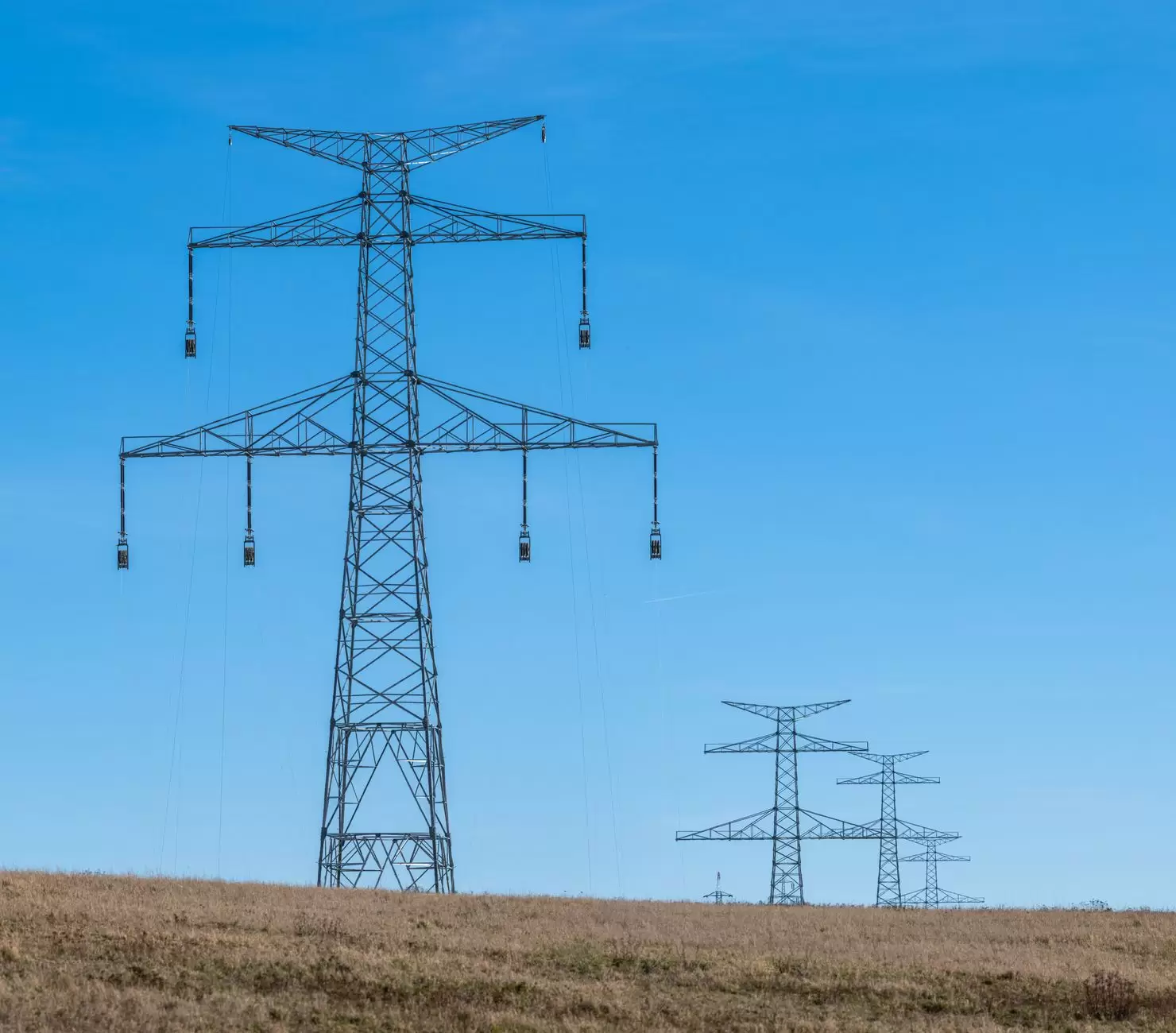
Grid congestion is not a technical curiosity. It is the mechanism through which transmission constraints translate into real money — money that changes hands between generators, consumers, and grid operators every hour of every day. And because congestion is growing faster than transmission capacity in almost every major electricity market, understanding where these costs land has become essential for anyone trying to make sense of modern power economics.
The challenge is that congestion costs are rarely obvious. They do not appear on retail electricity bills as a separate charge. They are embedded in wholesale price differences between locations, buried in curtailment payments to renewable generators, and hidden inside the redispatch costs that system operators pass through to network charges. By the time they reach a corporate energy buyer or a household, they have been smeared across multiple settlement mechanisms. But they are real, they are large, and they are reshaping investment decisions across the electricity value chain.
What Congestion Actually Costs
Congestion occurs when the lowest-cost generation cannot physically reach demand because transmission lines are at capacity. In a market without constraints, the cheapest power plant sets the price for everyone. But when a transmission line reaches its thermal limit, the grid operator must accept more expensive generation located closer to demand instead of cheaper generation trapped behind the bottleneck. The price difference between the two locations is the congestion cost.
That simple definition masks a web of practical complications. Once congestion costs are real, they must be allocated among market participants, and the allocation determines who bears the burden and who reaps the benefit. Those cash flows, in turn, shape long-term decisions about where to build generation, how much to invest in transmission, and whether storage or demand response can profitably respond. Understanding congestion pricing therefore means following the money.
In a locational marginal pricing system — used in markets from PJM in the United States to New Zealand’s wholesale electricity market — every node on the transmission network receives its own price. When congestion appears, prices diverge. Generators behind the constraint see lower prices because their power cannot access high-demand areas. Generators on the demand side of the constraint see higher prices because they face less competition. Consumers in constrained load centres pay more. Consumers near trapped generation pay less.
The total congestion cost is the sum of these price differences multiplied by the volume of electricity flowing across every constrained line. In the European Union, redispatch costs alone — the payments made to generators to adjust output around congestion — reached approximately €4 billion in 2022, according to data reported by ACER. In Germany, grid operators spent over €2 billion on congestion management in a single year, most of it paying wind farms in the north to curtail while paying gas plants in the south to ramp up. In the United States, PJM reported congestion costs exceeding $2 billion in several recent years. They are actual payments, recovered from consumers through network tariffs.
But the visible congestion costs — the redispatch payments, the constraint revenues reported by system operators — represent only part of the total economic impact. The deeper costs are embedded in investment decisions that never happened, generation portfolios that shifted, and industrial facilities that chose locations based on distorted price signals.
Three Layers of Hidden Cost
Understanding grid congestion requires separating three distinct economic effects. The first layer is the direct congestion rent: the money transferred from consumers in high-price zones to generators that happen to be located on the right side of the constraint. This is what markets report. It is visible, measurable, and in principle transparent.
The second layer is the curtailment cost. When renewable generators are paid to stop producing because transmission cannot carry their output, the payment is tracked, but the lost zero-carbon generation never appears on congestion reports. A wind farm curtailing 15% of its potential annual output does not simply lose revenue; project economics shift as fixed costs are recovered over fewer megawatt-hours, raising the levelised cost of energy. Future projects become harder to finance. These costs emerge not in congestion accounts but in higher contract prices, higher subsidy requirements, and projects that never get built.
The third layer — and the one most easily overlooked — is the long-term investment distortion. When location A consistently sees lower wholesale prices than location B due to persistent congestion, new generation will naturally gravitate toward location B even if location A has superior wind speeds, solar irradiation, or land availability. Over a decade, the generation mix that emerges is not the one that minimises total system cost. It is the one that minimises exposure to congestion. The difference between these two outcomes represents a genuine economic inefficiency, but it is never itemised on any settlement statement. It simply accumulates quietly as higher average costs across the entire system.
This distortion extends to demand as well. Data centre developers, hydrogen electrolyser operators, and industrial consumers all make location decisions based partly on expected electricity prices. If congestion inflates prices in urban load centres while suppressing them in remote areas with transmission constraints, investment shifts — sometimes toward locations where transmission access is fundamentally uncertain. The result is a geographical misallocation of capital that can persist for decades.
Why the Obvious Solution Is Not Enough
The standard response to grid congestion is to build more transmission. This is correct in principle. Adding capacity between a low-price zone and a high-price zone reduces the price differential and, in a well-designed market, the investment pays for itself through reduced congestion costs.
The difficulty is that the economically optimal level of transmission capacity is rarely the level that eliminates all congestion. Transmission lines exhibit economies of scale: doubling the capacity of a line does not double the cost. But congestion costs decline non-linearly as capacity increases. The first few hundred megawatts of additional transmission capacity eliminate the most expensive congestion hours. Beyond that point, each additional megawatt of capacity addresses fewer and fewer hours of constraint, delivering progressively smaller congestion savings.
At some point — and this is the detail that rarely appears in policy discussions — the marginal cost of adding more transmission exceeds the marginal congestion cost it would eliminate. This is not a market failure. It is an engineering-economic reality. The optimal transmission network will always carry some level of congestion because eliminating the last 5% of congestion hours requires building infrastructure that would sit idle for 95% of the year.
The implication is uncomfortable for any narrative that presents transmission expansion as a straightforward solution. Building more lines is essential. But it will not make congestion costs disappear, and in some cases it should not be expected to. The question then becomes: if some level of congestion is economically rational, how should markets allocate the resulting costs? And are current market designs doing it efficiently?
How Market Design Shapes Who Bears the Burden
Different electricity markets answer this question in fundamentally different ways, and the choice of market design has enormous consequences for who ultimately pays for grid congestion.
In zonal markets — the dominant model in continental Europe — the entire market area receives a single wholesale price. Congestion between zones appears as price differences between neighbouring market areas. Congestion within a zone is invisible to the market itself and must be managed through redispatch, where the system operator pays generators to adjust their output after the market has cleared. The cost of redispatch is socialised: it is recovered through network charges paid by all consumers in the zone, regardless of whether they contributed to the congestion.
In nodal markets — used in parts of the United States, New Zealand, Singapore, and increasingly under consideration in other jurisdictions — every location receives its own price. Congestion costs are explicitly priced in the wholesale market and flow from consumers in constrained areas to generators in those same areas. There is no separate redispatch mechanism for internal congestion because the market clearing process already accounts for transmission constraints. Consumers in congested locations pay more. Consumers in uncongested locations pay less.
The practical difference is not just about pricing philosophy. It changes who has an incentive to solve congestion. In a nodal market, a large industrial consumer in a congested zone has a direct financial incentive to invest in demand response, behind-the-meter generation, or storage. In a zonal market, that same consumer pays the same network charges as everyone else in the zone, and the incentive to reduce congestion at a specific location largely disappears.
Similarly, generators in nodal markets choose locations knowing that persistent congestion will reduce their revenues. This creates a decentralised incentive to site projects where transmission capacity exists. In zonal markets, generators receive the same zonal price regardless of where they connect, and the cost of poor siting decisions falls on consumers collectively rather than on the developer.
Neither design is inherently superior. Nodal pricing creates more efficient locational signals but introduces complexity, price volatility, and potential market power concerns. Zonal pricing is simpler and more politically tractable but systematically obscures congestion costs, leading to inefficient siting decisions and growing redispatch expenses that eventually become politically explosive — exactly the situation now facing several European markets.
What Is Changing
Several trends are amplifying congestion costs beyond what most transmission planning frameworks anticipated a decade ago. The first is the fundamental mismatch between where renewable resources are located and where existing transmission capacity exists. The best onshore wind in Europe is concentrated around the North and Baltic Seas. The best solar in the United States is in the desert Southwest. The best hydropower storage in China is in the western provinces. In every case, load centres are hundreds or thousands of kilometres away.
The second trend is the speed differential between generation development and transmission development. A solar farm can be permitted, financed, and built in eighteen months in some jurisdictions. A high-voltage transmission line crossing multiple permitting authorities, each with veto power over routing decisions, can take ten to fifteen years. The result is structurally predictable: generation consistently arrives before the transmission capacity needed to deliver its output.
The third trend is the electrification of demand, which concentrates new load in specific locations — often urban areas where transmission corridors are already scarce and expensive to expand. Data centres, electric vehicle charging, and heat pump deployment all increase demand in locations that tend to be already congested rather than in the remote areas where transmission capacity is more readily available.
These trends are converging to make congestion management one of the central challenges in electricity market design. The tools available — transmission expansion, storage deployment, demand response, dynamic line rating, topology optimisation, and market design reform — are all maturing simultaneously. But none of them will eliminate congestion costs entirely, and policymakers who promise otherwise are ignoring the economic reality that some level of congestion is an unavoidable feature of any transmission network optimised for total system cost rather than for perfect deliverability.
References
- ACER — Annual Report on the Results of Monitoring the Internal Electricity and Gas Markets, providing European redispatch cost data and congestion management statistics.
- PJM Interconnection — State of the Market Reports, contributing congestion cost figures and locational marginal pricing analysis for the largest US wholesale market.
- IEA — Electricity Grids and Secure Energy Transitions report, providing context on transmission investment needs and the speed differential between generation and grid development.
- IRENA — Planning for the Renewable Future, contributing analysis on the locational mismatch between renewable resources and existing transmission infrastructure globally.
- ENTSO-E — Ten-Year Network Development Plan, providing European transmission planning assumptions and congestion forecasts.