
The Grid That Almost Exists
On paper, the status of the ASEAN Power Grid has been one of steady integration for more than two decades. The vision first appeared in regional policy documents in 1997, alongside grand visions of energy security, economic integration, and mutual prosperity. In practice, the region still moves electrons the way it did thirty years ago—mostly within national borders, through bilateral deals negotiated one at a time, across a handful of ageing cross-border lines that were never designed for a genuinely multilateral system.
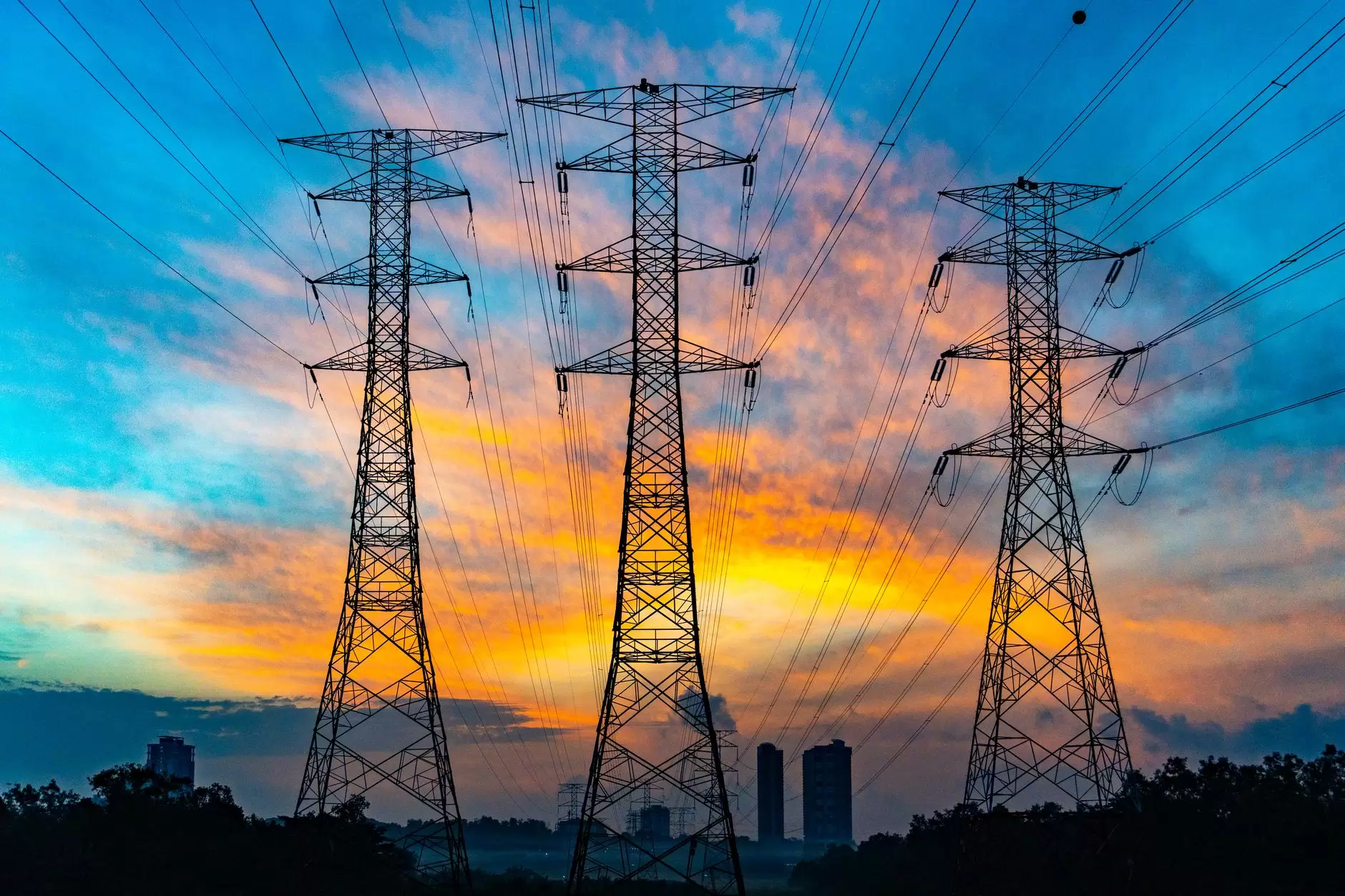

The gap between vision and reality has become harder to ignore. Southeast Asia’s electricity demand is growing faster than almost anywhere else on earth, driven by industrialisation, urbanisation, and rising household consumption. At the same time, the region’s energy transition ambitions are colliding with geography. Some countries have abundant hydropower but limited domestic demand. Others have growing cities, expanding manufacturing bases, and nowhere near enough clean generation to meet their own targets. A genuinely integrated grid would connect those surpluses to those deficits. But the infrastructure that would make that possible remains largely unbuilt—and the political and regulatory machinery needed to operate it remains largely undecided.
The Scale of the Mismatch
To understand why the ASEAN Power Grid matters, it helps to look at what the region is actually trying to connect. The ten member states of ASEAN span an extraordinary range of economic development, electricity system maturity, and resource endowments. Singapore operates one of the most reliable grids in the world but has almost no domestic renewable resources. Laos has hydropower potential that far exceeds its own needs but limited transmission infrastructure to export it. Indonesia is an archipelago of thousands of islands, many of which still rely on diesel generation. Myanmar has substantial gas reserves and hydropower capacity but a grid that has barely expanded beyond its major cities.
This diversity should be an advantage. In theory, interconnection allows each country to specialise in what it does best while drawing on its neighbours for everything else. Hydropower from Laos and Myanmar could firm up intermittent solar in Thailand. Vietnam’s rapidly growing wind capacity could supply demand centres in Cambodia. Singapore could purchase clean electricity from across the region rather than relying overwhelmingly on imported natural gas. The International Energy Agency and the ASEAN Centre for Energy have both modelled scenarios in which regional interconnection substantially reduces the total cost of decarbonisation compared with each country pursuing energy transition in isolation.
The reality is closer to the opposite. Despite decades of discussion, cross-border electricity trade in ASEAN remains a fraction of what occurs in other integrated markets. The European single market moves electricity across borders routinely. The Southern African Power Pool has been operating since 1995. Even Central America, with far fewer resources, operates a more interconnected system than Southeast Asia does today.
What Has Actually Been Built
The ASEAN Power Grid is not entirely imaginary. The Lao PDR–Thailand–Malaysia–Singapore Power Integration Project, first conceived in the late 1990s, remains the most visible example of multilateral electricity trade in the region. Laos exports hydropower to Thailand. Thailand, in turn, sells electricity to Malaysia. Malaysia has supplied Singapore under long-standing bilateral arrangements. In 2022, Singapore began importing up to 100 megawatts of hydropower from Laos via Thailand and Malaysia under the Lao PDR–Thailand–Malaysia–Singapore Power Integration Project—a development that was widely described as the first multilateral power trade in ASEAN history.
That milestone was real. It also revealed how far the region has to go. The electricity travelled across four countries through agreements negotiated bilaterally rather than through a unified market framework. The volumes involved were small relative to Singapore’s total demand. And the arrangement depended on transmission infrastructure that was, in several places, never built for this purpose. The fact that this modest project represented a historic achievement says more about the slow pace of progress than about the ambition behind it.
Other bilateral connections exist. Thailand and Malaysia operate a high-voltage direct current interconnection. Malaysia and Indonesia have connections across the Strait of Malacca. Vietnam, Cambodia, and Lao PDR share transmission links that were originally developed around specific hydropower projects rather than as part of a systematic grid integration strategy. But these connections were designed for bilateral trade, not for a genuinely multilateral system in which electricity could flow freely across the region in response to price signals and system needs.
The Bottlenecks Are Not Only Technical
The most common explanation for slow progress on the ASEAN Power Grid is infrastructure. Southeast Asia is not a single contiguous landmass. Indonesia, the Philippines, and parts of Malaysia and Thailand are separated by water. Submarine cables are expensive, technically complex, and politically sensitive. Even on the mainland, the distances between generation resources and demand centres are substantial, and the transmission infrastructure in several countries would require significant upgrading before it could reliably handle large cross-border flows.
But focusing purely on hardware misses the deeper problem. The real bottlenecks are institutional. ASEAN operates on a model of consensus and non-interference. That model has been remarkably successful at maintaining political stability in one of the world’s most diverse regions. It is far less effective at building the kind of integrated electricity market that would allow a power plant in Laos to compete directly with one in Vietnam to supply demand in Thailand.
Cross-border electricity trade requires harmonisation across multiple dimensions: technical standards, grid codes, market rules, dispute resolution mechanisms, and regulatory oversight. It also requires trust. Countries that import electricity become dependent on their neighbours for critical infrastructure. Countries that export electricity need confidence that their investment in generation capacity will not be stranded if the importing country changes its policy or finds a cheaper alternative. In Europe, decades of political integration provided the foundation for electricity market integration. In ASEAN, the political integration came later—and remains far more limited.
The institutional challenge is compounded by the region’s market structures. Several ASEAN countries still have vertically integrated state-owned utilities controlling generation, transmission, and distribution. Opening their grids to foreign generators—even within ASEAN—would threaten both their commercial position and their control over domestic energy policy. Market reform has proceeded at very different speeds. Singapore has a competitive wholesale market; Thailand has taken incremental steps toward liberalisation while maintaining strong central control; Vietnam has introduced competition in generation but not in transmission or retail; Laos remains dominated by state-owned Électricité du Laos. Building a multilateral market on such a patchwork of incompatible commercial models is extraordinarily difficult.
The Unexpected Detail: The Political Economy Problem Nobody Discusses
There is a revealing detail in the history of ASEAN power integration that most technical analyses overlook. The original vision for the ASEAN Power Grid was not driven primarily by energy transition concerns, or even by electricity planners. It was advanced in the late 1990s by Malaysia, which at the time held the ASEAN chairmanship and saw regional infrastructure integration as a vehicle for broader economic cooperation following the Asian financial crisis. The proposal was ambitious, forward-looking, and broadly supported in principle.
What happened next is instructive. The early feasibility studies identified several interconnection projects that made clear economic sense, with modest capital costs and demonstrable cross-border benefits. But when it came time to commit capital and negotiate the terms of trade, almost every country found reasons to delay.
Thailand was reluctant to become dependent on hydropower from Myanmar, a relationship that is complex and intermittently tense. Malaysia and Singapore, despite their deep economic ties, could not agree on the terms under which Singapore would buy electricity from Malaysian generators. Vietnam was focused on expanding domestic generation to meet rapidly growing internal demand and saw little immediate benefit in cross-border trade. Indonesia faced a different constraint: its archipelagic geography made connection costs orders of magnitude higher than mainland projects, and the domestic political resistance to spending that money on links that might primarily benefit Singapore or Malaysia was strong.
The pattern is consistent. Whenever the benefits of interconnection are analysed at a regional level, they appear substantial. Whenever the costs and risks are assessed by individual national governments, the calculus shifts. The ASEAN Power Grid requires countries to accept interdependence in a sector that has always been treated as a matter of national security. That is not a technical problem. It is a political one—and it has not been solved by any of the regional frameworks established to address it.
What Has Changed
Despite the slow progress, several developments have begun to shift the calculus in favour of greater interconnection.
The first is the sheer scale of investment required for domestic energy transition. Most ASEAN countries have committed to net-zero emissions targets, and several have announced ambitious renewable energy goals. Meeting those goals will require enormous investment in generation, transmission, and grid modernisation. Regional interconnection offers a way to reduce some of those costs by sharing resources across borders. The economic case has become harder to dismiss as the costs of going it alone have become more visible.
The second is Singapore’s emergence as a major demand centre for imported clean electricity. Singapore has limited land for solar, no hydropower resources, and a stated intention to reduce its reliance on natural gas. It has begun soliciting proposals for electricity imports from neighbouring countries, initially targeting up to four gigawatts of low-carbon electricity imports by 2035. That demand signal is already influencing investment decisions in Indonesia, Malaysia, and beyond. A wealthy city-state willing to pay for clean electricity creates a commercial incentive that decades of regional planning documents could not.
The third is the growing role of China and multilateral development finance in funding regional infrastructure. China’s Belt and Road Initiative has financed hydropower projects, transmission lines, and grid upgrades across mainland Southeast Asia. While these investments have not been coordinated through ASEAN mechanisms, they have created physical interconnection capacity that did not previously exist. The challenge now is to integrate those connections into a multilateral trading framework.
The fourth is the increasing urgency of grid flexibility. As more variable renewable generation comes online across the region, the ability to balance supply and demand across a wider geographic area becomes more valuable. Interconnection reduces the cost of integrating renewables by allowing surplus generation in one location to meet demand in another, rather than being curtailed. This is not a future problem. Thailand, Vietnam, and the Philippines are all experiencing curtailment and grid congestion issues that could be partially addressed through greater regional coordination.
Where the Pipeline Actually Stands
The project pipeline for ASEAN interconnection has expanded considerably, but the gap between announced projects and operational capacity remains substantial. The ASEAN Interconnection Masterplan Study has identified multiple priority projects, including new connections between Sumatra and Peninsular Malaysia, between Borneo and the Philippines, and between mainland Southeast Asian countries. Several of these projects have completed feasibility studies. Few have reached financial close.
The most advanced multilateral initiative is the Lao PDR–Thailand–Malaysia–Singapore Power Integration Project, which has moved from concept to limited commercial operation. The next phase, if it proceeds, would increase the volume of trade and potentially extend the arrangement to include additional participants. But even this project operates outside a formal multilateral market framework. It remains, in essence, a series of bilateral agreements stitched together under a regional banner.
The ASEAN Power Grid is often described as a single project. It is more accurately understood as a collection of discrete interconnection projects, each with its own commercial rationale, its own financing arrangements, and its own political context. Some will proceed. Others will not. The vision of a genuinely integrated Southeast Asian grid remains aspirational, and it will likely remain so until the institutional framework catches up with the physical infrastructure.
The Institutional Gap
If there is a single lesson from other regions that have successfully integrated their electricity systems, it is that physical interconnection must be accompanied by institutional integration. Transmission lines connect grids. Market rules connect economies. Without the latter, the former will be underutilised.
ASEAN has not yet established the institutions that would be required to operate a multilateral electricity market. There is no ASEAN system operator. There is no common grid code. There is no regional dispute resolution mechanism for cross-border electricity trade. There is no harmonised framework for third-party access to transmission infrastructure. Each of these gaps makes it harder for a generator in one country to sell electricity to a buyer in another, even when the physical connection exists.
Progress is being made, but slowly. The ASEAN Ministers on Energy Meeting has endorsed frameworks for multilateral electricity trading, and working groups are developing technical standards and regulatory guidelines. But the gap between ministerial endorsement and operational reality remains wide. The European Union took decades to build its internal energy market, and that was within a political union with supranational institutions and a common legal framework. ASEAN is attempting something similar without those advantages.
The region’s energy transition ambitions depend, in part, on closing that gap. Without greater interconnection, countries with limited domestic renewable resources will struggle to decarbonise affordably. Countries with abundant resources will struggle to monetise them. And the region as a whole will pay more for clean electricity than it would if it could share its resources more efficiently.
What to Watch
Several developments will determine whether the ASEAN Power Grid moves from aspiration to reality over the next decade. The first is whether Singapore’s electricity import programme proceeds at scale and on schedule. If it does, it will establish commercial precedents and build stakeholder confidence in cross-border trade. If it stalls, it will reinforce the caution that has characterised the region’s approach for the past two decades.
The second is whether ASEAN can develop operational institutions rather than simply producing more planning documents, as it has done for decades. A regional grid code, a framework for third-party access, and a mechanism for coordinating system operations across borders would each represent genuine progress. None of them exist today.
The third is whether the region’s major state-owned utilities—many of them vertically integrated monopolies with captive customer bases—will support or resist greater integration. Their cooperation is essential to any meaningful progress, yet their commercial interests and domestic mandates often pull against the regional objectives that cross-border trade would require.
The ASEAN Power Grid remains one of the most consequential infrastructure projects in Southeast Asia that has not yet been built. The technical challenges are real. The political and institutional challenges are greater. And the region’s ability to meet its energy and climate goals depends, to a degree that is not fully reflected in any national plan, on whether those challenges can finally be overcome.
References
- International Energy Agency — Southeast Asia Energy Outlook reports providing regional electricity demand projections and interconnection analysis
- ASEAN Centre for Energy — ASEAN Power Grid progress updates and the ASEAN Interconnection Masterplan Study identifying priority cross-border transmission projects
- Energy Market Authority of Singapore — public documentation on electricity import targets and the Lao PDR-Thailand-Malaysia-Singapore Power Integration Project
- Asian Development Bank — historical feasibility studies and financing analysis for ASEAN interconnection projects dating to the 1990s
- International Renewable Energy Agency — renewable energy potential assessments and grid integration studies for Southeast Asian markets