
When engineers at a Southeast Asian utility received a grid connection application in early 2024 for a new data center campus, they checked the requested capacity three times. The developer was asking for 300 megawatts — roughly the same electrical load as a quarter of a million households in the region. Across Asia, data center developers are now submitting connection requests at scales that would have been unthinkable five years ago, and the region’s power grids were simply not designed for what is coming.

The question is no longer whether AI will increase electricity demand. The question is whether the physical infrastructure of Asia’s power systems can be expanded fast enough to avoid becoming the binding constraint on digital infrastructure investment. The answer varies dramatically by market, and in several important cases it is making grid planners visibly uncomfortable.
The Scale and Speed of the Demand Shock
Understanding the magnitude of what is happening requires looking beyond the aggregate numbers that dominate headlines. The International Energy Agency projects that global data center electricity consumption could double by 2026 compared with 2022 levels, reaching approximately 1,000 terawatt-hours. Asia accounts for a growing share of that growth, driven by the expansion of cloud computing, the rollout of 5G networks, and the deployment of large-scale AI training infrastructure.
But the aggregate figures conceal the aspect that matters most for grid planning: concentration. A single hyperscale data center campus now routinely requires 100 to 500 megawatts of dedicated grid capacity, with some proposals exceeding 1,000 megawatts. To put that in perspective, a 500-megawatt campus consumes as much electricity as a medium-sized city. In many parts of Asia, the transmission and distribution infrastructure serving a proposed data center site was never designed to accommodate a load of that magnitude on a single connection point.
The speed is equally important. Traditional grid planning assumes load growth that is gradual, broadly distributed, and reasonably predictable. Utilities add capacity in increments, following multi-year planning cycles that allow time for environmental assessments, regulatory approvals, equipment procurement, and construction. A large manufacturing facility might take five to seven years from initial application to energization. Data center developers are asking for comparable amounts of capacity in two to three years, and they are doing so in clusters — multiple campuses targeting the same favorable jurisdictions simultaneously.
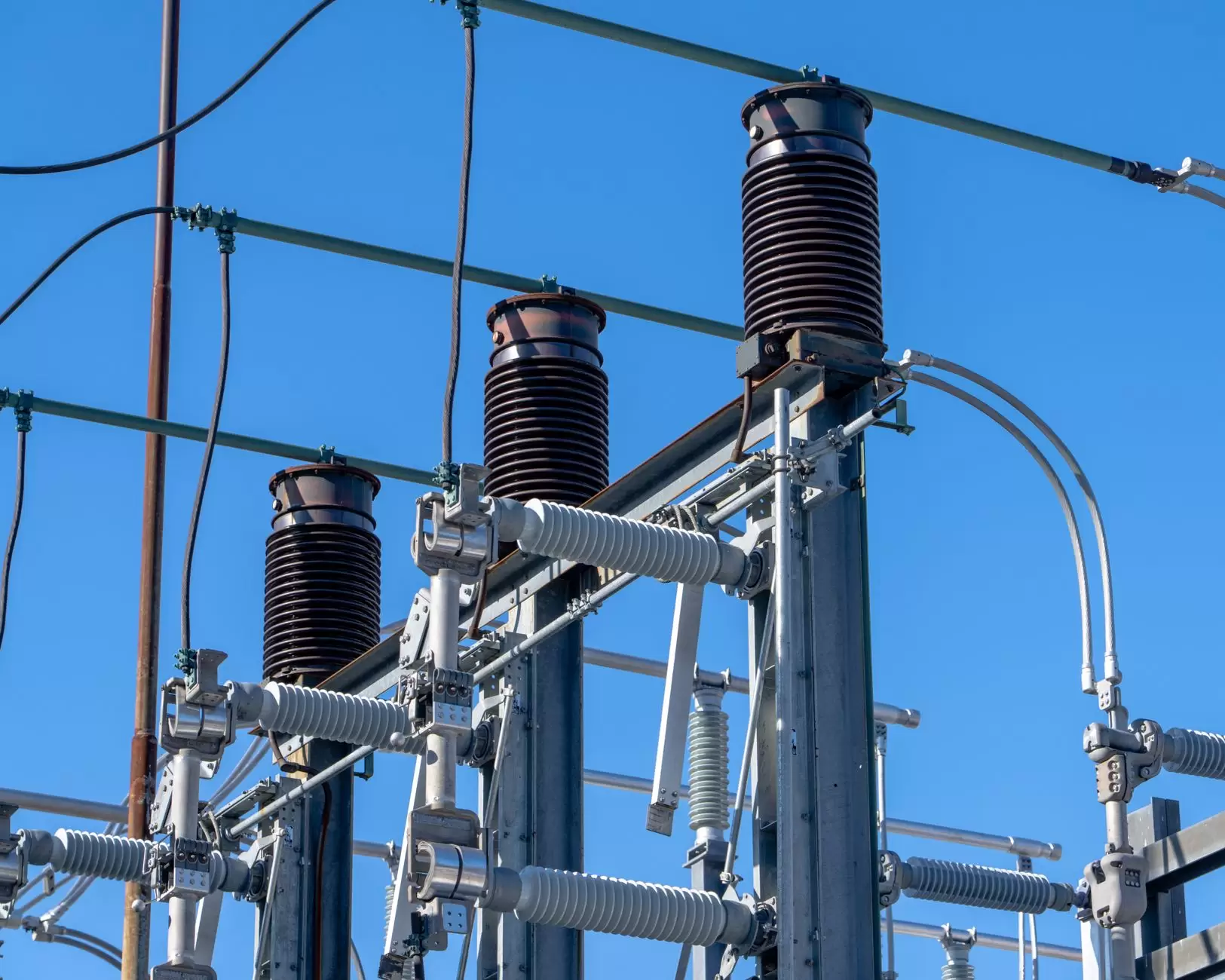
This concentration and speed combine to create a fundamentally different planning challenge than anything most Asian grid operators have faced before. It is not simply a matter of generation adequacy. The bottlenecks are appearing at the transmission and distribution level — in substations, transformers, and feeder lines that were sized for a different era of electricity consumption.
The Structural Vulnerabilities in Asia’s Grid Infrastructure
Asia’s power grids developed under a set of assumptions that are now being overturned. For decades, the dominant planning paradigm prioritized centralized generation — large coal, gas, nuclear, or hydro plants connected to load centers through high-voltage transmission corridors. Distribution networks were designed to deliver power from substations outward to residential, commercial, and light industrial customers, with load densities that followed predictable urban development patterns.
Data centers invert several of these assumptions. They create extremely high load density at specific nodes — a single facility drawing more power than an entire industrial park. They often locate in semi-rural or peri-urban areas where land is available and affordable, meaning the local grid infrastructure may be relatively light. And they require exceptionally high levels of reliability, typically demanding redundant grid connections and backup generation that complicates network protection schemes.
One structural vulnerability that is particularly acute in several Asian markets is the mismatch between data center development timelines and transmission planning cycles. In Japan, for example, transmission investment is planned through a formal process that involves extensive stakeholder consultation and regulatory review. The lead time for a major new transmission line can exceed a decade. Data center developers operating on three-year construction timelines cannot wait for that process to run its course. In some cases, they are being told that grid capacity will be available — but not until the early 2030s.
Southeast Asia faces a different version of the same problem. Countries including Malaysia, Thailand, Vietnam, and Indonesia are attracting significant data center investment, drawn by relatively affordable land, growing digital economies, and proximity to undersea cable landing stations. But the grid infrastructure in many of these markets is already stretched by rapid economic growth and increasing electrification. The additional concentrated demand from data centers is arriving at a time when utilities are already struggling to keep pace with more conventional load growth.
The regulatory dimension compounds the challenge. In most Asian electricity markets, the cost of grid upgrades is recovered through regulated tariffs that are spread across all consumers. Adding major new transmission or substation capacity to serve a single large customer raises difficult questions about cost allocation. Should residential consumers effectively subsidize the grid infrastructure required by multinational technology companies? Or should data center developers bear the full cost of the network upgrades their projects require? Different jurisdictions are reaching different answers, and the uncertainty itself is slowing investment decisions.
How Different Markets Are Responding
Singapore offers the most instructive case study, precisely because it illustrates what happens when grid constraints become binding. In 2019, the government imposed a moratorium on new data center development, citing concerns about electricity consumption and carbon emissions. The moratorium was partially lifted in 2022, but new projects now face stringent efficiency requirements and must demonstrate that they can operate within Singapore’s limited electricity supply. The effect has been to push data center investment across the border into Johor, in southern Malaysia, where a new data center cluster is emerging — connected back to Singapore by fiber but drawing its power from the Malaysian grid.
This pattern — data center demand leapfrogging grid constraints by relocating to jurisdictions with more available capacity — is likely to become more common across Asia. It creates both opportunities and risks. For jurisdictions that can offer reliable, affordable grid connections, data center investment can become a significant source of economic development. But the risk is that the capacity advantage proves temporary if grid investment does not keep pace with the demand it attracts.
Japan and South Korea face a different challenge. Both countries have highly reliable grids with strong technical standards, but their transmission networks were largely built out before data center demand became a material factor in load forecasting. The issue is less about grid reliability than about whether the transmission infrastructure exists in the right locations. In Japan, the Kansai and Chubu regions around Osaka and Nagoya are seeing significant data center interest, as are areas of Kyushu in the south. But the transmission corridors connecting these regions to generation resources were not sized for the concentrated loads that hyperscale data centers represent.
India presents yet another pattern. India’s grid has expanded rapidly over the past decade, with substantial generation capacity. But distribution remains the weakest link. India’s state-level distribution companies are financially fragile, with high technical and commercial losses. Connecting a large data center to a distribution network that struggles with reliability and voltage management creates operational risks technology companies are unequipped to manage. The solutions increasingly involve dedicated transmission-level connections that bypass the distribution network entirely — effectively treating data centers as transmission-connected industrial customers. This approach works technically but raises equity concerns, as it allows large customers to avoid contributing to the distribution networks that serve everyone else.
Across all these markets, one response is becoming increasingly visible: data center developers are beginning to behave like energy infrastructure companies. They are scouting locations not primarily by fiber availability or proximity to internet exchanges, but by visiting substations to determine whether there is physical space to add another transformer bay. In several Southeast Asian markets, developers are now proposing to finance and build substations and transmission connections themselves, then transfer them to the utility upon completion. This represents a fundamental shift in the relationship between electricity consumers and grid infrastructure — and it is happening not because of policy design, but because the traditional model cannot move fast enough.
What Happens Next
The most important near-term development will be the emergence of more sophisticated grid connection processes that account for the specific characteristics of data center load. Several Asian grid operators are already moving toward cluster-based planning, where data center zones are identified in advance and grid infrastructure is built proactively rather than in response to individual applications. This approach reduces uncertainty for both developers and utilities, and it allows for more efficient infrastructure investment. But it requires a degree of coordination between government investment promotion agencies, grid operators, and regulators that does not currently exist in most Asian markets.
A second development to watch is the growing role of behind-the-meter generation. Data center operators are increasingly exploring on-site gas-fired generation, fuel cells, and battery storage as alternatives to waiting for grid connections. In some cases, these behind-the-meter solutions are being used as bridging capacity — keeping the data center operational while grid infrastructure is being built. In others, they are becoming the primary supply, with the grid connection serving as backup rather than the reverse. This inversion of the traditional relationship between grid supply and on-site generation has operational implications that most regulators have not yet fully considered.
The third area that deserves attention is the potential for data centers to provide grid services. A facility that can shift its computational workload geographically, modulate its electricity consumption in response to grid signals, or use its backup generation to support the grid during periods of scarcity could become a valuable flexibility resource rather than simply a source of inflexible demand. Several pilot projects in Asia are exploring these possibilities, but the commercial and regulatory frameworks to support widespread adoption do not yet exist.
The fundamental question facing Asian policymakers and grid operators is whether the institutional arrangements that governed grid development for the past fifty years are adequate for the next twenty. The answer, increasingly, appears to be no. The speed, scale, and geographic concentration of data center demand require planning processes, cost allocation mechanisms, and investment frameworks that differ substantially from the status quo. The jurisdictions that adapt fastest will capture a disproportionate share of digital infrastructure investment. Those that do not will watch it flow elsewhere — and may find, a decade from now, that the grid decisions made today determined the geography of the AI industry in ways that are very difficult to reverse.
References
- International Energy Agency — World Energy Outlook 2024 and Electricity 2024 reports, which provide baseline projections for global data center electricity consumption and identify Asia as the fastest-growing region for digital infrastructure energy demand.
- International Energy Agency — Data Centres and Data Transmission Networks tracking report, used for understanding the trajectory of data center energy consumption and the concentration of demand in hyperscale facilities.
- Singapore Economic Development Board and Infocomm Media Development Authority — public statements and policy documents on the 2019–2022 data center moratorium and subsequent efficiency requirements, which frame the Singapore case study discussed in the article.
- Tenaga Nasional Berhad and Malaysian Investment Development Authority — publicly available information on the Johor data center cluster and grid connection processes in southern Malaysia.
- Japan’s Organization for Cross-regional Coordination of Transmission Operators (OCCTO) — documentation on transmission planning cycles and stakeholder consultation processes, relevant to the discussion of Japanese grid development timelines.