
Most of Asia Has Never Needed a Capacity Market. That Is About to Change
For decades, Asian electricity planners faced a straightforward problem. Build enough power plants to meet peak demand, add a reserve margin, and reliability took care of itself. The question of whether those plants would actually be available when needed rarely arose — they were thermal plants with fuel supplies, and they ran when dispatched. Capacity markets, the elaborate mechanisms North American and European regulators designed to ensure resource adequacy, seemed like an answer to a question nobody in Asia was asking.
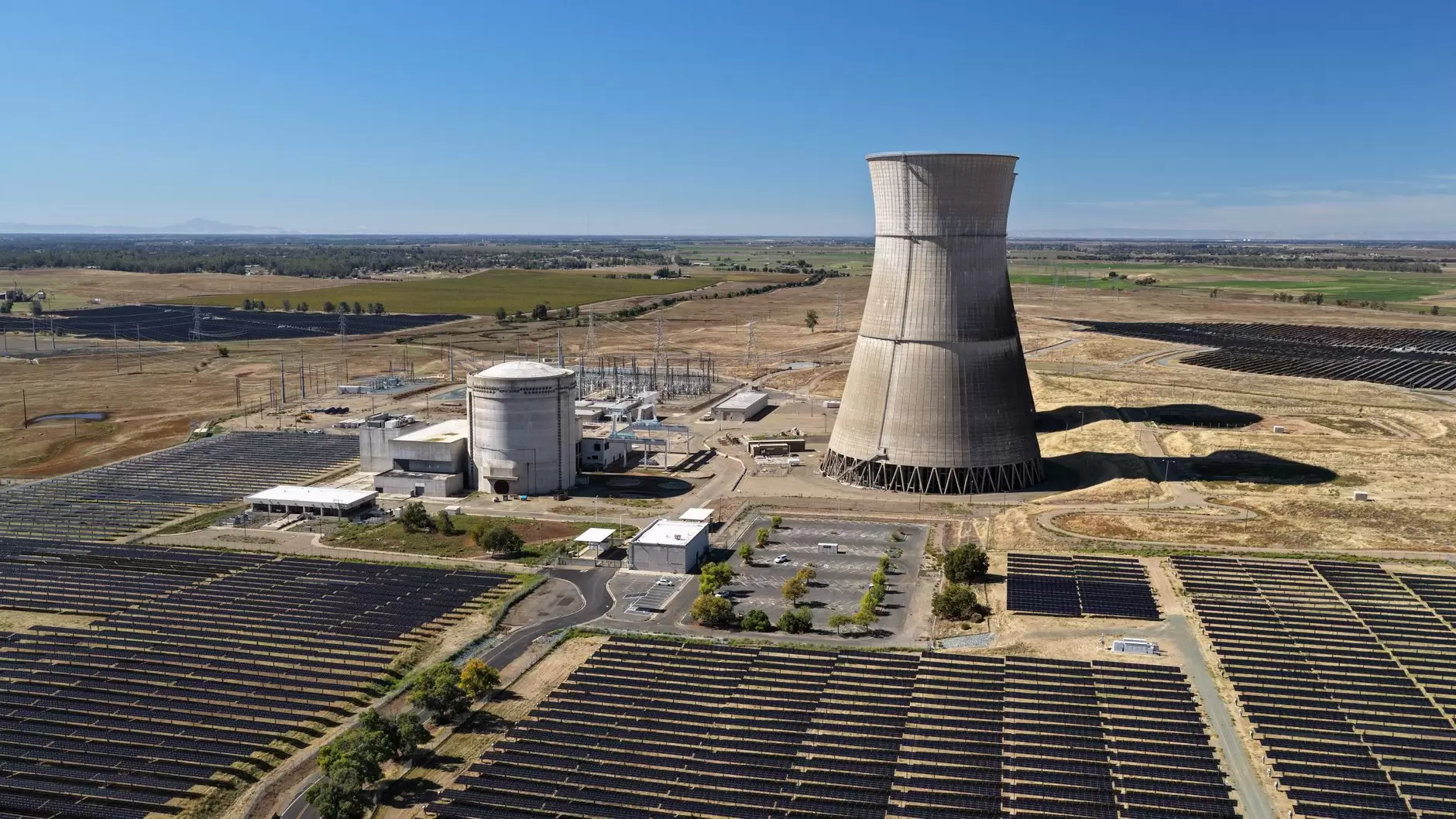
That assumption is now unravelling. Across the region, three forces are converging to make resource adequacy — the simple guarantee that enough generation capacity exists to meet demand — far more complicated than it once was. Renewables are displacing thermal generation without providing the same firm capacity. Liberalisation is unbundling vertically integrated utilities that previously handled adequacy planning internally. And rising electrification, particularly in Southeast Asia, is pushing peak demand growth beyond what traditional planning assumptions can comfortably accommodate.
The result is a quiet but accelerating shift. Several Asian jurisdictions are now actively designing, piloting, or implementing capacity remuneration mechanisms. The approaches differ sharply — from Japan’s carefully structured capacity auction to South Korea’s evolving reliability requirements to the tentative discussions underway in Southeast Asian markets. What they share is a recognition that the old planning model no longer fits the new electricity reality.
What a Capacity Market Actually Does
Before examining Asia’s specific experiments, it is worth clarifying what capacity markets are designed to solve. This is not a question about energy. Energy markets pay generators for the electricity they produce. A capacity market pays generators — or, in some designs, demand-side resources and storage — for being available to produce when needed.
The distinction matters because of a problem economists call the missing money problem. In an energy-only market, generators recover their fixed costs — construction, maintenance, financing — entirely through energy sales. As more renewables enter the system with near-zero marginal costs, wholesale energy prices tend to fall. That is good for consumers in the short term but makes it harder for peaking plants, which run only a few hundred hours per year, to recover their costs. If those plants retire without replacement, resource adequacy erodes.
Capacity markets address this by creating a separate revenue stream. Generators bid into an auction, typically several years ahead of delivery, committing to be available during specified periods. The market clears at a price that reflects the cost of the last unit needed to meet the reliability target. All successful bidders receive that clearing price. The mechanism essentially prices reliability separately from energy.
Several variations exist. Forward capacity markets, like those in PJM and the UK, procure capacity years in advance. Strategic reserves, common in Europe, contract specific plants outside the market. Reliability options, used in parts of Latin America, function more like insurance contracts. The common thread is a recognition that energy markets alone may not deliver adequate investment signals for resource adequacy.
Why Asia Took a Different Path
Most Asian electricity systems were built around a different institutional architecture. Vertically integrated, often state-owned utilities handled generation, transmission, and distribution within a single organisation. Resource adequacy was an engineering exercise conducted internally: forecast demand, add a planning reserve margin typically in the 15 to 25 percent range, and include those costs in the regulated asset base. The utility’s obligation to serve customers meant investment decisions were made through central planning rather than market signals.
This model worked adequately for decades. It began to strain under two pressures. The first is liberalisation. As countries including Japan, South Korea, and Singapore unbundled their electricity sectors and introduced competition, the single entity responsible for adequacy disappeared. Independent power producers made investment decisions based on expected revenues, not system-wide reliability obligations. Somebody needed to fill the coordination gap.
The second pressure is renewables. The problem is not simply intermittency — that is a short-term operational challenge for balancing and ancillary services. The deeper issue is that renewables suppress wholesale energy prices when they are generating, making it harder for any thermal plant, whether baseload or peaking, to recover fixed costs through energy revenues alone. The missing money problem, first observed in liberalised Western markets, is now emerging in Asia’s partially liberalised systems.
Several Southeast Asian markets are confronting a related but distinct challenge. In countries where electricity demand is growing rapidly, such as Vietnam and Indonesia, the question is not only whether existing plants will remain viable. It is whether investment in new capacity will arrive quickly enough and in the right locations. Traditional utility-led planning can struggle to keep pace with demand growth that industrialisation and rising air conditioning loads are driving. Market-based capacity mechanisms are increasingly being examined as tools to accelerate and coordinate investment.
Japan: The Most Deliberate Asian Experiment
Japan’s capacity market, launched in 2020 with first deliveries in 2024, is the most fully developed mechanism in Asia. Its design reflects distinctly Japanese circumstances. The electricity system remains divided between regional utilities with limited interconnections, meaning capacity must be procured in relatively small geographic zones. Nuclear retirements following Fukushima removed a large block of firm, low-carbon capacity that the system had relied upon for decades. And the government’s commitment to decarbonisation has introduced uncertainty about the future role of coal and gas.
The mechanism operates as a forward auction procuring capacity four years ahead of delivery. The reliability target, set by the grid operator OCCTO, determines how much capacity must be secured. Generators, storage, and demand response can participate. The auction clears zonally, with prices reflecting regional supply-demand balances rather than a single national price.
The early results highlight the challenges of introducing capacity markets into systems that have not previously operated them. The first main auction, held in 2023 for 2027 delivery, saw relatively low clearing prices, partly because existing thermal plants bid aggressively to secure the revenue stream. Observers noted that the mechanism achieved its primary objective — securing adequate capacity — but did so without sending strong signals for new investment. This outcome is not unusual for a first auction; similar patterns appeared in the early years of the UK capacity market.
The more interesting question is whether the Japanese design will evolve to address decarbonisation objectives. A separate decarbonisation auction, introduced alongside the main capacity auction, specifically targets low-carbon firm capacity — essentially creating a pathway for hydrogen-ready and ammonia-co-fired thermal plants, as well as batteries and pumped storage, to participate. The dual-track approach reflects a broader tension in capacity market design globally: should the mechanism simply procure reliability at lowest cost, or should it be used to steer the resource mix toward particular technologies?
South Korea and Singapore: Different Problems, Different Solutions
South Korea illustrates how resource adequacy mechanisms are shaped by market structure. Korea’s electricity market remains heavily regulated, with Korea Electric Power Corporation (KEPCO) as the single buyer and Korea Power Exchange (KPX) operating the market. Generators receive payments through a cost-based pool rather than competitive energy pricing. In this context, a market-based capacity mechanism would sit awkwardly against the broader regulatory framework.
Instead, South Korea has experimented with reliability-focused adjustments to its existing market design. Capacity payments, originally introduced to encourage investment in baseload generation, have been refined to favour flexible resources that can respond to the growing variability introduced by renewables. The government has also introduced requirements for generators to maintain specified availability levels, with penalties for non-compliance, functioning as a form of reliability obligation without a full capacity market.
Singapore presents a contrasting case. The city-state’s electricity market is fully liberalised and highly concentrated geographically — the entire country is effectively a single load zone. The Energy Market Authority (EMA) has historically relied on a vesting contract framework, which requires generation companies to sell a portion of their output at fixed prices, to manage market power and ensure investment certainty. More recently, EMA has signalled interest in a formal capacity mechanism, recognising that Singapore’s growing reliance on imported electricity and domestic solar requires new tools for managing resource adequacy across interconnections.
The Singaporean discussion is instructive because it highlights how capacity mechanisms intersect with cross-border electricity trade. If a significant share of Singapore’s capacity is ultimately located in neighbouring countries through the Lao PDR-Thailand-Malaysia-Singapore Power Integration Project, who bears the capacity obligation? The question has no obvious precedent, and its resolution will influence how Southeast Asian countries design their own mechanisms.
The Hidden Distinction: Firmness and What It Means for Asian Markets
Perhaps the least understood dimension of capacity market design — and the one most likely to create complications in Asia — is the definition of firm capacity. Not all megawatts are equal when it comes to reliability. A coal plant with secure fuel supply is firm. A solar plant is not. A battery with four hours of storage may be partially firm during certain hours. The capacity value assigned to each resource determines how much it can bid into the market and what revenue it receives.
These determinations become especially sensitive in systems where fuel supply is vulnerable to disruption. Several Asian markets, including Japan and South Korea, rely heavily on imported LNG. A capacity mechanism that treats LNG plants as fully firm implicitly assumes that fuel will be available when needed — an assumption that exposure to global gas markets and geopolitical shipping risks may challenge. Similarly, hydropower-dependent systems such as those in Laos and Myanmar face seasonal and climatic variability that complicates capacity accreditation. There is growing recognition that Asian capacity markets may need to incorporate fuel security assessments and hydrological risk adjustments more explicitly than their Western counterparts have.
What This Means for the Wider Electricity System
Introducing a capacity market is rarely a technical decision alone. It reshapes investment incentives, alters the relationship between incumbents and new entrants, and can have significant distributional effects — determining which resources earn revenue and which do not. In partially liberalised Asian markets, where state-owned incumbents often retain significant market power, the design choices become particularly consequential.
The interaction with renewable deployment is among the most important considerations. A well-designed capacity market can support renewables by ensuring that flexible, firm resources remain available to balance variability. A poorly designed one can inadvertently lock in thermal generation at the expense of storage, demand response, or interconnection — resources that may offer lower-cost reliability in a high-renewables future. Several European markets have already encountered this tension, with capacity markets initially favouring existing gas plants and requiring subsequent redesign to accommodate new technologies. Asia has the opportunity to learn from those experiences.
Transmission is another underappreciated dimension. Capacity markets typically procure resources within defined zones, but the zone boundaries themselves reflect transmission constraints. If those constraints change — through new interconnectors, for example — the optimal procurement pattern may shift. This dynamic is already visible in Japan’s zonal design, where limited interconnection between regions means capacity adequacy must be assessed at a sub-national level. The same issue will arise as ASEAN’s power integration agenda progresses and cross-border transmission becomes more significant for resource adequacy.
The Direction of Travel
Capacity markets are unlikely to become universal across Asia in the near term. The institutional preconditions — unbundled markets, independent regulation, and sufficient competitive depth — are absent in many jurisdictions and are not emerging quickly. But the underlying drivers are only intensifying. The growth of renewables is accelerating. Electrification is expanding peak demand. And the financing challenge for new thermal capacity is growing as lenders and developers factor decarbonisation risk into investment decisions.
What is emerging is a more pragmatic, regionally differentiated set of approaches. Some jurisdictions, following Japan’s lead, are implementing formal forward capacity auctions. Others, like South Korea, are layering reliability requirements onto existing market structures. Still others, particularly in Southeast Asia, are at earlier stages of assessing whether market-based mechanisms can complement traditional utility-led planning.
For industry participants, the practical implications are already material. Capacity revenue streams are becoming a central factor in project economics for generators and investors, while utilities are reworking planning processes to accommodate market-based adequacy procurement. Regulators face the difficult task of designing mechanisms that work within partially liberalised structures while maintaining reliability through the transition. None of these challenges are unique to Asia, but the region’s institutional context — higher state ownership, less market liberalisation, and more rapid demand growth — means the solutions will look different from those developed in Europe and North America.
Resource adequacy has always been the electricity industry’s quiet, unglamorous foundation. Most consumers never think about it. Most policymakers ignore it until a supply shortage concentrates their attention. Asia’s emerging experiments with capacity markets reflect a growing understanding that the foundation needs reinforcing — not through a single regional model, but through designs that reflect each market’s regulatory architecture, resource mix, and political realities.
References
- International Energy Agency — Electricity Market Report 2024. Provided regional analysis of Asian market structures and the evolving role of capacity mechanisms in Japan.
- Japan Electric Power Exchange (JEPX) — Capacity Market auction results and design documentation. Primary source for the structure, timeline, and clearing outcomes of Japan’s capacity market.
- Energy Market Authority (EMA) — Public consultations on Singapore’s electricity market design. Informed discussion of vesting contracts and potential capacity mechanism development.
- Korea Power Exchange (KPX) — Market rules and capacity payment frameworks. Provided detail on South Korea’s reliability-focused adjustments to cost-based pool arrangements.
- BloombergNEF — Research notes on capacity market design in liberalising Asian electricity markets. Contributed comparative perspective on Southeast Asian developments.