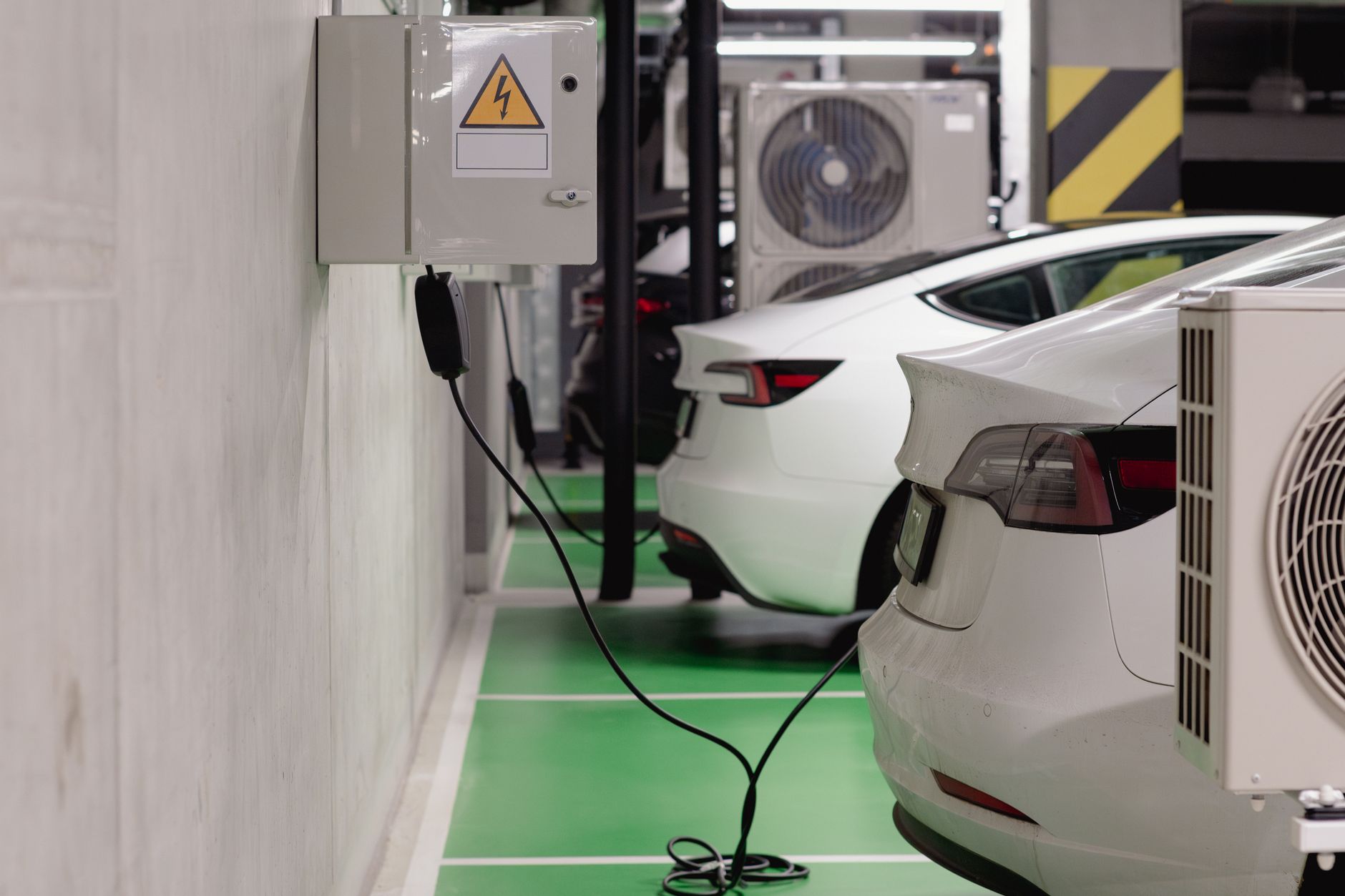
Grid operators looking at the evening peak now see a resource that was effectively invisible a decade ago: thousands of electric vehicle batteries parked at homes and depots, each holding stored energy that could discharge back into the network. Carmakers see the same asset as a warranty risk. Utilities see a potential flexibility provider, and aggregators see a portfolio. These three perspectives do not align easily, and the gap between them explains why vehicle-to-grid remains a pilot-scale industry rather than a standard grid resource.
The Hardware Question: Where the Export Path Lives
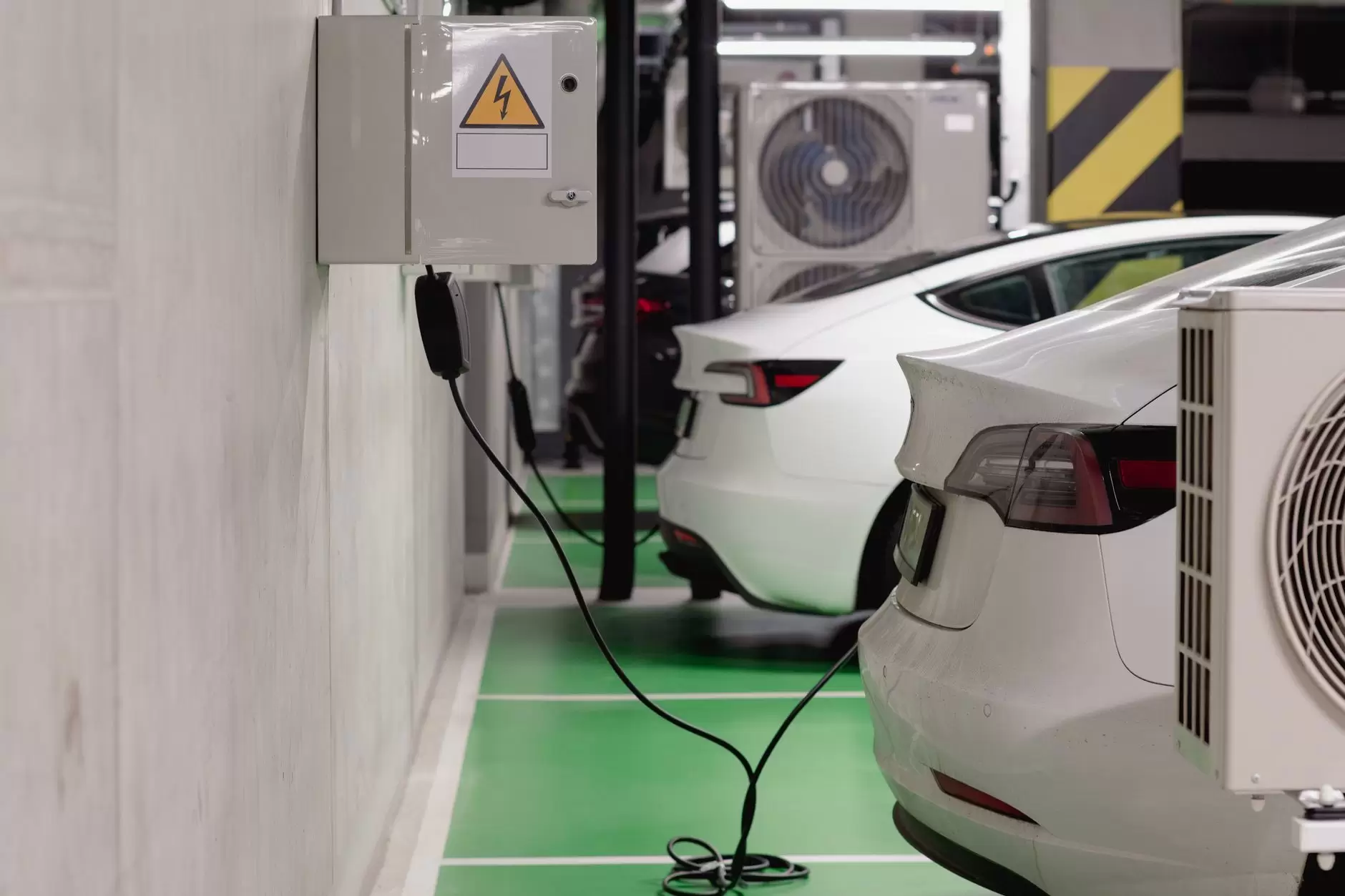
The physical path matters before any market question. Most electric vehicles are designed to charge in one direction, with an onboard charger that converts alternating current to direct current for the battery. Exporting power requires a second conversion stage, and in nearly all current designs that stage lives in the charging equipment rather than in the car. This is why the bidirectional charger, not the vehicle itself, carries most of the additional cost of vehicle-to-grid. The local distribution network is already the subject of close attention as EV charging loads grow; adding export capability makes that relationship two-way.
Two architectures exist, and the difference determines where cost and complexity fall. In a DC-coupled system, the charger performs the full conversion and exports alternating current to the building or grid. In an AC-coupled system, the vehicle’s own power electronics would perform part of that conversion, which most cars do not yet have. In practice, DC-coupled designs dominate early deployments because they require no change inside the vehicle. The distinction matters because it decides whether an automaker needs to validate new hardware or only approve a charger.
Standards add another layer. ISO 15118 defines a communication protocol between an electric vehicle and a charging station for both AC and DC charging. The 15118-20 extension adds bidirectional support, allowing energy to flow back to the grid or a building. This is a communication standard: it specifies how the car and charger exchange identity, billing data, grid constraints and energy pricing, but it does not settle which power electronics or connector must be used. That unresolved hardware question is why CHAdeMO, CCS and other paths continue to coexist.
CHAdeMO was the first connector to gain a widely used vehicle-to-grid specification, largely because Japanese manufacturers and utilities built it into early demonstrations. CCS, the dominant DC connector in Europe and North America, added bidirectional capability later through updates to its communication and control layers. ISO 15118-20 provides the common language above these connector-specific implementations. A charger and car may share the ISO standard but still differ in physical hardware and rated power, which is why different regional programmes can use the same protocol yet rely on different equipment.
Market Access: What a Vehicle Can Actually Sell
The products a vehicle can sell depend on how quickly it can respond and how long it can sustain delivery. Frequency response is fast, small and valuable per unit of energy, because the grid pays for the ability to react within seconds to a frequency deviation. Reserve products ask for a commitment to hold power in reserve for a defined period; the vehicle may not be called, but it must remain available. Arbitrage — charging when power is cheap and exporting when it is expensive — produces smaller revenue per vehicle after accounting for battery losses and the cost of cycling.
Individually, a single vehicle’s battery is small and its availability uncertain, so wholesale market access depends on aggregation. Behind the meter the arrangement differs: managed charging, or a site-level agreement with a building operator, can use the same battery without any market participation at all. An aggregator turns many small batteries into one dispatchable resource — it signs up vehicles, manages state of charge, bids combined flexibility into wholesale and ancillary markets, and sends individual instructions. A private owner participating through an aggregator can offer a narrow slice of the battery’s usable capacity, with a minimum state of charge preserved for driving. The car functions more as a flexible load than as a generator, and the offer is conditional on being plugged in at the right time, which makes availability a question of behaviour as much as engineering.
Market rules treat an aggregated electric vehicle differently from a conventional generator, and those rules vary by jurisdiction. In many systems, minimum bid sizes, metering requirements and telemetry standards mean that a single vehicle cannot enter a wholesale market alone. Aggregated portfolios may qualify where individual units cannot, but the aggregator must demonstrate control and response capability. The same logic applies to distribution-level services, where a utility may contract with an aggregator to manage local voltage or congestion rather than with thousands of individual drivers.
Warranty: Who Controls Dispatch, and What That Means for the Battery
Battery degradation from vehicle-to-grid is often misunderstood. The concern is not that any bidirectional use destroys the cell; it is that uncontrolled dispatch can push a battery outside the conditions an automaker validated. Shallow cycles at moderate temperature and state of charge have only a limited impact on cell life, and some services, such as frequency response, may draw only small amounts of energy even when called frequently. But an aggregator that commands deep discharges, high charge rates or wide temperature swings is operating the battery in a regime the automaker never tested.
That is why the warranty question reduces to who controls dispatch. An automaker that authorises a specific vehicle-to-grid programme, with defined limits and approved chargers, can stand behind the warranty. An automaker facing an aggregator that commands arbitrary export schedules has no basis to assess the added degradation, and exclusion is a rational response. Some manufacturers therefore restrict bidirectional use to approved hardware or require participation through their own scheme, while others leave the decision to the owner and adjust coverage accordingly.
Fleets have an advantage here because one organisation owns enough of the variables. A bus depot or delivery fleet operator knows the routes, owns the vehicles, and can schedule charging around a fixed duty cycle. The same entity controls when and how the battery exports, so the dispatch schedule can be made consistent with warranty limits and daily operational needs. This is why commercial fleets, depots and delivery operators are further along than households: the control problem is smaller, not just the revenue problem.
The Arithmetic: Revenue Per Vehicle Against the Charger Cost
The arithmetic separates fleets from household cars. A bidirectional DC charger costs considerably more than a standard AC charging point, because it contains an inverter, additional power electronics and communication hardware. A single household vehicle would need many years of ancillary-market revenue to recover that difference, especially once cycle-related degradation is priced in. Frequency response revenue is paid for availability rather than for large energy throughput, and arbitrage margins narrow after efficiency losses. The hardware cost is therefore the first filter: if the charger does not pay back, the market access questions are secondary.
Depots, bus fleets and delivery fleets compress that arithmetic. They charge at predictable times, leave vehicles parked when grid services are most valuable, and use larger batteries with defined duty cycles. A fleet operator can aggregate its own vehicles without the customer-acquisition and behaviour-uncertainty costs of household programmes. In many commercial settings, the same infrastructure that charges the fleet can also manage site peak demand, which provides a separate value stream even before wholesale market participation. This is why early commercial deployments cluster around commercial fleets rather than homes.
Which Problem Limits Deployment Today
Which of the three problems is binding depends on the use case. For household vehicles, hardware cost is the immediate constraint: a bidirectional charger remains an expensive upgrade for a car that is plugged in unpredictably. For automakers, warranty alignment is the constraint: they must accept a control boundary they did not design. Market access designs exist in many jurisdictions, but their value cannot be captured until the physical and contractual path from a parked car to a dispatchable export is in place.
The result is that fleet-first deployment makes sense for all three parties at once. The fleet operator bears the hardware cost, controls the dispatch schedule, and works with the automaker on warranty limits. Household vehicle-to-grid depends on cheaper bidirectional hardware and on automakers accepting standardised control boundaries, which are still being negotiated. The limiting problem today is therefore less about whether the grid wants the resource and more about whether the owner, the automaker and the aggregator can share control of the same battery.
References
- ISO 15118-20 — Road vehicles — Vehicle to grid communication interface
- ISO 15118-1 — Road vehicles — Vehicle to grid communication interface — Part 1: General information and use-case definition