One Transaction, Four Jurisdictions
Cross-border power trading barriers are rarely physical. The energy does not move directly from one country to another; it passes through a succession of national grid operators, each operating its own scheduling system, grid code and tariff structure. That sequence, more than the physical distance, often determines whether the trade is economic. The buyer and seller may agree on a price, but the delivery path must be assembled separately across every border it crosses.
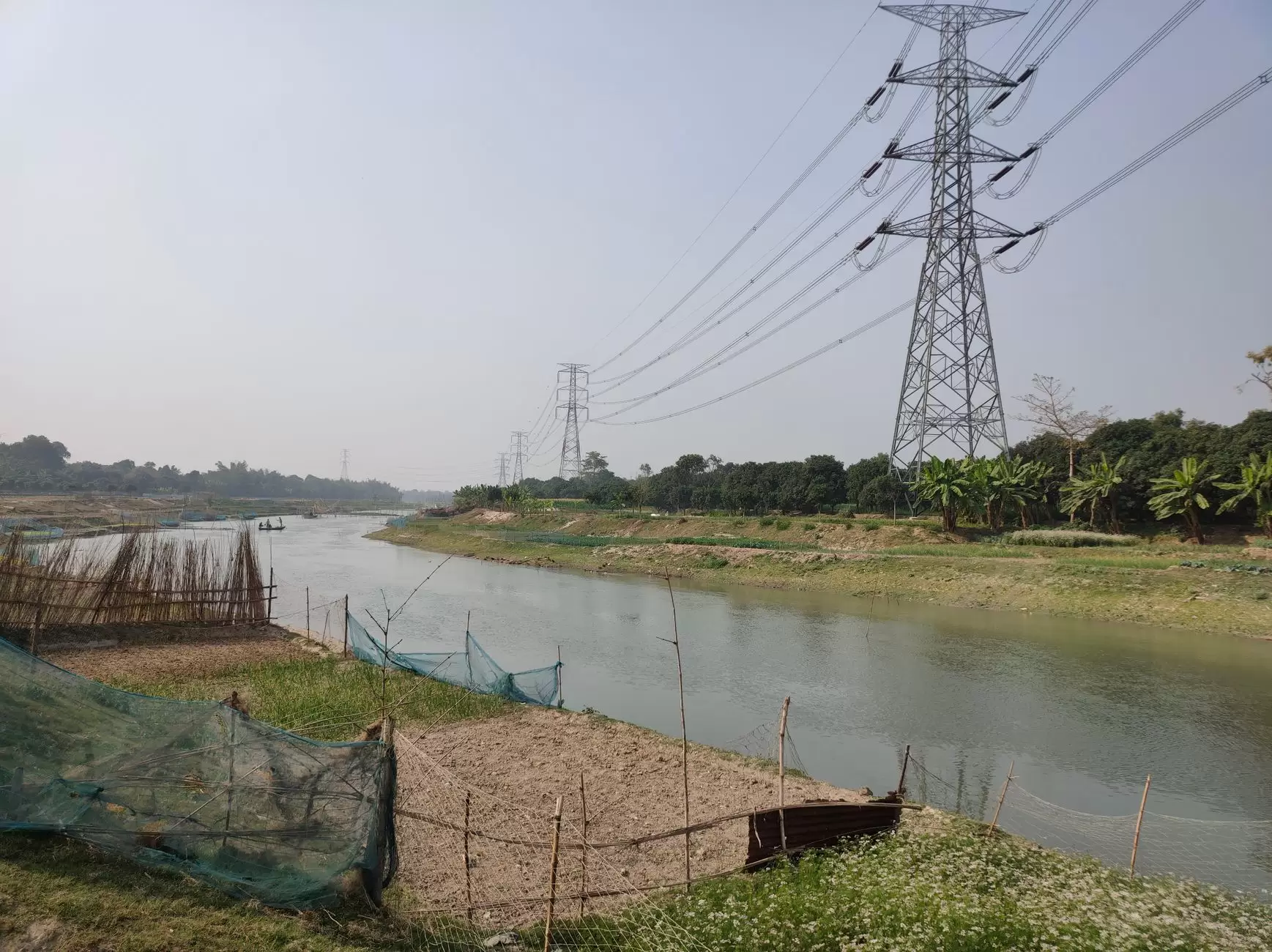
Consider a transaction that mirrors the Lao PDR–Thailand–Malaysia–Singapore Power Integration Project, or LTMS-PIP. A Lao hydropower generator sells to a Singapore buyer, with Thailand and Malaysia acting as transit systems. The seller does not ship electricity directly. The Lao grid operator schedules the injection; the Electricity Generating Authority of Thailand receives it at the border; Malaysia’s grid operator moves it south; and Singapore’s importer takes delivery at the connection point. Each step is a separate scheduled interchange rather than one end-to-end transfer.
This structure matters because it shows that a power purchase agreement is necessary but not sufficient. Export approval in Lao PDR, import approval in Singapore, and separate transmission arrangements in Thailand and Malaysia must all be in place. The transaction is not governed by a single cross-border contract. It is governed by a chain of contracts, licences and operational agreements, each of which can impose its own constraints.
Where the Costs Appear First
Wheeling is the first visible barrier. In most ASEAN cross-border trades, there is no single multilateral tariff that recovers transmission costs across borders. Each national grid operator applies its own charges, and the terms often sit inside bilateral agreements rather than published open-access schedules. In the LTMS-PIP corridor, Thailand and Malaysia are transit systems, not parties to a common tariff. The buyer must settle separate transmission arrangements with each intermediate operator.
These costs accumulate at every border. Losses are allocated at each scheduling point, and each operator may add administrative charges, reactive power compensation or ancillary service fees under its own grid code. The result is a stacking of transaction costs that can erode the price advantage of low-cost generation before delivery. This is not a single tariff barrier but a tariff-by-tariff chain, and it explains why wheeled power is often more expensive than a simple comparison of generation costs would suggest.
The absence of a common wheeling framework is especially visible when a private buyer tries to use a corridor that was set up for state utilities. Existing cross-border capacity may be committed to the entities named in intergovernmental agreements, and the published terms for third-party use can be limited. Without a clear, nondiscriminatory wheeling tariff, each negotiation becomes a bespoke exercise rather than a routine market transaction.
Network Access Is an Operational Constraint, Not Just a Tariff
Even when the commercial terms are agreed, physical transfer capacity determines whether the schedule can flow. Cross-border transmission is not a single available corridor; it depends on available transfer capability at each border, calculated from load, generation dispatch, outages and network configuration. In many ASEAN interconnections, the binding constraint during peak periods is not generation availability but the transfer capacity of the intermediate grids.
This is where the transaction-level view becomes important. The Lao generator may have available energy, but if the Thai network is congested on the Lao border, the schedule can be curtailed or rescheduled. Under the bilateral arrangements that govern Lao–Thai trade, capacity is not allocated through a single regional auction; the receiving system operator applies its own domestic dispatch and security criteria first. How that priority is defined depends on the applicable tariff, market design and the terms of each agreement, so the sequence differs from one border to the next. Where domestic dispatch or other bilateral obligations commit available capability, third-party transit can be limited even under an existing agreement.
Grid code differences add friction at each interconnection. Protection settings, telemetry standards and frequency control requirements differ between neighbouring systems. Interconnection standards tie compliance to the system being connected to — IEEE 1547 does this for distributed resources, and transmission operators apply the same principle through their own interconnection requirements — so a generator or trader exporting across a border is assessed against the receiving system’s grid code as well as its own. Telemetry may be carried over protocols such as IEC 60870-5-104 or IEC 61850, but the protection schemes and frequency control obligations sitting above those protocols are set nationally. Cross-border trading therefore depends on more than a commercial contract; it depends on technical compliance across multiple rulebooks. Harmonizing those grid codes is often framed as a technical precondition for scaling trade beyond pathfinder projects.
Physical interconnection is only part of the story. The cables and substations exist in some corridors, but operational coordination still depends on bilateral procedures rather than common platforms. Submarine cables and cross-border interconnectors provide the physical layer, yet the scheduling and allocation rules above them remain fragmented across the region.
The Regulatory Layer Decides What Can Actually Trade
Cross-border trading sits at the intersection of national licences, import and export approvals, and market design. In many ASEAN countries, importing or exporting electricity is not a default right. It requires government approvals, often tied to strategic or supply-security considerations. This regulatory layer explains why cross-border transactions have advanced through intergovernmental agreements rather than through merchant trading.
The LTMS-PIP demonstrates this. Its existence depends on four governments agreeing to the basic framework, and on state utilities in each country coordinating schedules and metering. A Singapore buyer cannot simply request transmission service from Thailand or Malaysia under a common regional rule. It must work through the specific bilateral arrangements that each corridor supports. The ASEAN Power Grid remains a patchwork of such arrangements, not yet a unified market.
Where institutional arrangements differ, the path to market changes accordingly. Singapore has moved furthest in formalizing import licences and long-term contracts, reflecting its lack of domestic renewable resources. Other jurisdictions remain more tightly linked to national utility planning and bilateral energy exchange. The region does not yet have a common ASEAN-wide market operator or a uniformly harmonized grid code across all member states, though subregional initiatives have advanced.
What Happens Next
For transaction-level trading to become less dependent on bilateral sponsorship, several layers would need to change. A common scheduling platform, nondiscriminatory access rules for third-party transit, and a recognized method for allocating losses and costs across borders are all still missing from many corridors. Some of these elements are being discussed in regional forums, but they are not yet embedded in the contracts or grid codes that govern existing cross-border flows.
The practical direction of travel is not toward a single ASEAN market overnight, but toward more standardised bilateral and subregional arrangements. Lessons from European market coupling are often cited as a reference point, though the institutional distance between Southeast Asia and the European internal market remains wide. The question for private traders is whether regulators adopt third-party access rules and whether grid operators publish workable wheeling tariffs. The gap between pathfinder projects and scalable trading turns on governance as much as on physical infrastructure.
References
- IEA — World Energy Outlook 2025 (regional electricity trade and interconnection trends)
- IEA — Electricity 2025 (Southeast Asia power demand and grid investment)
- IRENA — Renewable Power Generation Costs 2024 (hydropower and cross-border cost context)