Where the Technical Friction Actually Sits
A fault on the Thai side of a Lao–Thai interconnector can trip protective relays in Laos if clearing times are not coordinated, even when the physical line itself is ready to deliver power. The harder constraint is technical: most national grid operators in Southeast Asia maintain their own grid code, and those codes were written for a national network rather than for power flowing between countries. That gap is one reason cross-border trade still depends on bilateral arrangements, alongside institutional, political, and market factors. Grid code harmonization has therefore become central to the ASEAN Power Grid, but the real work sits below the headline voltage and frequency standards.
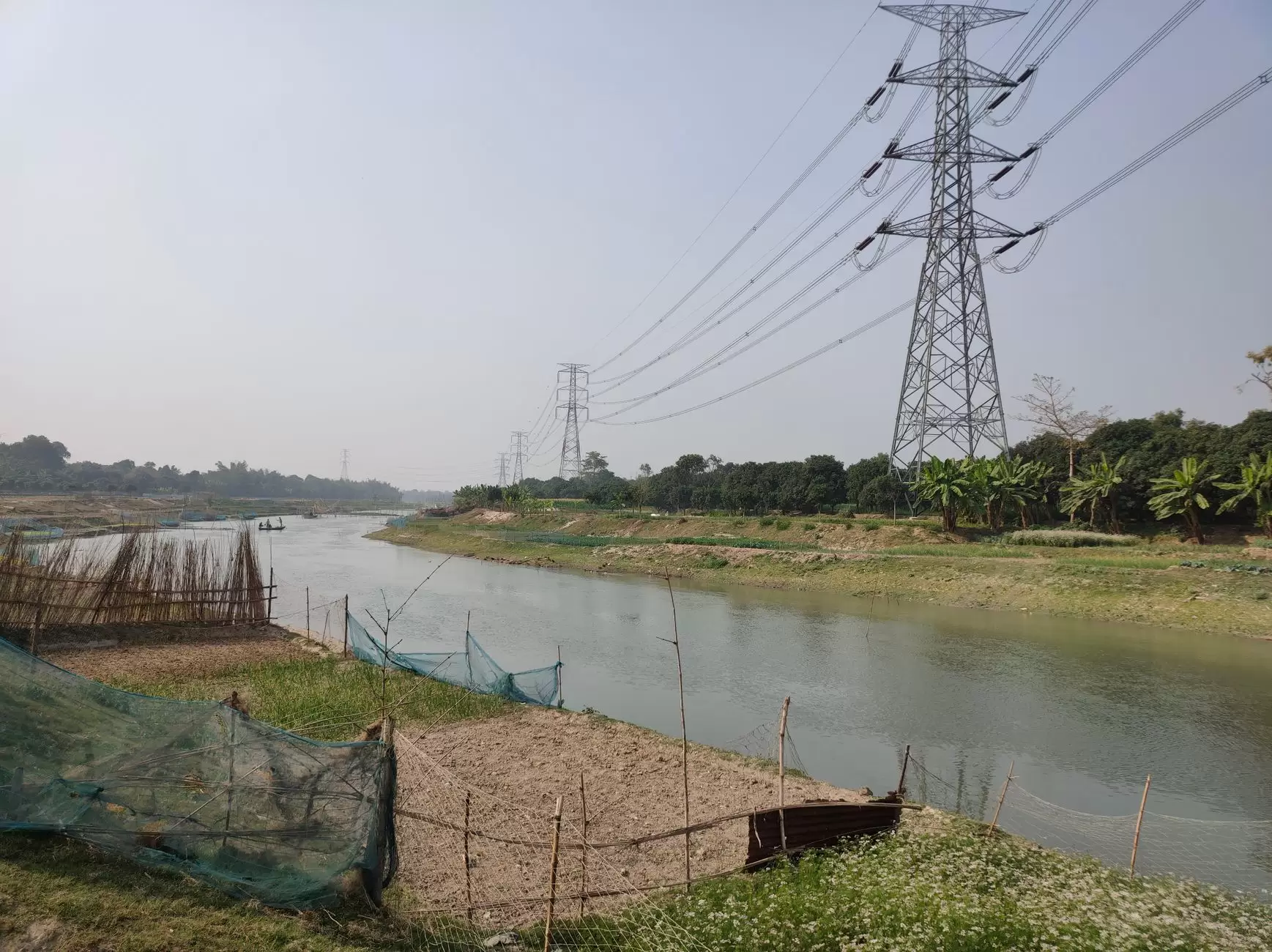
Grid codes set out the technical requirements that parties connecting to a network must meet. The precise scope and which parties are bound depend on the jurisdiction, the network, and the connection arrangement. Requirements typically cover voltage and frequency operating envelopes, fault ride-through performance, protection coordination, data exchange, metering, and communication protocols. Grid codes are not market rules; they set the technical conditions under which a physical interconnection can be operated safely. When two national grids are linked, the applicable requirements at the interface typically reflect both sets of requirements, depending on the interconnection agreement, tariff, and jurisdiction. Where codes conflict, the interconnector may be operated below its rated capacity or under restrictive protocols.
Each national code evolved to fit local generation mix, network topology, and operational practice. Thailand’s system, for example, developed around thermal and hydro capacity and a centralised grid architecture. Laos draws on a large share of hydro generation located far from domestic load centres. Malaysia’s grid code reflects a system with gas-fired generation and industrial load. These differences reflect engineering histories and operating realities. They also mean that when systems are physically joined, the points of friction are embedded in protection relays, telemetry formats, and dispatch procedures.
Where an interconnector links two systems, the requirements at the interface are not simply the sum of both grid codes. Which rules govern depends on the jurisdictions involved, the terms of the interconnection agreement, and the applicable tariff. A generator in Laos exporting to Thailand must still satisfy the technical requirements that the Thai system operator applies to imports, even though its local grid operator applies Laotian rules. That dual compliance does not disappear when the power flows onward to Malaysia or Singapore. Each leg of the physical transfer can bring its own technical requirements and compliance burden, depending on the applicable interconnection agreement and market structure.
The practical effect is that a cross-border transaction can be technically feasible while still requiring extensive manual coordination. Automated schedules may not align. Telemetry formats may not be compatible. Protection settings may need to be temporarily adjusted depending on the direction and magnitude of flow. These constraints reduce the commercial value of an interconnection even when the line itself is fully built. That is the operational reality behind grid code harmonization efforts in ASEAN.
ASEAN’s Bilateral Origins Shape the Technical Problem
The economic and reliability case for connecting Southeast Asia’s electricity systems has been argued in detail elsewhere. The harder question is technical operability after the line is energised. ASEAN’s cross-border links have grown through a series of bilateral agreements, not through a single regional grid code. That sequence reflects practical engineering and political reality rather than institutional failure.
IEA World Energy Outlook 2025 data points to Southeast Asia as one of the regions where electricity demand has grown most rapidly in recent years. That growth creates pressure to use every available cross-border capacity, and in turn makes grid code mismatches more consequential. The same trend is driven by hydro exports from Laos and variable renewables in Vietnam and elsewhere. Importing hydro flexibility requires frequency response and voltage control arrangements that national grid codes define differently.
The Lao PDR–Thailand–Malaysia–Singapore import arrangement illustrates the layered nature of these technical regimes. The route crosses four jurisdictions, each with its own national grid code, and each transfer leg carries its own metering, scheduling, and data requirements. The arrangement functions, but it requires bespoke operating protocols and close cooperation among system operators. That is a workable model for bilateral trade; it is not yet a foundation for a deeply integrated regional market.
Protection Settings and Data Formats Are the Binding Constraints
Headline standards such as nominal frequency and voltage are relatively easy to align. The more difficult differences sit in protection coordination, fault clearing times, and data exchange protocols. A downstream fault in one country can trip a circuit breaker in another if the protection settings are not aligned. Harmonizing protection philosophies — not simply voltage setpoints — is one of the factors that shape how coherently an interconnected network operates. Protection coordination is the part that most often resists alignment, because it is embedded in equipment specified for a network designed to operate alone.
Protection coordination across borders is complicated because each national grid operator owns its protection assets and assumes responsibility for clearing faults within its own boundary. When an interconnector is added, fault current contributions change. A breaker set to clear a local fault within a certain time may now see a larger fault current from the neighbouring system. If the neighbouring grid’s protection operates on a slower clearing time, the faster breaker may trip first, leaving the slower protection to handle a fault it was not designed for. This kind of mismatch may not be visible in ordinary operation; it appears during disturbances, when the cost of miscoordination is highest.
Telemetry and data exchange requirements can be similarly binding. A Thai generator selling into Malaysia must provide data at intervals and in formats determined by the applicable interconnection agreement and the Malaysian system operator’s procedures, which may differ from the formats used under Thai standards. This can delay commercial operation long after physical infrastructure is complete. The same issue arises for scheduling: a market participant may need to submit separate schedules to each system operator, with different deadlines and data fields. These administrative burdens are part of the technical cost of cross-border trade.
The visible differences — voltage and frequency standards — are often the least difficult to reconcile. The invisible ones — protection philosophy, data handling, scheduling practice — are harder, and they are among the main reasons a synchronised regional grid is more demanding to build than a set of bilateral interconnectors. They are not the only reason. Institutional and commercial arrangements weigh just as heavily: where balancing responsibility sits, how costs are recovered, and which system operator holds authority during a contingency. These are the constraints regional integration has to work through before additional transfer capacity can be fully used.
What Harmonization Actually Requires
Harmonization work in practice proceeds parameter by parameter. It does not require rewriting every national grid code. It requires a common definition of what needs to align, and a process for deciding when alignment is sufficient. The first practical step is to identify the specific interface requirements that every cross-border link must meet. The technical components include:
- Frequency response and reserve requirements. Cross-border flows require shared understanding of how each system will respond to a frequency deviation, including which party provides primary and secondary response.
- Fault ride-through and protection settings. Each interconnector needs agreed clearing times, fault current assumptions, and protection coordination studies.
- Voltage and reactive power control. The two systems must agree on reactive power exchange at the interface and on which party controls voltage under different flow conditions.
- Data exchange and telemetry. A common data model or agreed mapping is needed so that scheduling, metering, and real-time operational data can be shared without manual rework.
- Grid restoration and emergency procedures. After a system-wide outage, cross-border restoration requires coordinated procedures that respect each country’s grid code.
Grid codes are also expanding to cover distributed energy resources, a process formalised in standards such as IEEE 1547-2018. As more solar and battery systems connect at distribution level, the technical requirements that once applied mainly to large generators are becoming relevant to smaller participants. For ASEAN cross-border trade, this matters less directly today, but it shapes the direction of national grid code evolution and the points where future harmonization may be needed.
Governance also matters. Harmonization cannot be a one-off technical exercise. Grid codes change regularly as new plants connect, new market rules are introduced, and new equipment types appear. A regional mechanism is needed to track changes and resolve conflicts before they constrain operation. In ASEAN, this has largely been handled through working groups and bilateral consultations rather than a single regional regulator. That approach is slower but more politically acceptable.
The Direction of Travel
The pattern points toward deeper technical harmonization rather than a single ASEAN grid code imposed from above. Bilateral interconnections continue, but their operating protocols are becoming more standardised. The next phase is not about replacing national codes but about defining interface requirements that all cross-border links must meet.
A useful comparison is the way transmission system operators in other regions have created common network codes while leaving national codes intact. That model allows each country to retain its own domestic rules while agreeing on the specific parameters that matter at the border. It is a pragmatic path, and it fits ASEAN’s institutional structure, where sovereignty concerns remain strong.
The main uncertainty is institutional: whether the coordination can keep pace with the growth in cross-border electricity trade. Each new interconnector adds another interface that must be managed. Whether the cost of managing those interfaces grows faster than the benefits of additional transfer capacity depends on project design, market arrangements, and operating conditions. The technical challenge is less about adding lines than making the existing lines operate as part of one coherent system.
References
- IEA — World Energy Outlook 2025 electricity demand data
- IEEE 1547-2018 — IEEE Standard for Interconnection and Interoperability of Distributed Energy Resources with Associated Electric Power Systems Interfaces