The Queue That Slows Everything Down
A utility-scale solar project in the United States can move from land acquisition to commercial operation in roughly two years. The process that grants permission to connect that same project to the grid can take far longer — and that widening gap is now fueling the push for interconnection queue reform. In some regional markets, developers wait several years just to receive a study that tells them how much their connection will cost.
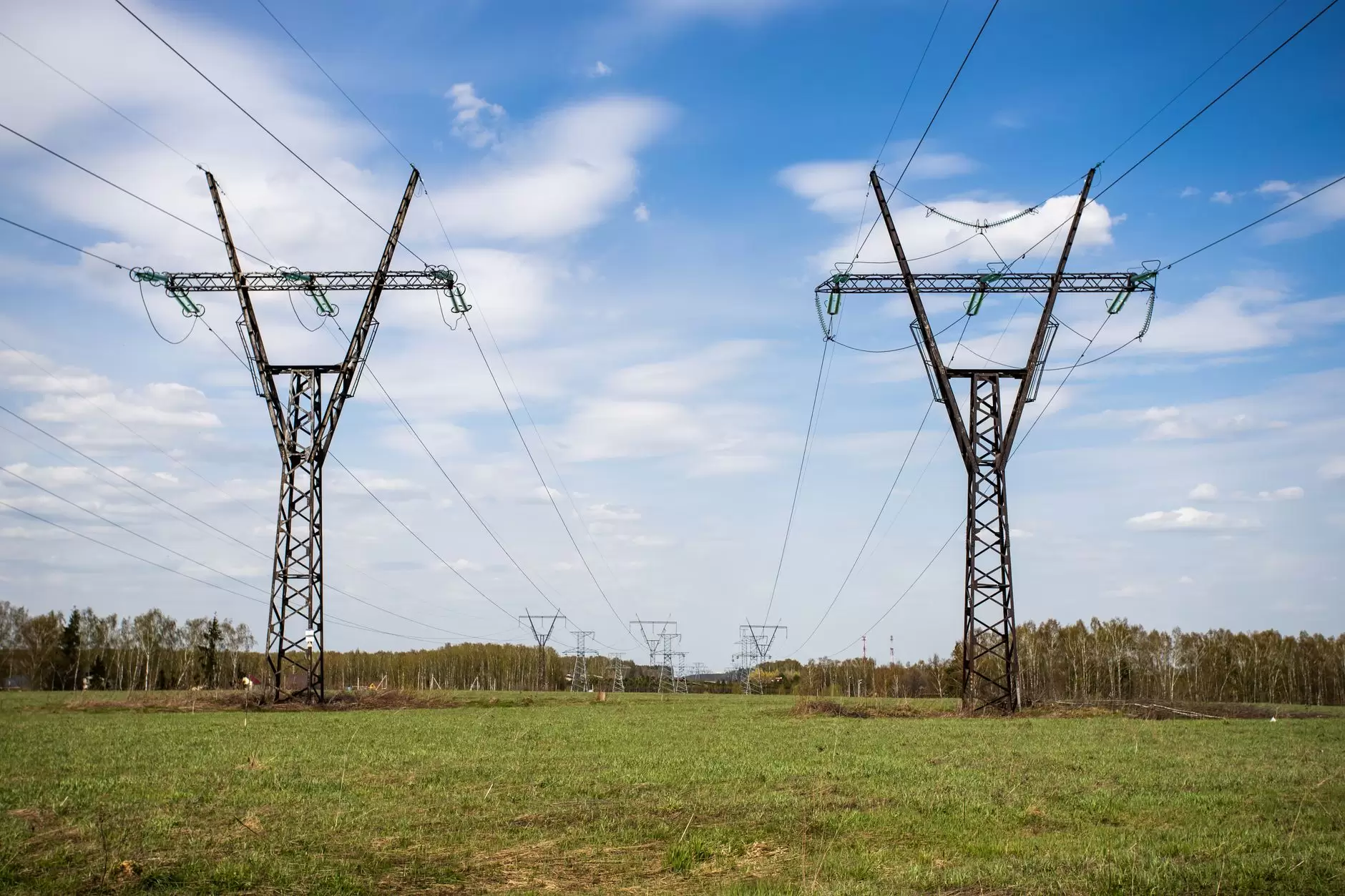
This is the interconnection queue — the administrative pipeline every new generator, battery system, and large load must pass through before linking to the transmission network. What began as a routine engineering review has become one of the most visible bottlenecks in the U.S. electricity industry. As renewable deployment accelerates, the queue shapes where capital flows, which projects get built, and whether emissions targets are met.
The queue matters because it functions as a gate between project development and physical delivery. A developer can hold a signed power purchase agreement, a completed environmental review, and a construction crew on standby. None of that matters until the interconnection agreement is signed. For financiers, the queue represents risk. A project sitting “in the queue” is not yet a project with a guaranteed grid connection. It is a project waiting to learn whether the connection is feasible, what it will cost, and when it can proceed.
Where the Backlog Came From
The queue’s current congestion traces back to how the process was designed decades ago. In the 1990s, the electricity industry expected a small number of large thermal plants to apply for grid connection each year. A coal plant or combined-cycle gas turbine requires years of permitting and financing before construction. The interconnection study could proceed in parallel without creating a bottleneck. Applications could be processed one at a time. The volume was low and the projects were large.
Renewable development inverted that logic. Solar and wind projects are smaller, more numerous, and faster to develop than conventional thermal plants. A developer can identify promising land, secure the rights, and file an interconnection application within months. Construction might take eighteen months once approved. But the interconnection study process — designed for slow-moving thermal plants — still operates at a pace calibrated for a different era. The queue accumulates applications faster than it can process them.
This is not simply a capacity problem. The queue has become a distortion mechanism in its own right. Developers have learned that a queue position holds optional value. Filing an application costs relatively little compared with the value of obtaining a favorable connection point or avoiding a costly network upgrade. That creates an incentive to file more applications than a developer actually needs.
The Speculative Filing Problem
Speculative queueing is one of the least understood drivers of the backlog. A developer with a 200-megawatt pipeline might file applications for 500 megawatts of potential projects. The logic is not fraud. It is risk management. The developer does not know which connection points will trigger which upgrade costs until the studies are completed. By filing for multiple positions, the developer preserves the option to proceed with whichever projects prove most economical and withdraws the rest.
The problem is that all those speculative positions occupy study resources. Grid operators must analyze each application as if it were real. Engineers model the project’s impact on thermal limits, voltage stability, and protection systems. They identify network upgrades that would be required if the project were built. That work is expensive and time-consuming. When a substantial portion of queue positions are withdrawn before construction, the effort spent analyzing them was largely wasted. Reports from Lawrence Berkeley National Laboratory have documented withdrawal rates that in some regions exceed half of all applications.
The speculative filing issue reveals something structural about the queue. The cost of filing is borne entirely by the developer. The cost of studying is borne by the grid operator and then allocated across all queue participants. This creates a common-pool resource problem. Each developer has an incentive to file multiple applications because their marginal cost is low, while the collective cost of studying those applications slows everyone down. No single developer can solve this alone, because withdrawing speculative positions would simply leave space for others to file more.
What Cluster Studies Actually Change
One of the most significant reforms has been the shift from a serial study process to a cluster study process. Under the old approach, each application was studied individually, in the order filed. A project at the front of the queue was studied without considering the projects behind it. This produced a cascading problem. Each project’s study assumed it was connecting to a network without later projects. When those later projects also connected, the network upgrades identified earlier proved insufficient, triggering re-studies and further delays.
Cluster studies flip that logic. Instead of studying one project at a time, the grid operator groups all applications received during a specific window into a single cluster. The study then evaluates the collective impact of all projects in that cluster on the network. This approach is more computationally intensive. But it produces a more realistic picture of what the grid actually needs. It also reduces the number of study iterations, because projects are analyzed together rather than one after another.
The cluster approach has its own complications. A developer who files early in the cluster window may face costs caused by projects filed later. The allocation of upgrade costs among cluster participants has become contentious. Some regional operators have moved to a shared cost model, where all projects in the cluster share the cost of common upgrades. Others maintain project-specific allocation. The difference matters, because a shared cost model can make a marginal project unviable if many nearby projects all trigger upgrades simultaneously.
Readiness Fees and Financial Barriers
Another reform tool has been the introduction of readiness fees. The idea is simple: make it more expensive to file speculative applications, and the queue should fill with more serious projects. Most grid operators now require developers to post a deposit at application, with additional payments required at each stage of the study process. Deposits are typically structured so they are refunded if the project reaches commercial operation, but forfeited if the developer withdraws or misses milestones.
The theory behind readiness fees is that they create a screening mechanism. A developer with a genuine project and a signed power purchase agreement can post the deposit without hesitation. A developer filing a speculative application to hold a queue position must weigh the risk more carefully. The fees are not designed to cover the full cost of the study. They are nowhere close to that. They are designed to change behaviour at the margin.
Readiness fees have shown some effect, though the evidence is mixed. Reports from several regional transmission organisations indicate that application volumes have decreased after fee increases, even as total queue volume remains high. What has become clear is that fees alone are insufficient. A developer with access to capital can simply pay the deposit and continue filing multiple applications. The fee structure works best when combined with other reforms: cluster studies, deposit escalation at each stage, and penalties for withdrawal.
FERC’s Role in Queue Reform
The Federal Energy Regulatory Commission has been the primary federal forum for interconnection queue reform. Two orders — Order 845 in 2018 and Order 2023 in 2023 — have shaped the current landscape. Order 845 addressed several inefficiencies in the pro forma interconnection procedures, including the treatment of storage and surplus interconnection service. But the more consequential order is Order 2023, which represented the first comprehensive overhaul of interconnection procedures in nearly two decades.
Order 2023 required regional transmission organisations and independent system operators to adopt cluster studies, impose stricter readiness requirements, and tighten deadlines for study completion. The order also addressed withdrawal penalties, mandating financial consequences for developers who withdraw after certain milestones. The commission’s stated intent was to reduce the queue backlog through a more efficient process that discourages speculative behaviour. The order did not mandate specific fees. It set minimum standards that all regional operators must meet.
Implementation of Order 2023 has been uneven. Several regional transmission organisations have requested extensions or modifications, citing the administrative burden of overhauling existing processes. Some have argued that the requirements do not fully account for regional differences in grid topology, market structure, or queue composition. The result is a patchwork of approaches, with some regions moving faster than others.
Why Regional Approaches Differ
The interconnection queue problem does not have a uniform solution because the electricity system itself is not uniform. Each regional transmission organisation operates under a different market design, serves a different geographic footprint, and faces a different mix of applications. Some regions, such as the Midcontinent Independent System Operator and Southwest Power Pool, led reform implementation partly because their queues grew so large so quickly. PJM Interconnection has faced particular challenges due to the sheer volume of applications and the complexity of its existing study processes.
The California Independent System Operator has taken a different path, partly because its queue includes a significant number of storage projects and because its transmission planning process is more integrated with state energy policy. ERCOT in Texas has historically maintained a lighter-touch interconnection process, reflecting its energy-only market structure and decentralised planning approach.
These regional differences matter because interconnection is not purely technical. It is a commercial negotiation embedded in a regulatory framework. The same fundamental problem — too many applications, not enough study capacity — manifests differently depending on market rules, state policies, and grid characteristics. A reform that works in one region may not work in another. FERC’s challenge has been to set minimum standards while allowing regional flexibility.
What Reform Achieves — and What It Does Not
The reforms implemented to date have produced measurable improvements in some regions. Cluster studies have reduced the number of study iterations in several markets. Readiness fees have discouraged some speculative filing. FERC’s attention has forced regional operators to prioritise queue reform in ways they might not have otherwise. The backlog in some regions has begun to stabilise, even though it remains far larger than what the industry would consider healthy.
Yet the fundamental problem persists. The queue backs up because the volume of applications — driven by renewable energy targets, storage deployment, and data centre load growth — exceeds the capacity of the study process. No administrative reform can change that arithmetic. The transmission system itself is often the limiting factor. Many applications require network upgrades that are expensive, time-consuming, and difficult to coordinate across multiple parties. The queue is as much a physical infrastructure constraint as a procedural one.
The mismatch between generation development timelines and grid planning timelines remains the underlying tension. Solar projects can be developed in two years. Transmission upgrades take a decade or more. The queue sits at the intersection of these two clocks. Reform can make the queue itself more efficient. It cannot eliminate the fundamental asynchrony between generation development and transmission expansion.
The Consumer Impact
The queue backlog imposes costs that ultimately flow to electricity consumers. When a renewable project faces delays in the interconnection process, the power purchase agreement that would have delivered low-cost electricity is delayed or cancelled. The developer may move the project to a different location or abandon it entirely. The result is that the supply of low-marginal-cost generation grows more slowly than it otherwise would, and consumers face higher prices than they might have under a more efficient process.
Grid operators bear costs as well. Studying thousands of interconnection applications requires significant engineering labour. Analysts who could be working on transmission planning or grid modernisation are instead devoted to studying projects that will never be built. This opportunity cost is rarely discussed in public forums, but it is substantial. Every speculative application that enters the queue consumes resources that could have been devoted to real projects.
What Comes Next
The direction of interconnection queue reform points toward tighter financial requirements, more standardised study processes, and greater coordination between interconnection and transmission planning. Several regional transmission operators are already exploring whether interconnection studies should be more integrated with broader transmission planning, so that the cumulative impact of multiple projects is assessed holistically. Others are considering whether the queue should be capped, with new applications admitted only when existing ones are resolved.
None of these approaches is straightforward. A tighter queue risks excluding smaller developers who lack the capital to post substantial readiness fees. A more integrated planning process raises complex questions about who pays for transmission infrastructure that benefits multiple parties. A queue cap could create new scarcity that favours incumbents. The trade-offs are real, and each reform decision creates pressure elsewhere in the system.
The interconnection queue cannot be reformed in isolation. It sits at the junction of generation development, transmission planning, market design, and regulatory oversight. The queue is not an administrative hurdle to be cleared. It is a signal. The backlog reveals where transmission capacity and planning processes are struggling to keep pace with the speed of generation development. Until that underlying tension is addressed, queue reform will remain a series of adjustments rather than a comprehensive solution.
References
- Federal Energy Regulatory Commission — Order 2023 and Order 845, establishing interconnection queue reform requirements and pro forma procedure updates
- Lawrence Berkeley National Laboratory — interconnection queue data and analysis documenting withdrawal rates and speculative filing patterns across U.S. regional markets
- Midcontinent Independent System Operator — cluster study methodology documentation and interconnection queue process reforms
- PJM Interconnection — interconnection reform proposals and queue statistics illustrating backlog scale
- California Independent System Operator — interconnection process documentation and storage integration practices