Japan’s Irrigation Ponds Supplied the First Floating Testbeds
Japan’s earliest floating solar technology deployment did not take place on scenic reservoirs or coastal waters. Instead, the first arrays appeared on irrigation ponds dug decades earlier to support rice farming. According to the World Bank’s floating solar market report, the initial installations in the mid-2000s were small demonstration systems on agricultural ponds in Aichi Prefecture, where flat land was scarce and the water surface was already underutilised.
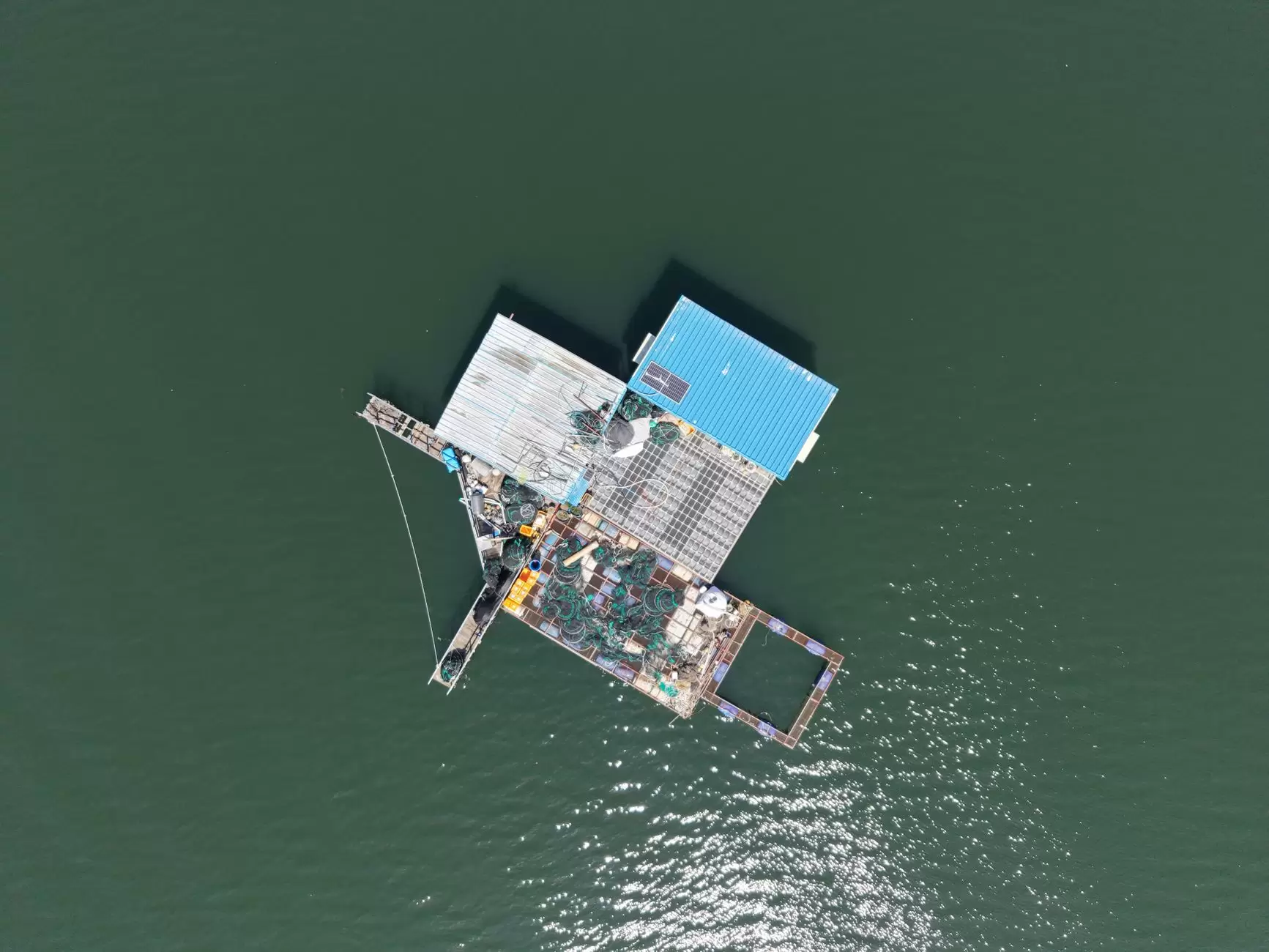
The logic was practical rather than technological. Japan has mountainous terrain and dense settlement, which limits available flat land for ground-mounted solar. Irrigation ponds, many built generations ago, offered a dual use: continue storing water while hosting solar modules above the surface. The ponds also required no new land acquisition, no clearing of vegetation, and no competition with agriculture.
This origin matters because it explains what floating solar has always been: a land-use response. It began as a way to add generation capacity to water surfaces that already existed for other reasons.
Fukushima Accelerated What Land Scarcity Started
After the 2011 Fukushima accident, Japan shut down most of its nuclear fleet and introduced feed-in tariffs for renewable electricity. Floating solar benefited from those elevated tariffs, particularly on inland water bodies. The same World Bank analysis notes that Japan’s generous tariff levels made projects on ponds and small reservoirs financially viable despite the added cost of floats and moorings. This policy support turned a niche demonstration into a recognised deployment category.
China took a different route. In Huainan, Anhui province, developers placed floating arrays on a lake formed by coal mining subsidence. The World Bank report describes this as one of several Chinese projects that combine solar generation with the re-use of damaged land, avoiding the need to occupy farmland or greenfield sites. Southeast Asia followed with projects on hydroelectric reservoirs, where existing grid connections and water infrastructure reduced some siting barriers.
The pattern across these early markets was consistent. Floating solar grew where land pressure intersected with some existing water body, whether an irrigation pond, a flooded mine pit, or a hydro reservoir. The water surface became the site because the land was already spoken for.
Why Water Becomes an Alternative Site
Floating solar addresses a specific problem: competition for land. In densely populated or agriculturally intensive regions, ground-mounted solar can conflict with food production, conservation and urban expansion. Placing modules on water avoids that competition entirely. The water surface is already part of the energy or irrigation system, so developers do not need to convert new land.
The cooling effect of water is often cited as a performance advantage. According to the World Bank and IRENA analyses, the gain in module efficiency from lower operating temperatures is modest, typically in the low single digits under optimal conditions. That gain helps project economics but does not by itself justify floating solar. The primary driver remains land availability, not thermal performance.
Floating systems can also reduce evaporation from reservoirs in arid regions, although the evidence depends heavily on reservoir size, climate and array coverage. In some agricultural settings, reducing evaporation can be a secondary benefit that strengthens local support for a project. The benefit is real but highly site-specific.
Structural Constraints Shape Project Viability
Building on water introduces engineering challenges that ground-mounted systems avoid. Floating platforms must withstand wave loading, wind, water level fluctuation and corrosion. The design of floats, anchoring systems and mooring lines must account for seasonal changes in reservoir depth. According to IRENA, the choice between anchored and bank-fixed systems depends on the water body’s bathymetry and the range of water level variation.
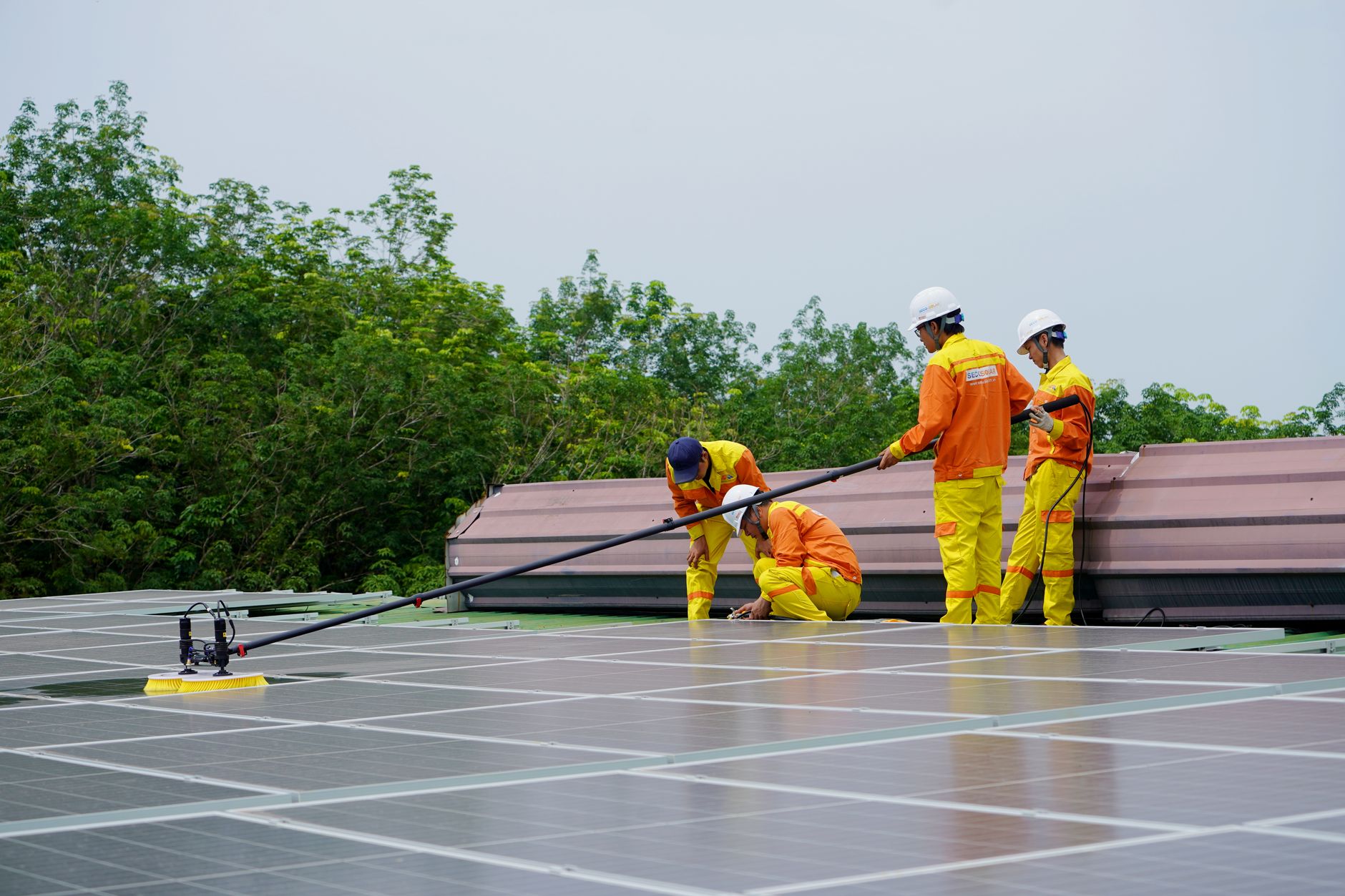
Maintenance access is another constraint. Unlike ground-mounted systems, where technicians can walk directly to equipment, floating arrays require boats or permanent walkways to reach inverters, combiner boxes and cables. Electrical safety on water demands careful insulation, grounding and fault protection, and crews must follow additional protocols for working over water. Biofouling, algae growth and bird droppings can reduce output and increase cleaning costs compared with land-based arrays, and these issues tend to require specialised cleaning equipment designed for the floating environment.
These factors mean that floating solar is not automatically cheaper than ground-mounted solar. Capital costs can be higher because of the floats, mooring and specialised installation. However, in land-constrained locations, those additional costs can be lower than the cost of acquiring and preparing suitable land.
A further limitation is grid access. Many reservoirs and irrigation ponds are located away from substations or at the end of distribution feeders. Connecting a floating array may require new transmission or distribution upgrades, which can dominate project economics. In some Southeast Asian projects on hydro reservoirs, the existing power evacuation infrastructure from the hydro plant reduces this barrier, but in other locations the grid constraint is more serious than the water engineering.
Regional Divergence Reflects Local Incentives
Japan and China lead in floating solar capacity because their land constraints intersect with strong policy support or industrial scale. Japan’s feed-in tariff and high population density made small and medium pond projects attractive. China’s manufacturing scale and the availability of flooded mining subsidence areas created a pipeline of larger projects. Southeast Asian markets such as Thailand, Vietnam and Indonesia have adopted floating solar primarily on hydro reservoirs and industrial water bodies, often driven by renewable targets and the desire to avoid land conflicts.
In Europe and North America, floating solar has grown more slowly. Land is often more available, and environmental regulations covering water bodies can be stricter. Reservoirs used for drinking water or recreation face additional permitting requirements. Some European projects have moved ahead on gravel pit lakes and industrial basins, but deployment remains limited compared with Asia.
The divergence reveals that floating solar is not simply a technology choice. It is a land-use and regulatory decision. Where land is cheap or abundant, the additional complexity of floating platforms is harder to justify. Where land is scarce or contested, water surfaces become a solution that can be permitted faster and integrated with existing infrastructure.
What Floating Solar Reveals About Grid Planning
The rise of floating solar highlights a shift in how power system planners think about solar siting. Historically, solar deployment was treated as a matter of finding cheap, sunny land. Floating solar shows that electricity generation assets can be layered onto infrastructure that already exists for other purposes. This changes the planning question from “Where is the best land?” to “Which existing surfaces and rights-of-way can host generation without creating new conflicts?”
It also exposes a persistent bottleneck: transmission. A floating array on a remote reservoir does not solve the problem of delivering power to load centres. The most successful floating solar projects tend to be those located near existing grid infrastructure, such as hydro plants or industrial water bodies. Where that infrastructure is absent, the project becomes a transmission problem as much as a solar problem.
That is the lesson for floating solar: the limiting factor is often not the generation technology itself but the system around it—the availability of transmission capacity, the flexibility of market rules, and the physical condition of the grid that must integrate the new power. A floating solar project can be technically mature and cost-competitive, yet still struggle to deliver value if the surrounding infrastructure and regulatory framework are not designed for it.
What to watch next? Standardisation of float and mooring designs is likely to reduce costs and improve reliability. Environmental monitoring around water quality and aquatic ecosystems is likely to become a key part of project approval. The most significant growth is likely to occur in countries that can pair floating solar with existing hydro, irrigation or industrial water assets, rather than treating it as a standalone generation technology.
References
- World Bank, ESMAP and SERIS — “Where Sun Meets Water: Floating Solar Market Report” (2019). Provided background on early Japanese irrigation-pond projects, the Fukushima feed-in tariff, the Chinese flooded coal mine example, and the modest cooling and evaporation benefits of floating solar.
- IRENA — “Floating Solar Photovoltaic: An Emerging Technology.” Used for technical details on float types, mooring designs, water level variation, and structural constraints.
- IEA — World Energy Outlook 2025. Used for context on land competition and the role of solar in electricity system planning.