A decarbonization strategy anchored in import dependence
Japan has spent more than a decade managing an energy position that few large economies share. It imports almost all of its fossil fuel supply, and after the 2011 accident at Fukushima Daiichi its nuclear fleet was largely idled. The result was a sharp increase in fossil-fuel import requirements and a power system far more exposed to global fuel prices and supply disruption than it had been before 2011. That exposure shapes every subsequent choice about emissions reduction, fuel procurement and electricity market design.
The Green Transformation strategy, known as GX, is the policy package assembled to respond to that position. It links emissions reduction to energy security and industrial competitiveness rather than treating them as separate agendas. The central premise is that Japan’s decarbonization pathway has to work within the constraints of an import-dependent power system and an export-facing manufacturing base. That is why the strategy pursues nuclear restarts, renewables, imported fuels, carbon pricing and sectoral support at the same time, within the wider Asia-Pacific energy transition.
GX was created because earlier climate plans left the financing and sequencing questions unresolved. Japan needed a mechanism to direct public capital into emissions-reducing projects that private lenders considered too expensive or too long dated. It also needed a carbon pricing architecture that could make those investments less exceptional over time. The result is a framework built on transition bonds, emissions trading and a fossil-fuel surcharge, with the three instruments designed to reinforce one another.
Energy security shapes GX in practical ways. It influences which technologies receive priority, how quickly nuclear restarts are pursued, and why hydrogen and ammonia imports are treated as priority inputs rather than niche additions. It also shapes the carbon pricing design, which is deliberately sequenced to avoid imposing abrupt costs on industries already paying high imported fuel bills. The remainder of this article explains those instruments and their consequences.
What the policy actually contains
The emissions trading system at the centre of GX now has a defined timetable. According to METI, the GX-ETS enters full-scale mandatory operation in FY2026 after a voluntary phase that ran from FY2023 to FY2025. It covers roughly 300 to 400 large emitters, representing about 60 percent of national emissions, at a threshold of at least 100,000 tonnes of CO2 per year. The initial design uses free allocation, with benchmarks intended to decline progressively over time.
A separate instrument addresses the fossil-fuel side. The GX-Surcharge is legislated for FY2028, levied on fossil-fuel importers and domestic extractors, with the revenue used to redeem GX Economy Transition Bonds. This is the mechanism that connects the bond-financed spending to the carbon-pricing framework. It does not make the carbon price the sole source of repayment from day one, but it creates a dedicated revenue stream linked to fossil fuel use.
The bonds themselves sit within a broader public-private investment framework. The Japan Climate Transition Bond Framework plans JPY 20 trillion of GX Economy Transition Bonds as part of a wider JPY 150 trillion public-private investment programme. The sequencing logic is that transition bonds provide upfront public support now, while the carbon-pricing framework is intended to become more consequential over time. The risk is that if the carbon signal remains too weak, the public support has little to show for it; if it strengthens too abruptly, energy-intensive industries face a cost shock. That tension runs through the rest of the strategy.
The 2040 framework and its electricity mix
The Seventh Strategic Energy Plan and the GX2040 Vision were both approved by Cabinet on 18 February 2025. They set a 73 percent greenhouse-gas reduction by FY2040 compared with FY2013 and a 2040 power mix of roughly 40–50 percent renewables, 20 percent nuclear and 30–40 percent thermal. The GX2040 Vision frames the policy around three objectives pursued together: stable energy supply, economic growth and decarbonization. That framing explains why the electricity mix is not reduced to a single technology.
Nuclear restarts provide low-carbon dispatchable generation, but each restart remains subject to safety review, regulatory approval and host-community consent. The pace is therefore not set by the central government alone. Renewables are called on to do much of the heavy lifting, but Japan’s mountainous terrain and limited flat land constrain the largest solar and wind projects. Offshore wind has drawn attention, although grid connection, port infrastructure and supply chain bottlenecks have slowed progress relative to early ambitions.
Those constraints mean the delivered cost of renewables in Japan is often higher than simple levelised cost figures for solar and wind elsewhere in the region. This is not a uniquely Japanese problem, but it is more acute because suitable sites are scarce and because the grid was built around concentrated demand centres along the Pacific coast. The same market-versus-reliability tension is visible in China’s provincial spot pilots, though Japan’s challenge is weighted toward fuel import dependence rather than coal capacity.
The contrast with India’s electricity sector is also telling. India faces demand growth that is outpacing network investment, while Japan’s challenge is more about fuel import dependence, constrained sites and the slow pace of nuclear restarts. Both countries illustrate how different grid and fuel legacies shape what a decarbonization strategy can realistically do.
Hydrogen, ammonia and the industrial-policy question
Hydrogen and ammonia are prominent in GX, but they are one pillar of a broader sectoral investment strategy. The GX framework also prioritises next-generation renewables, nuclear power, carbon capture and storage, and other sectors. Within that wider set, hydrogen and ammonia are aimed mainly at sectors where direct electrification is difficult, such as steelmaking, chemicals and parts of the power sector.
Ammonia co-firing in coal plants is considered a transitional pathway for existing thermal assets. The operational reality is more demanding than the concept suggests. Co-firing requires large volumes of low-carbon ammonia, does not eliminate carbon emissions from the plant, and changes combustion characteristics in ways that can affect efficiency. It is therefore better understood as a way to preserve the option value of existing thermal capacity while longer-term alternatives develop.
The early projects depend heavily on government support because low-carbon hydrogen and ammonia are not yet produced at the scale or cost required to replace their fossil equivalents. Japan is promoting both domestic production and imports, which means building port terminals, storage facilities and shipping capacity before a liquid market exists. That is where GX most clearly functions as industrial policy rather than a conventional carbon market.
The same support measures also create a tension: subsidies, transitional support and sector-specific measures protect incumbent industries, but they can slow the price signal that carbon pricing is supposed to send. That trade-off is built into the design, which is why support is calibrated sector by sector. It sits at the centre of the wider Asia-Pacific energy transition.
Why the wider Asia-Pacific is watching
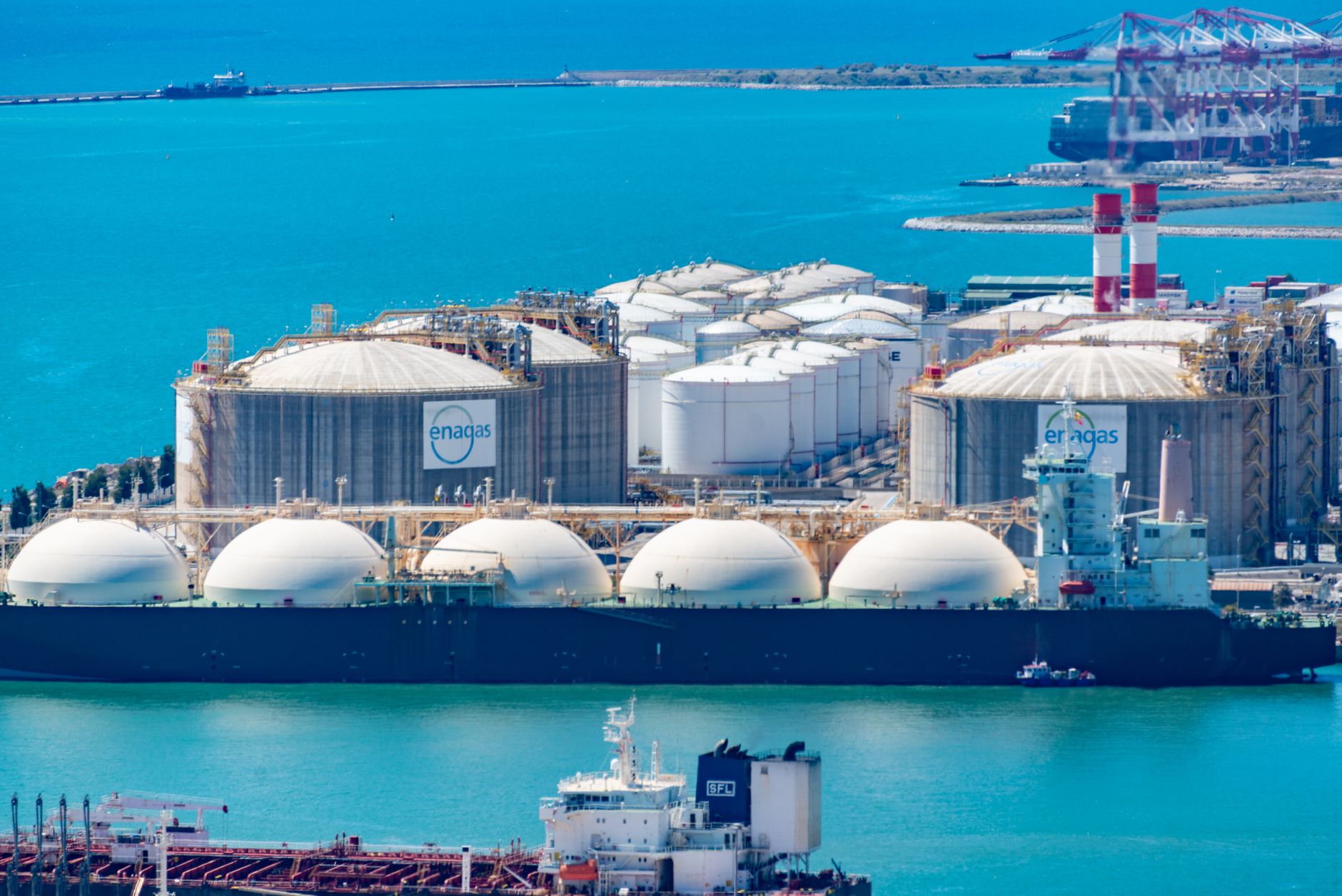
Japan’s choices influence fuel markets and technology supply chains across Asia. Japan is one of the world’s largest importers of liquefied natural gas. If GX policies reduce gas demand or shift procurement toward lower-carbon fuels, long-term contracts and the economics of LNG projects elsewhere in the region are affected. If gas retains a large role, that supports continued investment in gas infrastructure in Southeast Asia and Australia.
The strategy also has an explicit Asia-facing dimension. Through the Asia Zero Emission Community, known as AZEC, and related initiatives, Japan has sought to position GX technologies and policy approaches as templates for partners across Southeast Asia. This is not only about selling equipment; it is an attempt to align regional fuel and technology choices with Japan’s own supply-chain and decarbonization requirements.
Carbon pricing is the other transmission channel. Several Asian economies are watching Japan’s carbon levy and emissions trading arrangements because they face similar constraints: high fossil-fuel imports, existing heavy industry and exposure to international trade. The same institutional logic may influence how governments elsewhere in the Asia-Pacific energy transition design their own mechanisms. That regional read-across is why GX matters beyond Japan’s own emissions inventory.
What to watch as the policy moves from design to implementation
The broad direction of GX is clear: align energy security, industrial competitiveness and emissions reduction within one framework. The constraints are equally visible. Nuclear restarts have moved more slowly than earlier plans anticipated. Renewable deployment is limited by land, grid capacity and local acceptance. Hydrogen and ammonia supply chains require infrastructure that does not yet exist at scale. Each of these is a commercial and regulatory problem as much as a technical one.
The main test is whether a gradually rising carbon signal becomes strong enough to influence investment decisions while upfront support continues. That is a sequencing challenge, not a target-setting challenge. If the carbon price strengthens too slowly, transition bonds risk supporting projects that would not have attracted private capital under stronger price expectations. If it strengthens too abruptly, energy-intensive industries face a cost shock that policymakers find difficult to absorb. The outcome is being shaped by the same institutions that have long mediated Japan’s energy choices: utilities, trading houses, industrial groups and the agencies that regulate them.
References
- METI — Emissions Trading System (GX-ETS): FY2026 full-scale operation, covered entities and threshold details.
- METI / Agency for Natural Resources and Energy — Seventh Strategic Energy Plan (Cabinet decision, 18 February 2025): 2040 outlook and power mix targets.
- METI — GX2040 Vision (Cabinet decision, 18 February 2025): three-part framing of stable supply, economic growth and decarbonization.
- METI — Japan Climate Transition Bond Framework: JPY 20 trillion GX Economy Transition Bonds within a JPY 150 trillion public-private investment framework.
- IEA — World Energy Outlook 2025: energy security and fuel-import context for Japan’s electricity mix.