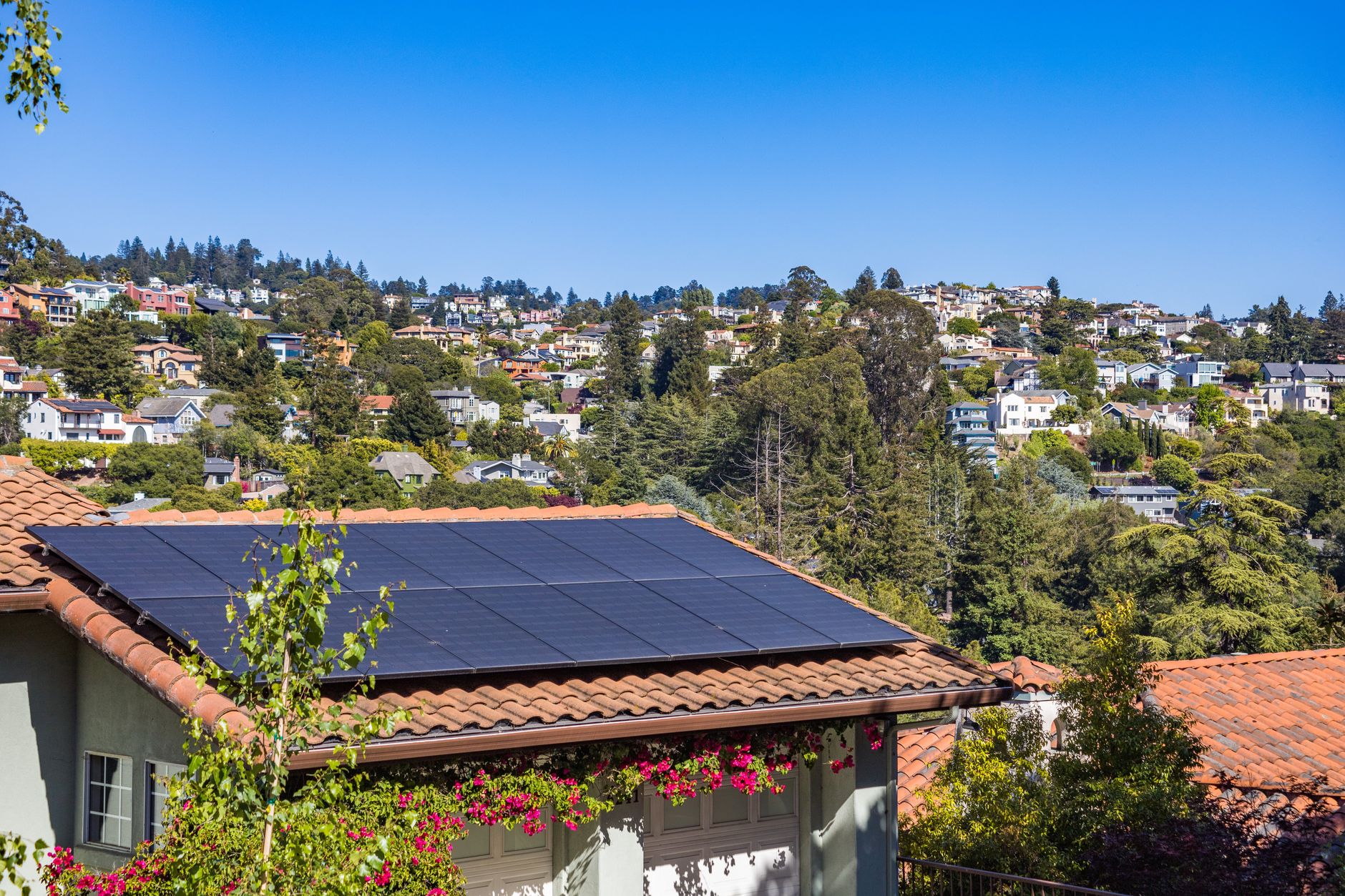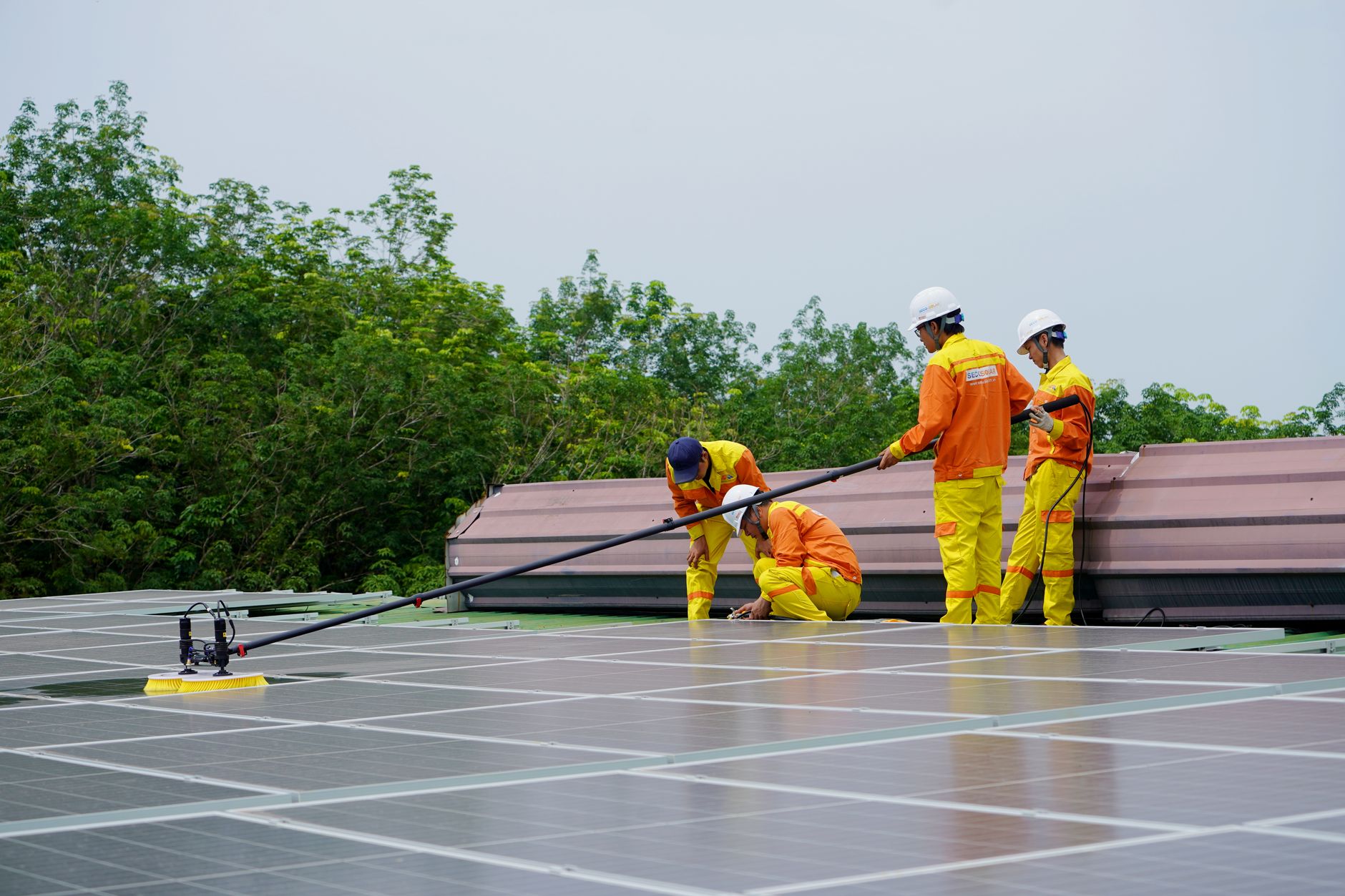
The grid operator balancing a system with millions of rooftop solar panels and behind-the-meter batteries faces a coordination problem. It is the mismatch a virtual power plant is designed to address — one of scale rather than technology. Individually, these resources are too small to matter to a wholesale market built around power stations that can be called and dispatched directly. A single residential battery might hold a few kilowatt-hours of usable capacity. A commercial EV charger might draw or return a few tens of kilowatts. None of that resembles the behaviour of a conventional generator, and most control-room systems were built around a small number of large, directly dispatched assets rather than ten thousand separate household devices.
Virtual power plants are the industry’s answer to that mismatch. A virtual power plant is not a physical station. It is an aggregation of distributed energy resources — batteries, flexible loads, rooftop solar, electric vehicle chargers — coordinated through software so that the fleet can behave, at least from the grid’s perspective, like one larger resource. The value sits in the control layer rather than the hardware.
Why Small Resources Stay Outside Wholesale Markets
Many distributed assets are already connected to the grid but remain commercially invisible. Wholesale electricity markets generally operate with minimum bid sizes, direct telemetry requirements and settlement procedures designed for a limited number of large plants. A portfolio of five thousand home batteries spread across a utility service territory does not fit that model without an intermediary. The aggregator performs that intermediation, combining many small devices into a single schedule and a single settlement position.
This is not only a technical integration task. It is also a contracting problem. Many system operators are not equipped to negotiate thousands of individual supply contracts, and many customers have little interest in handing direct control of their assets to a grid operator. An aggregator stands between the two, holding commercial relationships with asset owners on one side and with the market or utility on the other, while retaining the right to dispatch assets within agreed limits.
What the Aggregation Layer Actually Does
A virtual power plant needs a continuous picture of what each asset can do at any moment. That includes state of charge for batteries, availability of flexible loads, local voltage and thermal constraints, and whether each device is actually online. The platform then receives grid signals, processes them and issues instructions across the fleet. The time available to receive an instruction and adjust assets depends on the service being provided and the rules of the market or programme, not on a single universal response requirement.
For energy arbitrage or day-ahead scheduling, the platform may have hours to reposition assets. For some fast frequency response products, the window can be much shorter, but even there the specific interval is defined by the applicable market rules rather than by the technology itself. The aggregator’s control system must therefore manage both automated, near-real-time dispatch and longer-horizon schedules. This dual nature distinguishes a virtual power plant from a simple demand-response programme that only curtails load at certain hours.
One operational reality often missing from high-level descriptions is that the platform rarely has perfect visibility into every local constraint. A battery that appears available in a central dashboard may be unavailable because a customer has set a minimum state of charge, or because the home’s internet connection is down. Aggregators address this by maintaining a portfolio larger than the amount of flexibility they commit, and by designing control algorithms that can shift dispatch across many units rather than depend on any single device.
Where Virtual Power Plants Earn Revenue
The services a virtual power plant can sell vary by market design and jurisdiction. In some regions, aggregators can bid fleets into wholesale capacity and ancillary services markets. In others, their role is limited to utility-run programmes or local flexibility tasks. Rather than one common revenue model, a virtual power plant typically layers several value streams, and the mix depends on what each market allows.
Capacity and reserve products require a resource to stand ready for a defined period or to respond within the applicable time frame if called, as set by the product’s rules. A portfolio of residential batteries can meet those requirements in principle, but the aggregator must be able to demonstrate, through telemetry and performance testing, that the fleet can perform when dispatched. That means thousands of small devices may be subject to some of the same qualification expectations a single power plant would face.
For commercial and industrial assets, demand charge reduction can be at least as valuable as any grid-services payment. A virtual power plant can shift or shed load during a customer’s peak intervals, reducing the portion of the bill determined by maximum demand. That is why industrial demand charges explained by peak kilowatts matter so much to the aggregator’s customer proposition. The same control actions that provide grid flexibility can also deliver direct bill savings to the asset owner.
The Operational Constraints That Shape Participation
Behind the market revenue sits a set of operational constraints that determine whether a virtual power plant can actually deliver. Device-level limitations remain a central issue. Residential batteries degrade with cycling. Flexible loads can only shift within the comfort or process limits the customer accepts. Communication networks introduce latency and dropout. A virtual power plant is therefore not simply a smaller version of a grid-scale battery; it is a statistical portfolio whose availability is influenced by customer behaviour and consumer-grade infrastructure.
This changes how system operators and planners should evaluate VPP contributions. A single 10 MW battery has a known state of charge, a direct control path and a single owner. A virtual power plant of equivalent aggregate capacity may exhibit wider performance uncertainty, particularly during the rare periods when the grid actually needs the flexibility. Aggregators respond by building headroom into their commitments and by limiting how much of their enrolled capacity they bid as firm.
Regulatory treatment also differs. Some market rules require individual resources within a VPP to meet the same interconnection and metering standards as larger projects. This can raise customer acquisition costs and slow deployment. Others allow simplified enrolment for behind-the-meter assets, accepting that a fraction of the fleet may be unavailable at any given time. The rules the market chooses shape which kinds of resources are economic to aggregate and which are not.
What Limits Virtual Power Plant Growth Today
Customer acquisition is one of the largest practical barriers. A virtual power plant only becomes useful with enough enrolled capacity, and each asset brings its own installation, permission and ongoing communication burden. Residential customers may hesitate to share control of a battery they bought for backup power, while commercial customers may worry about interference with core operations. Aggregators therefore spend heavily on explaining how participation works and on setting conservative control limits that protect the customer’s primary use.
Regulatory fragmentation adds further friction. Some jurisdictions have moved to open wholesale markets to aggregated distributed energy resources, while others still restrict aggregation to specific demand-response or network-support programmes. Standards for device interoperability also vary. Although technical standards such as IEEE 1547-2018 define baseline behaviour for distributed resources, a virtual power plant must still integrate equipment from many manufacturers using different communications protocols and software interfaces.
The economic case also depends heavily on market price signals. When wholesale energy prices are low and capacity payments are thin, the revenue available to an aggregator may not cover customer acquisition and ongoing platform costs. In markets with strong peak price signals or explicit flexibility procurement, the same portfolio can be commercially attractive. The difference is not the technology; it is the market design that decides whether aggregation can recover its costs.
Where Virtual Power Plants Fit in System Planning
Virtual power plants occupy an awkward space in traditional system planning. They are not a single generator with a fixed availability profile, nor are they pure demand response that can only reduce load. They can shift consumption, inject stored energy, provide reserves and support local voltage management, depending on the assets in the portfolio. System planners are still working through how to treat these mixed capabilities in resource adequacy and grid planning frameworks.
One approach is to model a virtual power plant as a resource with uncertain availability and partial dispatchability. That is different from a thermal unit, but it is also more useful than treating distributed assets as nothing more than a demand reduction. The aggregator’s obligation to prove performance through telemetry becomes central to that planning treatment. Without that proof, a cleverly marketed portfolio cannot be relied upon during a capacity shortfall.
For asset owners, the relevant question is whether the payments justify the loss of some operational freedom. A battery owner may accept a restriction on charging during evening peaks if the reward is sufficient. A factory may allow a brief load reduction if it does not endanger production. The virtual power plant’s job is to convert those small, conditional concessions into a grid resource that is large enough and reliable enough for the system to use.
References
- IEEE 1547-2018 — interconnection and interoperability requirements for distributed energy resources, referenced for the device-level behaviours a virtual power plant must manage.
- NERC — Long-Term Reliability Assessment: context on how aggregated distributed resources are assessed for reliability contributions and the uncertainty involved in relying on them during peak conditions.
- IEA — World Energy Outlook 2025: context on distributed resource growth and the increasing need for flexible system resources.