When the Wind Blows but the Power Cannot Move
When a wind farm in the North Sea produces more electricity than nearby coastal towns can absorb, the surplus has no automatic path to industrial centres hundreds of kilometres inland. The cables that could carry it either do not exist, were routed decades ago for different purposes, or are already operating at their thermal limits. How the transmission grid works determines where the constraint actually sits — less in the turbines or storage systems than in the infrastructure that has to move power from where it is generated to where it is consumed.
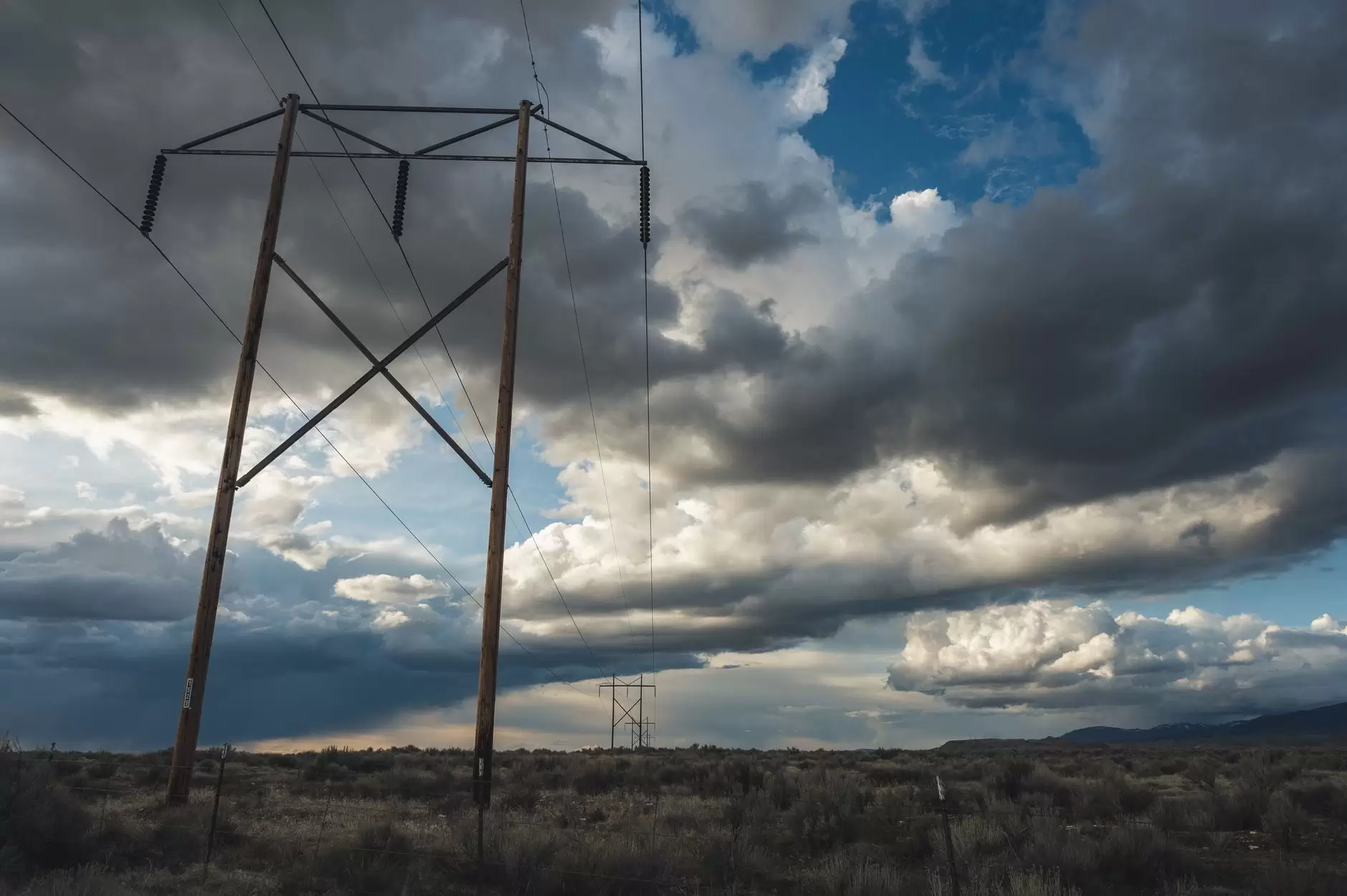
The grid that exists today was built over more than a century to connect large centralised power stations to nearby population centres, under assumptions that no longer hold. Those generators could be sited close to load, and transmission lines served primarily as connectors within relatively localised systems. Wind and solar invert this logic because renewable resources are located where the resource is strongest, often far from demand centres. Their variable output also places new stresses on infrastructure built for different assumptions. Load growth from electrification and data centres adds a further layer of pressure in many markets.
Understanding why the network behaves as it does requires moving from the physics of an alternating current line to the institutions that govern how new lines get approved. This article explains the engineering, economic, and institutional reasons behind the often-noted slowness of transmission development, and maps the territory a professional needs to orient themselves in the high-voltage grid.
How Power Moves: The Physical Layer
Transmission infrastructure is the high-voltage network that moves large quantities of electricity from generation sites to the transformers that step voltage down for distribution to end users. In many systems, distribution networks carry power at tens of kilovolts, while transmission networks operate at higher voltages that vary by jurisdiction and utility practice. Common transmission voltages include 110 kV, 220 kV, 400 kV, and 500 kV; some systems in China and elsewhere use ultra-high-voltage lines above 1,000 kV to move power over very long distances from interior hydro and coal plants to coastal load centres.
The physical system consists of more than wires. Conductors, typically aluminium with a steel core for strength, are suspended from towers using insulators that prevent electrical contact with the structure. Substations along the route house transformers that change voltage levels, circuit breakers that isolate faults, and control equipment that monitors system conditions. The network is interconnected through a web of line segments, creating multiple possible paths for power to flow between any two points. This interconnectedness provides reliability but also introduces complexity, because power does not follow a single predetermined corridor.
On an alternating current network, power does not divide among paths in proportion to their impedance. Flows are instead governed by the relationship between voltages and impedances across the whole network: on a high-voltage line, real power flow is driven mainly by the difference in voltage phase angle between its ends, while reactive power responds to differences in voltage magnitude. For any given angle difference, how much power a line carries depends on its impedance — the combination of resistance, inductance, and capacitance — which varies with length, construction, and voltage level.
Because every path is coupled to every other, power injected at one point can loop through neighbouring systems, producing unscheduled flows. A generator in northern Germany may find some of its output circulating through Poland or the Czech Republic before reaching its intended consumers, adding load to infrastructure that receives no direct benefit.
The capacity of a transmission line is also not a single fixed number. It varies with ambient temperature, wind speed, and solar radiation because the practical limit for most overhead lines is thermal. Current flowing through a conductor generates heat through resistance. When the conductor gets too hot, the aluminium expands and the line sags, bringing it closer to the ground or vegetation and creating a flashover risk. On a hot summer day, when demand peaks, the line’s capacity is already reduced before any load is applied. This is why grid-enhancing technologies that measure and exploit real-time thermal headroom have gained attention.
Why Alternating Current Became the Default
The fundamental architecture of today’s transmission system was settled in a commercial dispute in the late 1880s. Edison’s direct current systems operated at low voltage, requiring power plants within about a kilometre of customers. Alternating current allowed voltage to be stepped up through transformers for transmission and stepped down again for consumption. This voltage transformation capability was decisive. At higher voltage, the same amount of power can be transmitted with lower current, and losses are proportional to the square of the current. Halving the current reduces losses by a factor of four, which is why transmission economics have always favoured higher voltages.
The decision turned on the economics of voltage transformation rather than any difference in the quality of the electricity being carried. Both forms carry power equally well, but AC transformers were simple, reliable, and inexpensive compared to the rotating machinery needed to change DC voltage at the time. The decision embedded AC as the foundational technology of grids worldwide, and nearly all transmission infrastructure built since then has been designed around synchronous AC operation.
This legacy still shapes what is possible today. The loop-flow behaviour described earlier follows from the topology and impedance of the interconnected AC network, which sets the broad pattern of flows that system operators work within. Operators retain some influence over how those flows distribute — through phase-shifting transformers, network reconfiguration, flexible AC transmission devices, and HVDC links that break the synchronous path — but such measures act at particular interfaces rather than rewriting the underlying impedance pattern across the system. Changing loop-flow behaviour on a system-wide scale generally means changing the network itself, which is a slow and capital-intensive undertaking.
The grid was optimised for an era when generation could be sited close to load, demand growth was predictable, and power plants could be built where the grid already existed. The institutional frameworks that govern the network and planning processes, interconnection queues, and regulatory approvals were built around the same assumptions. That history explains why retrofitting the system has proven more difficult than many policy documents anticipated.
The Institutional Layer: Why New Lines Take So Long
If a developer wants to build a solar farm, the process often takes two to three years from site identification to commercial operation, assuming local conditions are favourable. If a utility or transmission operator wants to build a new high-voltage line, the process commonly takes a decade or more. The physical construction of a transmission line is a well-understood industrial process that can be completed in a few years. The delay comes from the institutional requirements that precede construction: planning studies, route selection, environmental assessments, land acquisition, regulatory approvals, permitting, and often litigation or public opposition.
Each step involves consultation with multiple stakeholders, and each stakeholder has legitimate interests that must be addressed. Landowners along the proposed route may object to easements on their property. Local governments may oppose lines that cross their jurisdiction but deliver power elsewhere. Environmental regulators require studies of impacts on wildlife, habitats, and landscape. In many countries, the process is structured to give each objection a full hearing, which provides protections but also creates opportunities for delay. When a transmission line crosses national or state borders, the complexity multiplies because each jurisdiction may have different rules, timelines, and views on who should bear the costs. Transmission permitting has become a discipline in its own right.
The interconnection queue adds another layer of delay. Where formal queues exist, a new generator applying to connect to the transmission network enters a queue for study; in markets that handle connections through other mechanisms, the same studies are still carried out before an agreement is granted. The scope of those studies is set by the interconnection procedures each operator publishes, and it covers how the new generation affects grid stability, thermal limits, voltage profiles, and system protection. They are technically demanding and cannot be rushed without compromising accuracy.
In many markets, the queues have grown to include hundreds of projects, and a large share of those requests are speculative applications that are withdrawn before construction begins. That volume makes it difficult for serious developers to obtain timely and cost-certain connection agreements. Interconnection queue reform is one response, but the backlog remains a structural feature in many regions.
The slow pace of transmission development creates a mismatch. Solar and wind projects can be deployed much faster than the network can be expanded to accommodate them. In regions with strong renewable resources and weak transmission links, developers face curtailment rather than access. Power is produced but cannot be delivered, so it is wasted. The exact timelines vary by jurisdiction, technology, and permitting regime, but the mismatch between grid planning and generation build-out has direct consequences for the pace and cost of renewable integration.
Direct Current Returns: Where HVDC Fits
Nearly a century after AC won the war of currents, direct current is making a return to transmission systems. High-voltage direct current technology offers distinct advantages for specific applications, particularly long-distance transmission and submarine cables. HVDC lines have lower losses than AC lines over the same distance because they do not experience the reactive power effects that consume capacity in AC systems. They also allow precise control of power flow, reducing the loop-flow problem that causes unscheduled flows across AC interconnections.
Connecting asynchronous grids is a further case where HVDC is usually the practical choice, though not the only one: variable-frequency transformers and other arrangements serve a similar purpose in some configurations, and the option selected depends on transfer capacity, distance, and the operating requirements of the systems at each end. HVDC explained in more detail shows where each converter type wins.
The technology has evolved since the first commercial HVDC links were commissioned in the 1950s. Early systems used line-commutated converters built around thyristors, which required strong AC networks on both ends and consumed reactive power. Modern systems often use voltage-source converters built around insulated-gate bipolar transistors, which can control both active and reactive power independently and can operate into weak or even passive networks. This flexibility has opened new applications, including offshore wind connections where large amounts of power must be brought to shore from distant arrays, and cross-border interconnectors between countries with different grid frequencies or operating rules.
HVDC is not a universal solution. The converter stations at each end are expensive and require sophisticated control systems. For shorter distances or smaller power flows, AC remains more economical. The choice between AC and HVDC for any given project involves engineering analysis of distance, capacity requirements, system integration, and cost. What has changed in recent years is not that HVDC has become intrinsically cheaper, but rather that the applications where it offers clear advantages have grown sharply in number and commercial relevance.
Congestion, Curtailment, and the Cost Question
When transmission capacity is insufficient to move power from generators to load centres, the system becomes congested. Congestion forces system operators to curtail some generation, typically renewable generation, because it is variable and often located where transmission is weakest. Curtailment represents electricity that was available but not used, which means the capital cost of the curtailed facility is spread over fewer delivered megawatt-hours, raising the effective cost of renewable power. In some regions, curtailment rates have become high enough to affect project economics, discouraging further investment in exactly the generation the energy transition depends on.
The cost of congestion extends beyond individual project economics. When transmission constraints prevent cheap renewable power from reaching consumers, more expensive generation must be dispatched to meet demand, raising wholesale prices. In markets that price congestion explicitly, the spread between the price in a constrained area and the price in an unconstrained one is the congestion signal, and where that spread flows through to retail tariffs, part of the cost reaches consumers. How much of it does, and who carries the rest, depends on market design and on the allocation rules each jurisdiction applies, so generators, suppliers and network charges absorb the balance in different proportions.
The alternative of building enough transmission to eliminate all congestion would rarely be economical, since the capital cost of overbuilding the network could exceed the savings from reduced congestion. Some level of constraint is therefore rational, but current levels in many systems go beyond what can be explained by manageable risk alone.
The interaction between transmission constraints and market design creates additional complications. In some markets, transmission rights are allocated through auctions that can favour incumbents. In others, the allocation of losses and constraints between generators and consumers remains subject to regulatory dispute. The physical reality of a constrained network does not translate cleanly into market signals, and the resulting inefficiencies can persist for years while regulators and market participants argue over allocation rules. Cost allocation for multi-value transmission projects is one of the most contested questions in this space, because the benefits of a new line often span multiple jurisdictions and customer groups.
Where to Go Next
The direction of travel for transmission infrastructure is shaped by current planning and investment activity. Grid operators in several jurisdictions are expanding high-voltage networks to accommodate renewable integration, electrification, and growing demand from data centres and industrial processes. The scale of investment required is large, and much of the spending is being channelled through mechanisms that differ from traditional utility rate recovery. Competitive tenders for transmission development, anticipatory investment frameworks, and streamlined permitting processes are being tested in various jurisdictions, with varying degrees of success.
What remains uncertain is how quickly the necessary investments can be mobilised and how effectively institutional barriers can be addressed. Current planning documents assume continued network expansion; the open question is pace and execution rather than direction. The technical solutions exist. HVDC technology is mature and commercially available. The engineering knowledge needed to design and build modern transmission networks is well established. The binding constraints are procedural, financial, and political, and different countries are approaching them in different ways. The results of those experiments are shaping which regions are able to integrate renewables at scale and which fall behind.
For industry participants, the practical implication is that transmission should be understood as a constraint to be managed rather than a fixed condition. Developers are factoring interconnection timelines into project economics from the earliest stage. Utilities and system operators are being asked to be more transparent about where constraints exist and what options are available to address them. Regulators are recognising that the pace of transmission development now limits the broader energy transition, and that accelerating it requires trade-offs between consultation, certainty, and speed. The technologies that generate clean electricity have matured; the system that delivers it is still catching up, and the pace of that catch-up remains a central variable in how much low-cost renewable capacity can be connected.
References
- IEA — Electricity 2025: context on transmission investment needs and grid constraints during renewable integration and load growth.
- IEA — World Energy Outlook 2025: longer-term scenarios for grid expansion and electrification.
- FERC — Order No. 2023: interconnection queue reform measures affecting generator access to the transmission network.
- ENTSO-E — Ten-Year Network Development Plan: European cross-border transmission planning and loop-flow management.