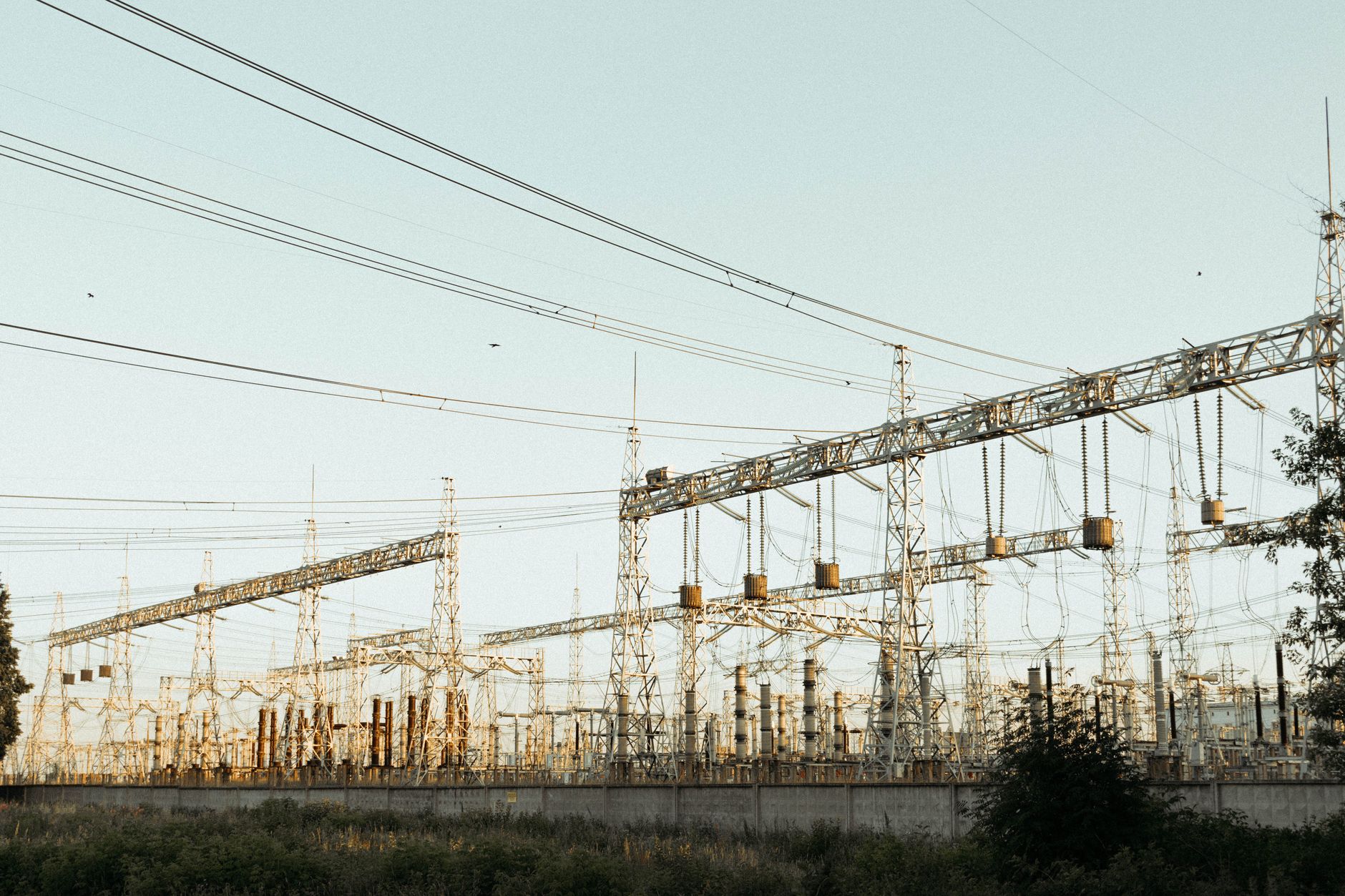
When a control room loses visibility into a substation, the default diagnosis has long been a failed remote terminal unit or a severed communications link. Digital substation cybersecurity introduces a less familiar failure mode: the equipment may still be powered, still communicating, but no longer answering to the people who operate it. The difference matters because a failed device announces itself. A compromised device can continue to behave normally for weeks while an adversary waits.
That shift from accidental failure to hostile control changes how utilities plan for reliability. Traditional grid planning assumes equipment fails in roughly predictable ways. Security planning assumes an adaptive adversary who studies the system, chooses the moment to act, and may already be inside the network. As the grid becomes more digital through ongoing grid modernization, the operational network has become part of the attack surface rather than a protected island behind the control room.
The concern extends beyond isolated incidents. As protection, control and monitoring functions converge on shared digital platforms, the boundary between a local substation fault and a broader operational disruption becomes harder to draw. A corrupted configuration file loaded into multiple devices can propagate a common fault across several sites before operators recognise the pattern.
The Operational Security Difference in Digital Substations
Most corporate cybersecurity thinking begins with confidentiality: protect the data. A digital substation inverts that priority. A false trip signal or a delayed breaker command has immediate physical consequences, so availability and integrity matter more than secrecy. This is why office security tools do not simply transfer into an operational environment. A routine antivirus scan that restarts a protection relay can cause more disruption than the malware it was meant to stop.
Operational networks also age differently. A corporate server may be replaced every few years; protection relays and bay controllers can remain in service for two decades or more. Many were installed when the substation network was assumed to be physically isolated and trusted. Authentication, encryption and patch management were often retrofits. A control engineer defending a relay commissioned years ago is not working with the same set of tools as an IT security team defending a cloud application.
The devices that make this possible were often procured before security was a formal design requirement. Several widely used substation protocols were designed for speed on isolated networks. Messages such as GOOSE in IEC 61850 carry tripping commands with minimal overhead. Later security extensions add authentication, but they cannot fully remove the assumption that a message on the local network comes from a device that belongs there. An attacker who reaches that network may only need to send a correctly formatted message and let the protection scheme do the rest.
This shift also changes the meaning of a successful attack. In conventional IT, success often means stolen data or interrupted services. In substation automation, a more damaging outcome can be a system that continues to report normal conditions while physical equipment is being stressed. The operator trusts measurements that attackers have learned to reproduce. Protecting against that requires understanding the operational logic, rather than simply scanning for known malware signatures.
What Attackers Actually Target in the Digital Grid
Attackers rarely start inside a protection relay. The more common path runs through the people and systems around the operational network: a vendor’s remote-access channel, an engineering laptop used at multiple substations, or a compromised update package. Once inside, the objective is often to manipulate the operator’s view of the network. A deliberately wrong measurement, a suppressed alarm, or a replayed routine event can be more damaging than a full shutdown, because the operator may respond to a normal-looking system that no longer corresponds to the physical grid.
The International Energy Agency’s Energy and AI analysis points to digitalisation and AI as expanding the pathways through which a system can be reached. Connectivity multiplies the routes available to an adversary, even where the technology itself is sound. An operator therefore cannot secure the grid by hardening the control room alone. Remote access for vendors, maintenance crews and engineering workstations creates additional doors, but those same connections make modern operations possible.
Two related problems make this harder. First, the operational network often has far less visibility than the enterprise network. An operator may log every login to a corporate email system but have limited visibility into who opened a firmware update tool in a substation. Second, many grid devices have long maintenance windows and cannot be patched on the same schedule as office software. A security update that requires a protection relay to be taken out of service becomes an operational project with its own safety procedures and outage planning, rather than a routine patch.
Many utilities still manage enterprise and operational security through separate teams with different incident response habits. That separation reflects real technical differences. An IT team can isolate and rebuild a server quickly; an OT team often cannot remove a relay from service without coordinating with operations. This is why security incidents in control environments are sometimes treated as reliability events first and forensic events second. The immediate goal is safe continuation of service.
Defense-in-Depth in Operational Environments
The logic of defense-in-depth is that no single control can stop a capable adversary. The operator stacks independent barriers so that a failure in one layer does not leave the system exposed. In the digital grid, those layers typically begin with segmentation: separating office IT from operational networks, and separating protection, control and monitoring functions within the substation itself. A compromise in the enterprise network should not reach the relay network by default.
- Network segmentation and boundary controls, including unidirectional gateways where two-way traffic is not needed
- Authentication and role-based access for operations personnel, engineering workstations and vendor connections
- Continuous monitoring of operational protocols for messages that do not fit normal patterns
- Patch management matched to vendor lifecycles and constrained maintenance windows
- Redundant protection and manual operating procedures that allow safe operation if digital systems are compromised
Grid automation has made many of these controls both more necessary and more difficult to apply. Remote control reduces response time but also removes the physical isolation that once protected substations. When a self-healing scheme can reconfigure feeders automatically, the control logic itself becomes part of the threat surface, and confirming that the scheme responds only to genuine faults is as much an engineering question as a network one. Operational security is therefore treated as an engineering problem rather than solely an information security problem.
Monitoring operational protocols is also harder than monitoring enterprise traffic. Many control system communications are deterministic and periodic. An intrusion detection system tuned for office traffic may not recognise a GOOSE message that appears only during a fault. Effective monitoring interprets protection and control semantics rather than only network packets. This capability is still uneven across the sector, and many smaller distribution operators lack the staffing to run it continuously.
Standards bodies have responded with frameworks tailored to power systems. IEEE and CIGRE have both published guidance on cybersecurity for substation automation and control systems, including the IEEE 3001 series. Regulators expect operators to demonstrate how their controls align with such references. Compliance, however, establishes a baseline; it does not guarantee that a specific relay configuration is safe from a specific adversary.
Regulation, Standards, and the Limits of Compliance
In the United States, cybersecurity obligations for the bulk power system are enforced through mandatory reliability standards under Federal Energy Regulatory Commission oversight and NERC Critical Infrastructure Protection standards. European transmission system operators work through ENTSO-E on the Network Code on Cybersecurity and operational security coordination, while national regulators impose additional requirements. The common pattern is a mandatory baseline: identify priority assets, control access, monitor changes and report incidents. These obligations create shared vocabulary and minimum expectations, but they generally do not keep pace with every technique used by a particular threat actor.
Every regulation creates a trade-off. Mandatory compliance can focus attention on completing checklists rather than reducing risk. A utility can meet every requirement and still operate with weak segmentation, long-lived vendor credentials or untested incident response plans. The more useful framing is that rules provide a floor. Operational security decisions, such as where to place a unidirectional gateway or how to rehearse a manual fallback, often sit above that floor.
A further limit of regulation is the supply chain. An operator can secure its own network and still depend on relays, controllers and software from vendors whose own development environments may have been compromised. Supply chain assurance is moving slowly from procurement checkboxes to contractual and technical controls, but the industry is at an early stage. The challenge is structural: long equipment lifecycles and global component sourcing make every utility dependent on systems it cannot fully inspect.
Where the Conversation Is Heading
For grid operators, the practical question is shifting from whether they have complied to whether they can safely operate if one layer is compromised. The question has no single answer, and another checklist does not resolve it. Some utilities are treating cybersecurity as a reliability design constraint. They specify security requirements in procurement, run operational attack exercises, and build manual fallbacks that work without digital systems. Simulating those fallbacks in a digital twin can expose gaps before a real incident does.
Several difficult questions concern equipment that is already in the field. Retrofit security controls can be more expensive than the devices they protect, and full replacement may not be justified by remaining service life. Utilities are therefore making case-by-case decisions about which assets receive authentication, monitoring and segmentation. That piecemeal approach is less tidy than a blanket programme, but it matches the reality of constrained budgets and long asset lifecycles.
Operational security sits at the intersection of two disciplines with different timeframes. Grid engineers plan for decades and prioritise physical safety. Security teams respond to threats that change in weeks and prioritise keeping adversaries out. Defense-in-depth works when both perspectives shape the same system design, and when neither side treats the other as an afterthought.
References
- IEA — Energy and AI: used for the observation that digitalisation and AI expand the operational attack surface in electricity systems.
- NERC Critical Infrastructure Protection (CIP) reliability standards: used for mandatory baseline obligations for bulk power system cybersecurity in the United States.
- ENTSO-E — Network Code on Cybersecurity: used for European operational security coordination and baseline obligations.
- IEEE 3001 series — power system cybersecurity guidance: used for substation automation and control system security practices.