In several Asian grid control rooms, the queue of connection requests contains data center campuses that would have been considered improbable a decade ago. AI data center electricity demand in Asia reaches that queue as discrete requests from individual developments, ahead of any load forecast. A single hyperscale facility commonly requests several hundred megawatts of dedicated capacity — roughly the electrical demand of a mid-sized city — for a site that may sit at the end of a lightly loaded rural feeder. The request arrives not as part of a gradual industrial expansion but on a construction schedule set by the developer, typically well ahead of the grid planning cycle it depends on. That combination of scale, speed and location is forcing utilities to revisit assumptions that have shaped grid planning for decades.
The operating question is whether the physical electricity system can be reinforced fast enough to avoid becoming the binding constraint on digital infrastructure investment. The answer varies sharply by market, and in several jurisdictions it is already visible in connection delays and unconventional workarounds. Data center electricity demand has been rising across Asia, but the grid impacts depend less on the total than on where and how quickly new campuses seek to connect.
The Load Arrives at City Scale, on a Developer’s Timeline
The International Energy Agency’s Electricity 2025 report identifies data centers as one of the fastest-growing sources of electricity demand globally, with Asia accounting for a large share of the increase. Aggregate projections matter less for grid planning than the fact that the new demand is highly concentrated. A single hyperscale campus often requires hundreds of megawatts, and some proposals exceed a gigawatt. That places one connection request at the scale of a small city’s entire load, while the substations and feeders serving these sites were often designed for agricultural land or light industrial use.
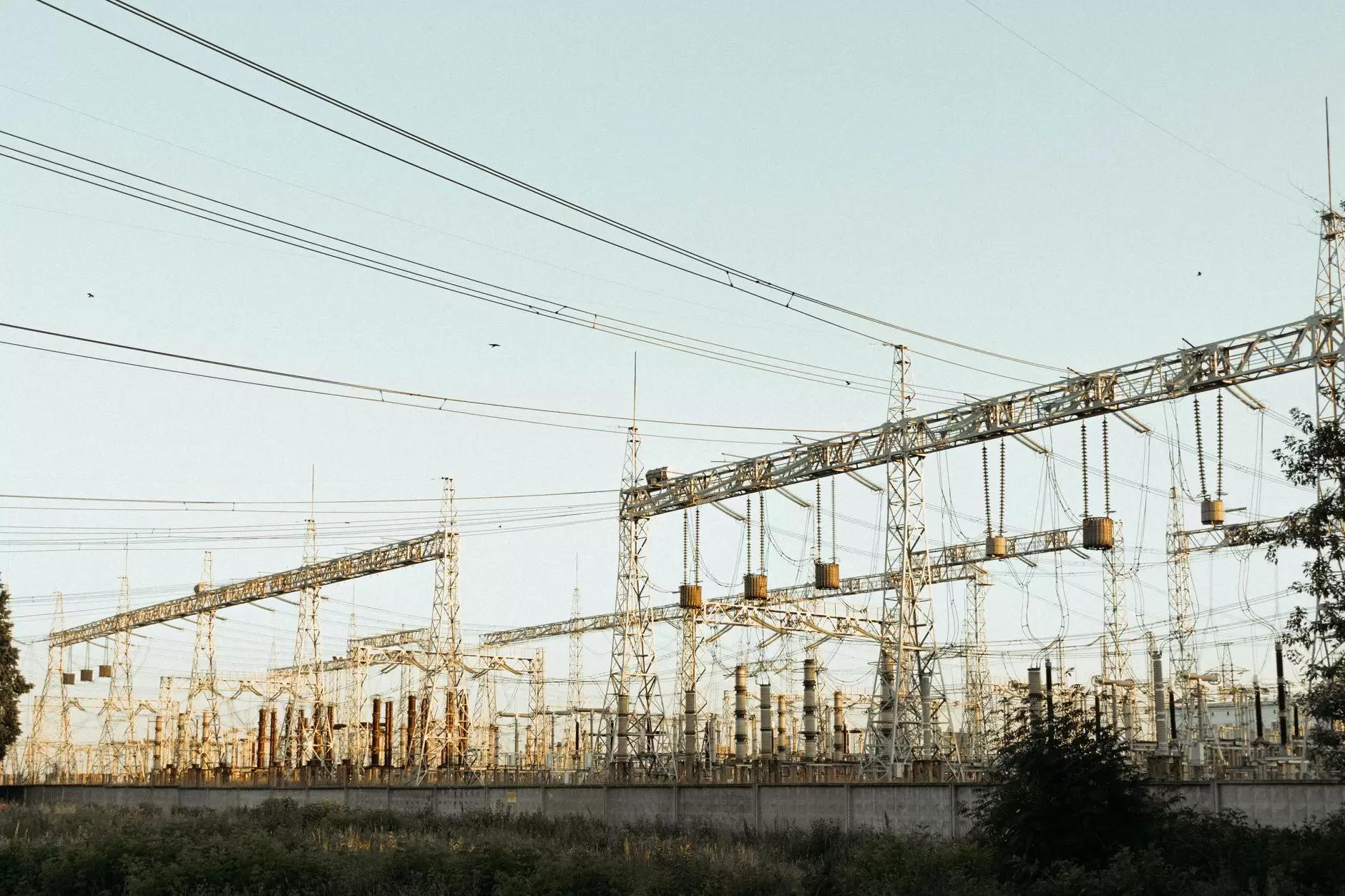
The mismatch concerns local network capacity rather than generation adequacy. Transformers, switchgear and distribution feeders can carry only so much current, and retrofitting a high-voltage connection into a grid node that was not designed for it is often a multi-year engineering project in its own right. The speed compounds the effect. In many jurisdictions, grid planning has traditionally assumed load growth that is gradual, broadly distributed and predictable. Utilities add capacity in increments over multi-year cycles spanning assessment, approval, procurement and construction.
A large industrial facility can take five to seven years or more from application to energization in many jurisdictions. Data center developers are asking for comparable capacity in two to three years, and they often cluster in the same places to take advantage of favourable land, tax and connectivity conditions. This clustering is difficult for utilities that forecast data center load growth using models built for population and industrial expansion, because hyperscale demand rarely follows historical patterns in timing or location. The racks themselves are also becoming more power-dense, raising the on-site power and cooling requirements a connection must support.
This mismatch helps explain why data center grid connections take so long. Delays rarely stem from a shortage of generating capacity; they reflect the time needed to reinforce local substations, procure high-voltage equipment, secure permits and coordinate protection changes across the network. A connection request that looks small in aggregate terms becomes a large civil and electrical engineering project once the local work is scoped.
Where Asian Grids Are Most Exposed
Asia’s power systems were largely built around centralized generation. Coal, gas, hydro and nuclear plants feed high-voltage transmission corridors that deliver power to load centres, and distribution networks were designed for predictable residential and light industrial loads. Data centers invert that logic. They concentrate very high load density at a single node, often in semi-rural or peri-urban locations where land is cheaper and fibre is available, but where local distribution infrastructure was never reinforced beyond modest local demand. They also expect very high reliability, requiring redundant grid connections and backup generation that complicate protection and switching arrangements.
Japan’s transmission investment runs through a formal planning process with extensive stakeholder consultation, and a large new line can take a decade or more from initial proposal to energization. A data center developer on a three-year construction schedule cannot wait for that process. In some cases utilities are indicating that capacity may not be available until the early 2030s. The constraint is where available transmission capacity sits relative to where developers want to build. Data center siting decisions are now shaped by electricity availability and grid constraints as much as by fibre access or tax incentives.
Southeast Asia faces a different version. Malaysia, Thailand, Vietnam and Indonesia are attracting large data center investment because of affordable land, growing digital economies and proximity to undersea cable landing stations. Many of these grids are already stretched by rapid economic growth and rising electrification, and the concentrated demand from data centers is arriving on top of that existing strain. The issue in these markets is less the length of planning processes than the thin margin of spare capacity at local substations and the limited ability of distribution companies to fund and execute upgrades quickly.
Cost allocation adds another layer. In some jurisdictions, network upgrades are recovered through tariffs that may be spread across the customer base; in others, developers are expected to pay more directly for the assets their projects require. When a utility builds a new substation and high-voltage connection to serve a single hyperscale customer, the question of who pays becomes politically charged, and the answer varies by regulatory framework.
How Markets Are Responding
Singapore provides the clearest example of what happens when grid constraints become binding. In 2019, the government imposed a moratorium on new data center development, citing electricity consumption and carbon emissions. The moratorium was partially lifted in 2022, but new projects now face tighter efficiency requirements and must demonstrate they can operate within Singapore’s limited supply. A direct consequence has been the emergence of a data center cluster just across the border in Johor, southern Malaysia, connected back to Singapore by fibre but drawing power from the Malaysian grid. This pattern of leapfrogging is emerging across the region, and it underscores how grid constraints redirect investment rather than suppressing it.
Japan and South Korea face a different challenge. Both countries have highly reliable grids with strong technical standards, but their transmission networks were largely built out before data center demand became a material factor in load forecasting. Japan’s data center interest has concentrated in the Kansai and Chubu regions around Osaka and Nagoya, and in parts of Kyushu. Transmission corridors connecting those regions to generation resources were not sized for concentrated hyperscale loads. South Korea shows a similar mismatch: a highly reliable grid whose available capacity does not always coincide with where international technology companies want to build.
India presents yet another pattern. Generation capacity has grown over the past decade and the national grid has become more interconnected, but distribution remains the weak point. Many state-level distribution companies carry weak finances and high technical and commercial losses. Connecting a large data center to a distribution network that struggles with reliability and voltage management creates operational risks that technology companies are not set up to manage.
The workaround, in a growing number of cases, is a transmission-level connection that bypasses the distribution network, treating the data center as a transmission-connected industrial customer. Whether that reduces the customer’s contribution to distribution network costs depends on the applicable tariff and regulatory framework. Where it does, the arrangement raises commercial and political questions that remain unresolved.
Across these markets, a quieter change is taking place. Developers are beginning to behave more like energy infrastructure companies, scouting locations not primarily by fibre access or internet exchange proximity but by visiting substations to assess whether there is physical space for another transformer bay. In several Southeast Asian countries, developers are proposing to finance and build substations and transmission connections themselves, then transfer those assets to the utility upon completion. This shift is happening because the traditional connection process cannot move fast enough, rather than as a result of deliberate policy design.
What Happens Next
The direction of travel points toward more proactive, cluster-based planning. Some Asian grid operators are identifying data center zones in advance and building common infrastructure before individual applications arrive. This approach can reduce uncertainty for developers and utilities and allow more efficient use of shared substation capacity. It requires coordination between investment promotion agencies, grid operators and regulators that does not yet exist in most markets. Without that coordination, the same concentrated demand keeps arriving as a series of individual connection requests, each requiring bespoke reinforcement.
Behind-the-meter generation is becoming an important part of the response. Data center operators are exploring on-site gas-fired generation, fuel cells and batteries as alternatives to waiting for grid connections. In some cases, these assets act as bridging capacity while grid reinforcement is built; in others, they become the primary supply, with the grid connection serving as backup rather than the reverse. Behind-the-meter generation is changing the data center–utility relationship in ways that extend beyond backup power, and that shift raises operational questions many regulators have not yet addressed.
A third development is the use of data centers as flexible demand. A facility that can shift computational workload geographically, modulate consumption in response to grid signals, or use backup generation to support the grid during scarcity could become a flexibility resource rather than an inflexible load. Pilot projects in Asia are exploring these possibilities, but the commercial and regulatory frameworks to support widespread adoption remain incomplete. Until those frameworks mature, most data centers currently operate as static, high-reliability loads from the grid’s perspective.
The core question facing Asian policymakers and grid operators is whether institutional arrangements built for gradual, predictable load growth can accommodate a class of customer that arrives at city scale on a private-sector timeline. The early evidence suggests that the answer is not the same everywhere. Jurisdictions that treat data centers as an active part of grid planning, rather than an exception to it, are better positioned to attract digital infrastructure investment without shifting unreasonable costs onto existing consumers. In places that do not, the geography of AI-related infrastructure is already being shaped less by fibre and tax incentives than by the availability of a transformer bay at a suburban substation.
References
- International Energy Agency — Electricity 2025: data center electricity demand trends and regional growth.
- Singapore Economic Development Board and Infocomm Media Development Authority — Data Centre Call for Application (July 2022): moratorium review and efficiency requirements.
- Japan Organization for Cross-regional Coordination of Transmission Operators — Transmission planning process documentation.
- Malaysian Investment Development Authority — Data center investment and grid connection context in Johor.