When a control room operator approves a switching sequence or adjusts a voltage set point, the grid absorbs the consequences immediately. There is no paused state for testing. Historically, utilities relied on offline simulation packages and carefully maintained network models to study these choices ahead of time. A digital twin of the power grid changes that relationship by keeping a continuously updated virtual representation that operators, planners, and trainers can interrogate without touching the real system.
That change matters because the grid no longer behaves like a slow-moving machine with a small set of predictable operating states. Variable renewable output, more distributed generation, and tighter operating margins have reduced the room for planning around a few fixed study cases. The question for utilities is therefore not whether to simulate, but how to make simulation reflect the system as it is operating today.
The distinction that follows is between a model that is periodically validated and one that is continuously reconciled with the system it represents. That difference shapes where the approach earns its cost. Planning studies can often tolerate a model that is updated periodically, while operational, training, and contingency analysis generally need a model that reflects current conditions more closely. The sections below work through those cases, and through the data, model-maintenance, and security constraints that affect how far a live twin can be trusted.
What Separates a Digital Twin from a Conventional Grid Model
A conventional network model is usually a validated snapshot. It represents line impedances, transformer ratings, protection settings, and load levels at a moment in time. Utilities update these models periodically, often for planning studies or protection coordination. A digital twin extends this by ingesting operational data—SCADA measurements, phasor measurement unit readings, weather forecasts, outage records, and market signals—and using them to keep the model aligned with current conditions. The twin builds on the physical model by connecting it to a data pipeline that updates the model on a defined cadence.
In practice, digital twins vary widely in scope. Some cover a single substation or a critical transformer. Others cover a distribution feeder or an entire transmission corridor. The level of detail depends on the decision the twin supports. A planning twin needs accurate topology and load flow behaviour. A training twin needs dynamic models for protection, voltage regulation, and operator interfaces. An operational twin may only need a narrow set of contingency scenarios that run fast enough to inform a control room action. This variation is one reason the term is applied so loosely across the industry.
Several industry bodies have begun to formalise the distinction, and the recurring element is data connection: a twin is updated from live or near-live operational data, while a conventional model is manually maintained. That difference sounds modest, but it has practical consequences for what the model can be used for.
Testing Decisions Before They Touch the Grid
For planners, a digital twin reduces reliance on a small number of offline study cases. Traditional planning studies often examine summer peak, winter peak, and a handful of contingencies. A twin allows planners to test the same network under many combinations of load, renewable output, and outage conditions. The value comes more from coverage than from prediction: the twin can search across a wider range of states and flag where voltage, thermal, or stability limits begin to bind. It does not replace the formal planning process, but it helps identify conditions that might otherwise be missed.
This broader search often exposes inconsistencies that offline studies tolerate. A utility using a distribution feeder twin to assess hosting capacity may discover that the geographic information system and the network model disagree about which transformers serve which feeders. The mismatch is not new—it has likely existed for years—but a continuously updated twin makes it visible because the model is queried far more often. That is a different kind of value: the twin becomes a data quality tool as much as a simulation tool.
Operator training is another practical use. Control room simulators have existed for decades, but many run on disconnected models updated only periodically. A digital twin linked to the same network model as the energy management system means trainees practise on the same topology and protection configuration as the live grid. Protection settings change, new equipment is commissioned, and old assumptions quietly go stale. A training simulator that does not reflect these changes can teach operators responses that do not match the actual protection configuration. The benefit is consistency: one model shared across planning, training, and operations, with a controlled update process.
The quality of these scenarios depends on the sensor and communication layer. Without reliable measurements and an accurate network model, the twin may replay a plausible but incorrect version of the system. A common experience is that a twin exposes data quality problems that offline studies tolerated.
Digital Twins in the Control Room
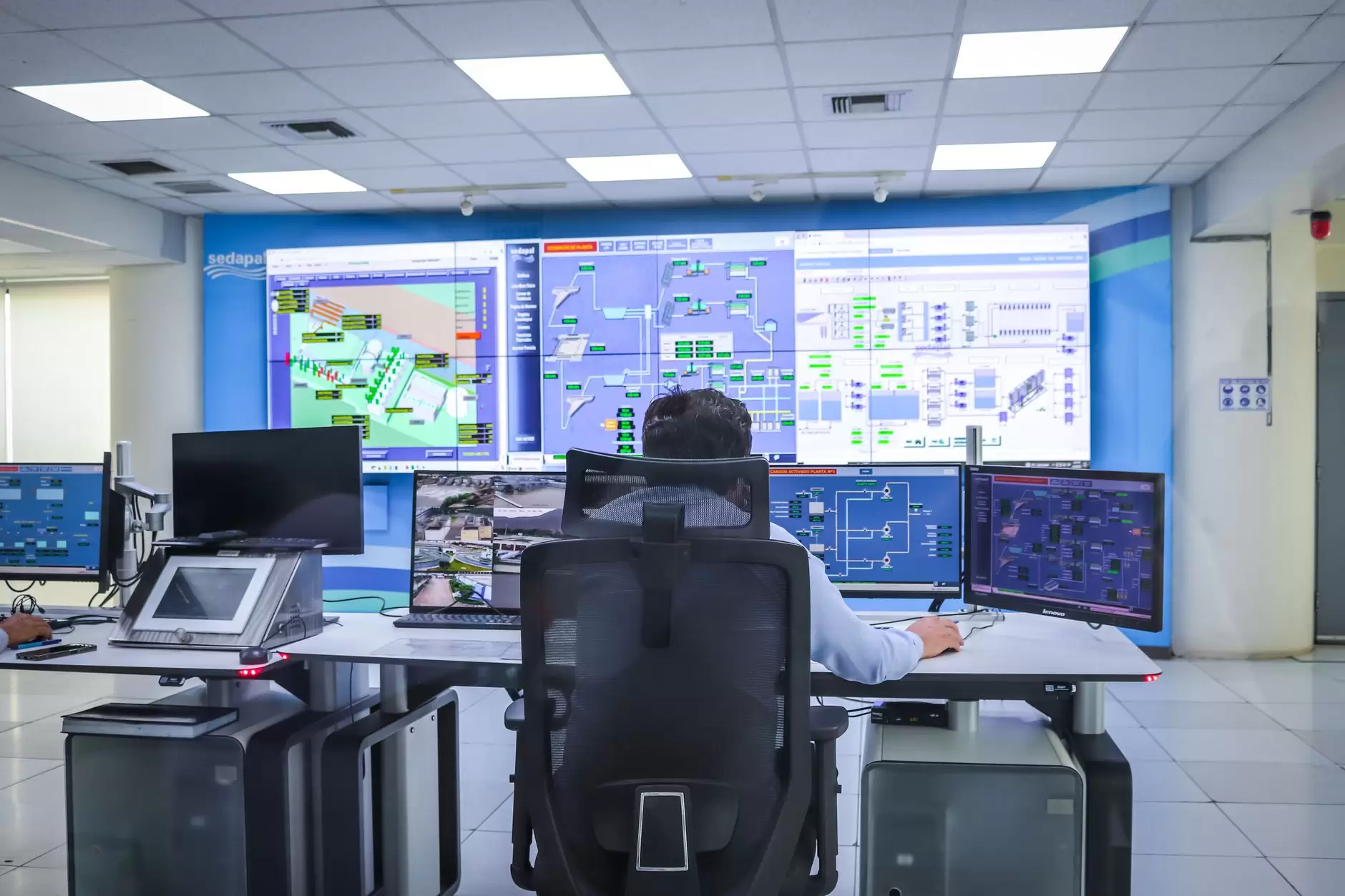
In the control room, the useful twin usually runs faster than real time. Operators facing an active disturbance do not need a perfectly detailed physical model; they need to know whether a proposed switching action would solve a constraint or create a worse one elsewhere. For that, the twin must be tuned to the decision interval. A simulation run that takes longer than the contingency it is assessing is unlikely to support an operator who has minutes to act. This constraint separates research demonstrations from operationally deployable capability, and it explains why utilities often begin with targeted twins for specific substations or corridors rather than whole-system replicas.
The other operational role is situational awareness. A digital twin can aggregate data from SCADA, phasor measurement units, weather forecasts, and market systems into a common operating picture. It does not replace the energy management system or the operator’s judgment. It provides a sandbox for asking questions that live operations cannot answer: what happens if this line trips during the next hour, what would the voltage profile look like if reactive power were pre-positioned, how much feeder load could be shifted before a transformer overloads. Traditional tools can answer each question, but the twin makes the process faster and more repeatable.
This question-based analysis connects to the wider move toward grid automation. The twin does not trigger actions itself, but it gives operators and automated systems a common basis for evaluating them. Where an advanced distribution management system or an automated switching scheme proposes an action, the twin can show what the network would look like afterwards — a check that becomes harder to perform by inspection as the number of controllable devices grows. The twin remains a decision-support tool rather than a control system. That distinction is commercial as much as technical: it determines who carries responsibility for a switching decision, and how the twin is procured, validated and maintained.
The Data Quality Constraint
Model maintenance is usually the binding constraint. A digital twin is only as good as the data it receives. If a sensor is misconfigured, a protection setting is not updated, or a field crew records a wrong transformer tap position, the twin produces confident answers that are wrong. This is more dangerous than a simple missing-data flag. In a conventional study, engineers know the model is an approximation. In a twin presented as a live mirror, there can be a tendency to trust the output. The governance required to prevent that overconfidence—data validation, model version control, audit trails—demands continuous effort from utilities already stretched by other digitalisation work.
The problem often surfaces through operational use. A planning study may tolerate a stale model for months without visible harm. A continuously updated twin generally cannot, because its outputs are useful only when they reflect the current network state. Some utilities begin with a narrow, well-bounded model for a specific decision, where the data quality can be managed manually at first.
Security also changes the stakes. A twin that ingests operational data and can simulate control actions becomes an attractive target for attackers. A compromised twin could be used to mislead operators, conceal contingencies, or rehearse manipulations before they are attempted on the real grid. This does not argue against twins. It means the data interfaces between the twin and the energy management system need the same protection as other operational systems. The cybersecurity requirements of the digital grid apply directly to the twin environment.
Where Digital Twins Fit in Grid Modernization
Digital twins sit within the wider effort to make the grid more observable and controllable. They depend on the same sensor, communication, and automation investments that utilities make for other purposes. A utility that has already deployed advanced metering infrastructure and distribution automation has much of the data foundation a feeder or substation twin needs. A utility that still relies on manual field readings has a slower, less consistent update path: readings arrive too slowly and too irregularly to keep a model aligned with actual conditions, and the twin’s output degrades accordingly, however capable the simulation software may be. Digital twin initiatives therefore tend to emerge after investment in grid modernization, not before it.
The longer-term direction points away from a single monolithic twin of an entire power system and toward a federation of twins, each scoped to a particular asset or decision process, sharing common data models and update protocols. A transmission operator may maintain twins for critical corridors. A distribution company may maintain feeder-level twins for hosting capacity and outage management. A generator may maintain a plant twin for maintenance planning. The challenge is interoperability: if each twin uses a different data schema and update cadence, the value is fragmented. Standardisation efforts are beginning to address this, but the sector is still in an early phase where most deployments are project-specific rather than integrated across the enterprise.
The IEA has highlighted digitalisation as a factor reshaping electricity system operation, and digital twins sit within that broader pattern. For operators and planners, the practical question is which decisions justify the cost of maintaining a twin. A digital twin is worth the effort when it changes a decision that the utility otherwise gets wrong or gets too late.
That is a commercial and operational calculation, not a technology demonstration. Utilities that succeed tend to start with a concrete decision problem—transformer loading, protection coordination, storm restoration, or operator training—and build just enough twin capability to support it. Organisations that begin with an enterprise-wide platform often spend more time on integration than on operations. The value depends on whether the model is current, governed, and tied to a specific operating question.
References
- IEA — Digitalisation and Energy: how digital technologies affect electricity system operation.