Why does a technology that supplies most of the world’s grid-scale energy storage struggle to attract private capital in deregulated electricity markets? The question sits at the centre of pumped hydro storage economics: a cost structure dominated by civil construction paid for up front, set against revenue that depends on the price spreads a plant can capture years later.
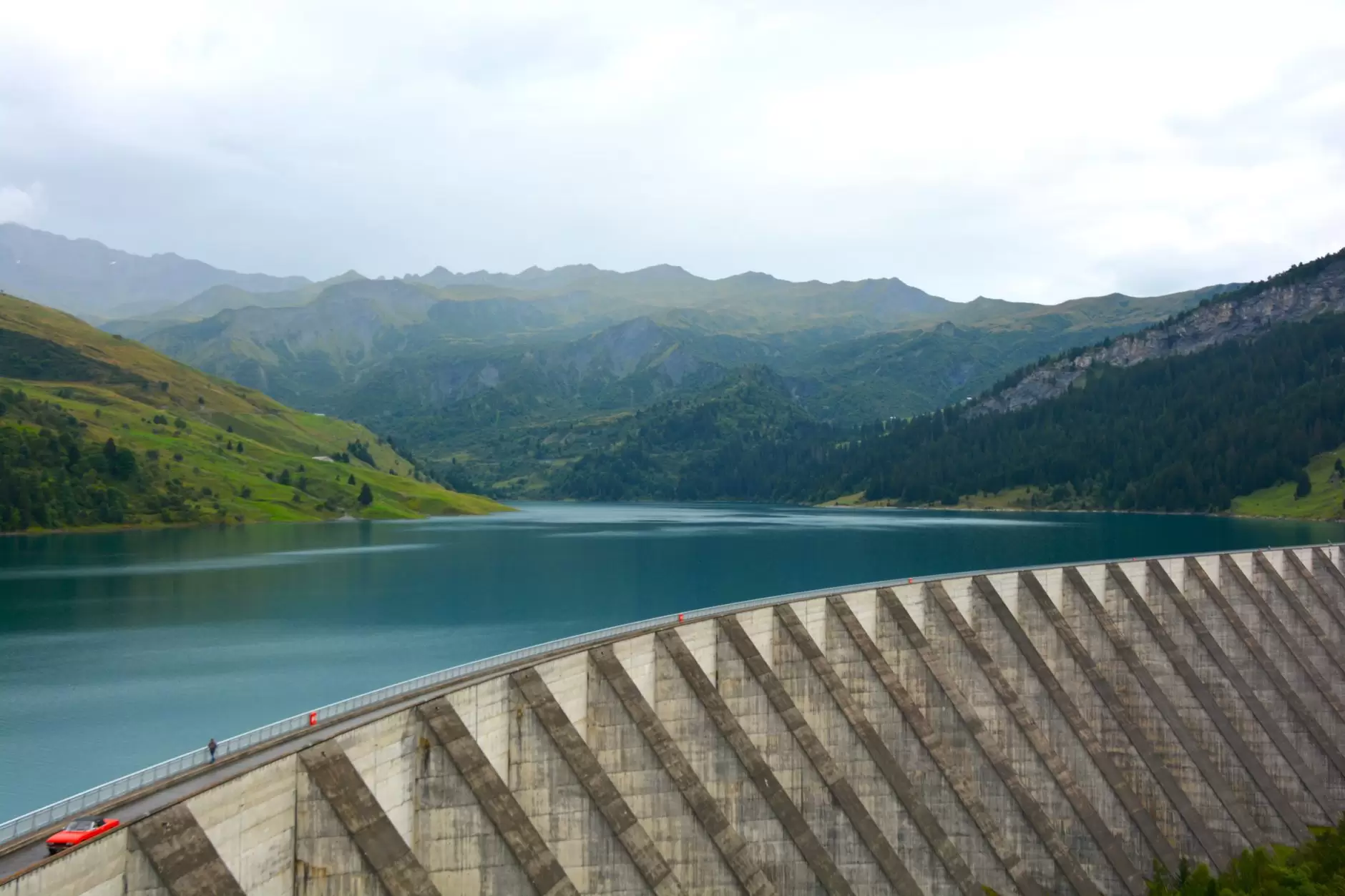
Pumped storage hydropower is dispatchable, long-duration, and technically mature. In some regulated jurisdictions, utilities have built it for decades with costs recovered through the rate base, though whether that recovery is available — and on what terms — depends on the local tariff and cost-recovery rules rather than on the technology itself. In deregulated markets, where generation competes on price and no guarantee covers a plant’s capital recovery, those engineering virtues do not translate into a financeable business case. The difficulty lies in the mismatch between a capital-intensive asset and a merchant revenue model.
The IEA’s World Energy Outlook frames long-duration storage among the flexibility options that become more relevant as variable renewables penetrate the system. That framing does not solve the financing problem, but it explains why the technical case keeps resurfacing even as developers struggle to close projects.
The Capital Cost Problem
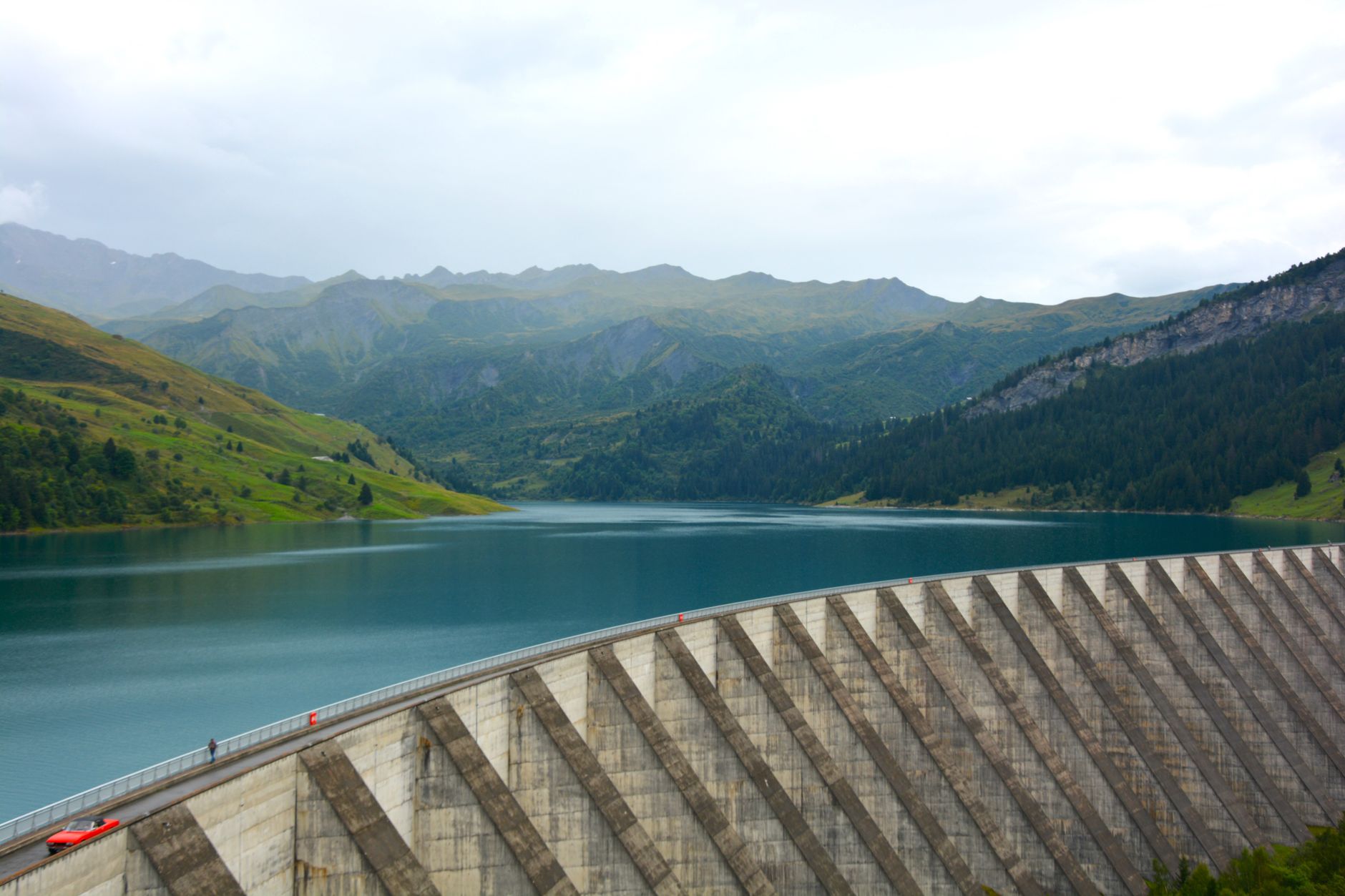
Pumped storage is among the most capital-intensive generation assets. Unlike a battery system that arrives as modular, factory-built containers, a pumped storage plant is a civil engineering project. It requires an upper and lower reservoir, water conduits, a powerhouse, turbine-generator units, and often large transmission upgrades. The underground works and tunneling alone can consume much of the budget before any equipment is installed. IRENA’s cost data places pumped hydro among the higher capital cost storage options per kilowatt, with figures varying widely by site.
Capital costs are also difficult to standardize. Each project depends on geology, head height, reservoir size, and distance to transmission. Developers cannot rely on a learning curve the way solar and battery manufacturers can. Site-specific design means every project must pass a detailed feasibility process before investors can assess the economics. The result is long development timelines and high early-stage expenses with no guaranteed revenue stream.
Australia’s Snowy 2.0 illustrates how these risks materialize. The expansion involved complex tunneling and unexpected geological conditions, leading to repeated cost revisions and schedule slippage. Snowy 2.0 is being developed by a publicly owned utility, not a merchant developer. That ownership structure reflects the difficulty of attracting private capital to an asset that may take over a decade to move from design to operation. In contrast, the Bath County plant in Virginia, one of the world’s largest pumped storage facilities, was built under a regulated utility model, where cost recovery was handled through the rate base.
Siting and Permitting Constraints
The physical requirements of pumped storage narrow the field of viable locations. A project needs two reservoirs at different elevations, connected by a waterway with enough head to generate economically useful power. The best sites—those with steep terrain, stable rock, and nearby water—were often developed decades ago, usually by regulated utilities with access to relevant land and water rights. Many of the remaining sites sit in more environmentally sensitive areas, farther from load centers, or in regions with contested water resources.
Permitting adds a second layer of difficulty. A project may require approvals for water use, land disturbance, grid connection, and in some cases construction in protected landscapes. The process can extend over many years, and the outcome is not guaranteed. Transmission access is another constraint. Remote sites often lack adequate high-voltage connections, and the cost of new lines can push an already expensive project beyond what markets are willing to pay. For batteries, by contrast, sites can be scaled to fit existing grid connections or distributed across locations.
Revenue Uncertainty in Deregulated Markets
In regulated markets, a pumped storage plant can be added to the rate base and paid for over decades through customer charges. In a deregulated market, the plant must earn revenue by competing as a generator and as a load. A pumped storage plant buys electricity to pump water uphill and sells it later when prices rise. That arbitrage spread must cover operating costs, financing charges, and ultimately the capital investment. Round-trip efficiency is typically in the 70 to 80 percent range, meaning the plant consumes considerably more energy than it generates, so the spread has to be wide enough to absorb that loss.
Relying on arbitrage alone is difficult. Energy price spreads fluctuate with market design, fuel prices, renewable penetration, and demand. In some markets, high renewable penetration has increased midday-to-evening spreads, but the pattern is not stable enough over decades to support a multi-billion-dollar asset. Ancillary services can provide additional revenue, but those markets are smaller and can be saturated by faster-response battery storage. This is why operators of battery storage assets often stack revenue streams; a pumped storage plant has fewer near-term flexibility options because its value is tied to long-duration discharge rather than rapid response.
Capacity markets, where they exist, add another revenue stream. In some US regions such as PJM, a capacity payment can support a project’s fixed costs. Under ERCOT’s current market rules, an energy-only design generally provides no separate capacity payment, so a plant there typically depends on energy and ancillary revenues to cover its fixed costs. This single design difference helps explain why similar projects look viable in one jurisdiction and untouchable in another.
Why This Matters for System Planning
System operators care about pumped storage because it can supply energy for many hours, not minutes. As renewable penetration rises, periods of low wind and solar output can extend for days in some regions. NERC’s long-term reliability assessments highlight the need for energy-limited resources that can discharge over longer durations, and pumped storage is one of the few established long-duration storage technologies that does so. Yet the market value of that capability is not always captured in hourly energy prices or shorter-duration ancillary service products.
What Would Need to Change
For new pumped storage to attract capital in deregulated markets, developers need revenue certainty that matches the asset’s multi-decade life. Several mechanisms are being applied or considered:
- Long-term contracts for storage services, sometimes called capacity or storage offtake agreements, which provide a minimum revenue floor.
- Capacity markets that explicitly recognize long-duration resources alongside shorter-duration batteries.
- Revenue stabilisation mechanisms such as the UK’s cap-and-floor framework for long-duration storage.
- Public ownership or public-private partnerships for projects that serve broader system needs beyond market revenue.
The UK’s Coire Glas project, a proposed pumped storage scheme, has been developed against the backdrop of a cap-and-floor mechanism that provides revenue certainty outside the wholesale market. Australia has taken a different route, with Snowy 2.0 proceeding as a public enterprise investment. These models reduce merchant risk but shift some of it to customers or taxpayers. That trade-off is central to the debate over how much flexibility infrastructure should be contracted for directly, rather than left to market signals.
Pumped storage remains valuable to system operators because it can provide many hours of dispatchable energy and help manage periods of low renewable output. The gap between that technical value and the merchant revenue available in many deregulated markets is the core reason so few new plants are built. Until some combination of long-term revenue certainty, market design changes, or direct public support bridges that gap, most new storage capacity continues to come from shorter-duration technologies whose capital costs and payback periods fit more easily within merchant business models.
References
- IEA — World Energy Outlook 2025: context on flexibility and long-duration storage in high-renewable systems.
- IRENA — Renewable Power Generation Costs 2024: capital cost position of pumped storage relative to other options.
- NERC — Long-Term Reliability Assessment: energy-limited resource value and system adequacy considerations.