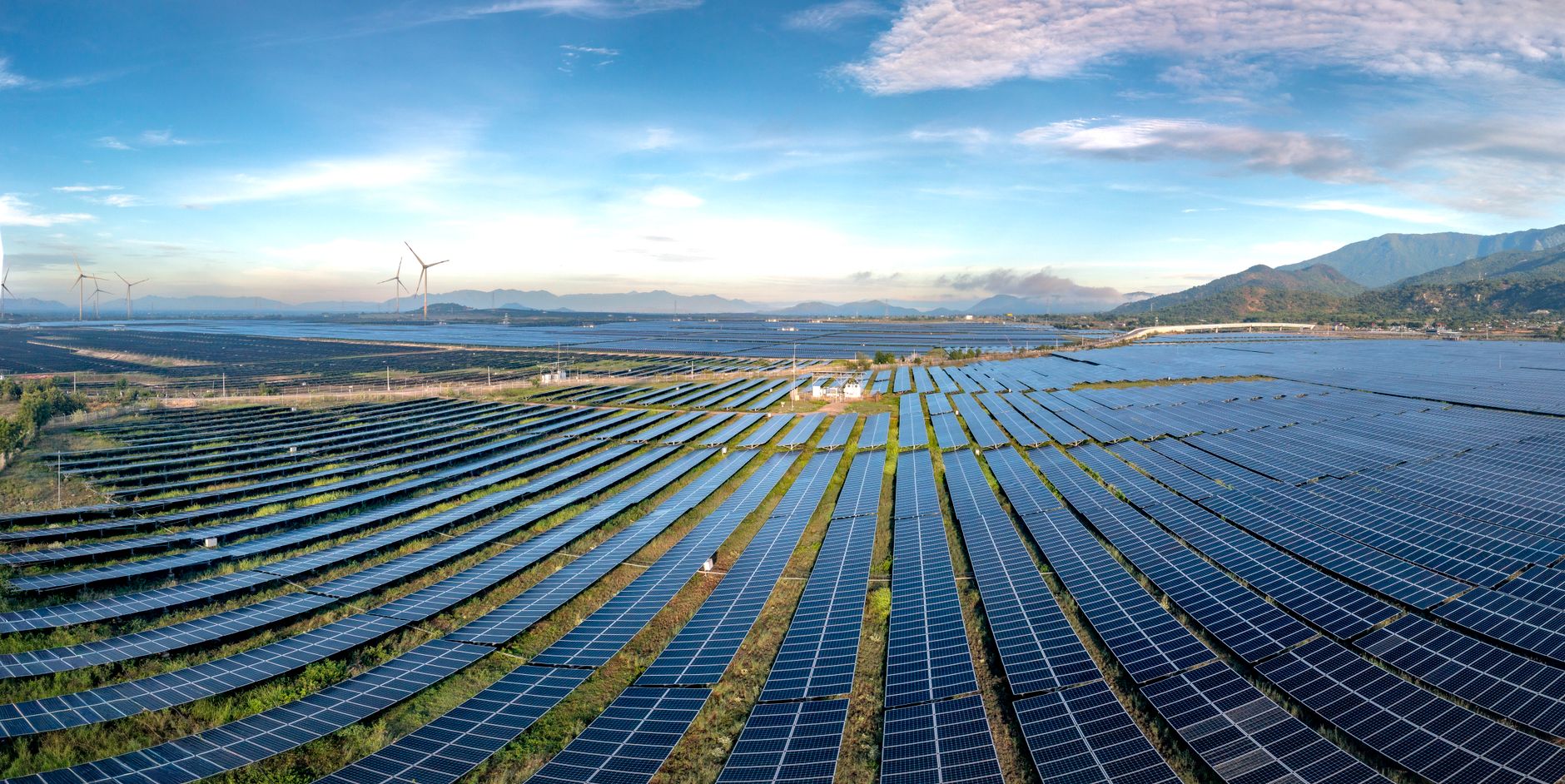
Two otherwise identical renewable projects can face materially different financing costs. The one with a long-term contract from a creditworthy corporate buyer may secure cheaper debt than the one selling solely into the wholesale market, even though both plants generate the same electricity under the same weather. That gap explains why corporate power purchase agreements have become a central instrument in renewable finance.
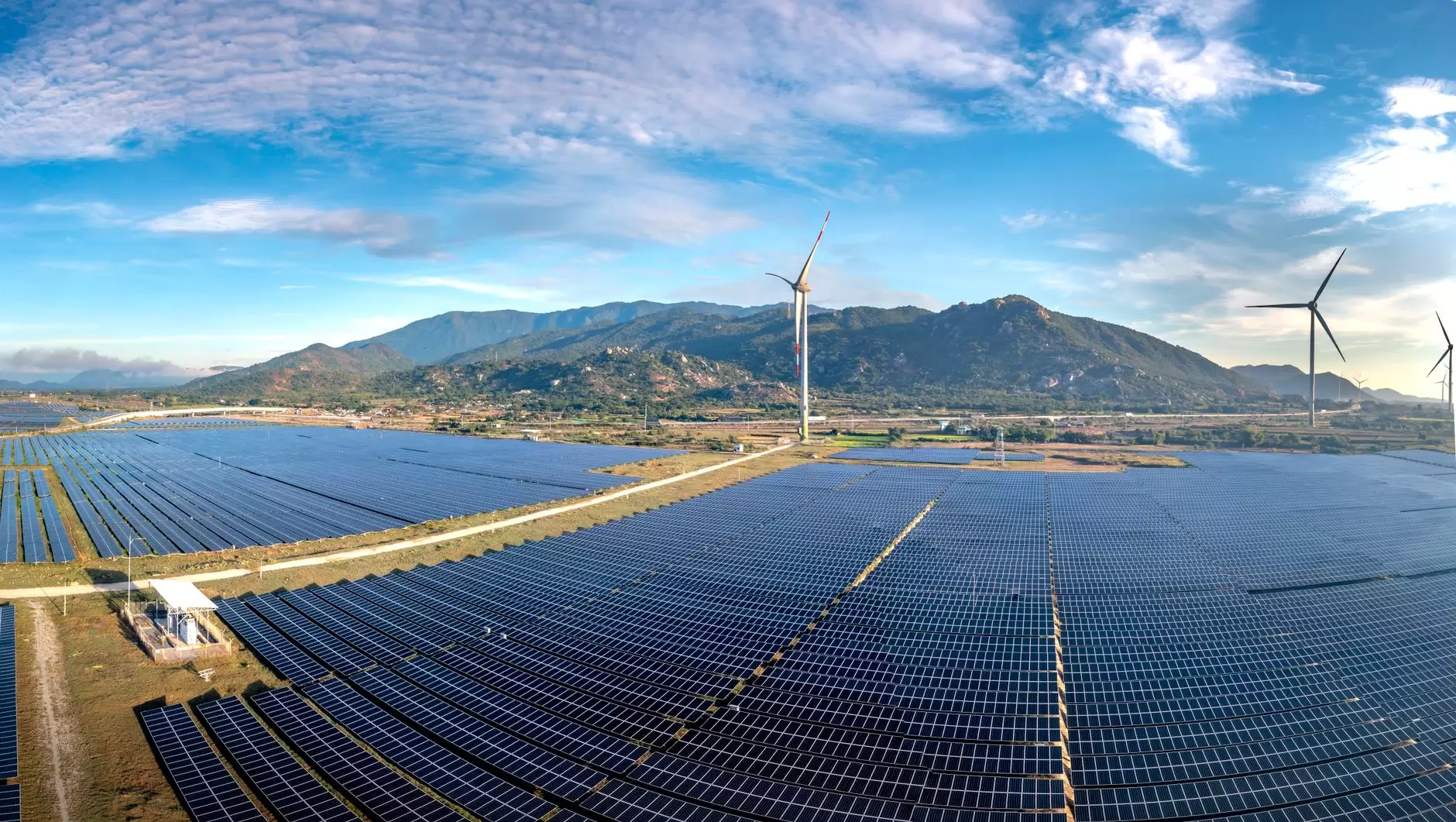
What a Corporate PPA Actually Does
A corporate power purchase agreement is a long-term contract between a renewable project and a corporate buyer. The buyer agrees to pay a fixed price for electricity, or for the financial equivalent of electricity, over a term that typically runs from ten to twenty years. The project receives a more predictable revenue stream, while the buyer gains protection against wholesale price movements and a documented claim to renewable energy attributes.
The label covers two distinct arrangements. In a physical PPA, electricity is delivered from the project to the buyer, often through the grid, and the buyer acts as the offtaker. In a virtual PPA—sometimes called a financial PPA or contract for differences—no electricity changes hands between the parties. The project sells all output into the wholesale market, and the buyer and project settle the difference between the fixed contract price and a floating market reference price, usually on a monthly or quarterly basis.
That distinction changes where merchant risk sits. A physical PPA can expose the buyer to balancing and scheduling obligations. A virtual PPA avoids physical delivery but introduces basis risk between the reference market price and the buyer’s actual electricity cost. The chosen structure therefore influences how much merchant risk remains with the project and how much is assumed by the buyer. The relationship between the fixed contract price and a project’s levelized cost of electricity is also context-dependent; a fixed price above LCOE does not by itself guarantee viability if curtailment, grid charges, or shape risk erode revenue.
Why Merchant Risk Pushed Developers Away from Pure Market Exposure
Merchant risk is the revenue uncertainty a generator faces when it sells output at wholesale market prices. For renewable projects, that uncertainty has grown as penetration has increased. In markets with high renewable shares, spot prices tend to fall when the wind blows and the sun shines. That pattern, often described as price cannibalization, means a project can generate at full output precisely when prices are lowest, or even negative.
A lender evaluating a merchant renewable project must assume a revenue profile that is highly volatile and correlated across similar projects in the same market. That reduces the amount of debt a project can support and increases the required return on equity. A corporate PPA changes this by substituting a counterparty’s fixed payment obligation for spot market exposure. The project still faces volume risk from resource variation, but the price component of revenue becomes substantially more predictable.
One of the more surprising features of this shift is that many corporate PPAs do not involve physical delivery at all. In a virtual PPA, the buyer never receives a single megawatt-hour from the project. The contract is purely financial, yet it provides the same financing benefit to the project because banks can underwrite the fixed settlement stream. This departs from the conventional utility offtake model, where a single buyer physically consumes the output. The corporate buyer is effectively providing a financial hedge, not an operational offtake.
How Corporate PPAs Became the Dominant Financing Route
The rise of corporate PPAs traces to falling technology costs, the withdrawal of public price support, and the need for large energy buyers to manage long-term electricity cost and emissions accounting. Government feed-in tariffs and auctions initially provided the revenue certainty renewable projects required. As those support mechanisms were reduced or phased out in many markets, developers needed alternative sources of long-term revenue. Corporate buyers, particularly technology companies, industrial manufacturers, and data centre operators, stepped in.
Falling renewable costs were a precondition. When levelized cost of electricity calculations fell below expected wholesale price levels in many regions, fixed-price PPAs became economically attractive for buyers. A corporate could lock in a price below its long-run forecast for grid electricity while also satisfying internal emissions commitments. For developers, a creditworthy corporate counterparty replaced a merchant market with a contracted revenue stream that made project finance feasible.
Standardization reinforced the shift. Lenders became comfortable with contract templates, credit ratings, and the financial settlement mechanics of virtual PPAs, because a familiar structure could be diligence-tested against precedent rather than negotiated from first principles on every transaction. The result was a market structure in which corporate offtake became one of the primary routes to bankability for utility-scale renewables outside government auctions, and in which a project’s risk profile came to be defined as much by its contract terms as by the resource it harnessed.
What Merchant Risk Remains After Signing a Corporate PPA
A corporate PPA does not eliminate merchant risk. It replaces one form of merchant risk with a series of contractual risks, several of which are less visible to outside observers than wholesale price volatility. The contract shifts the type of risk rather than removing it, and each remaining risk affects project economics in a different way.
First, volume risk remains. Most renewable projects are paid for the electricity they actually generate. If wind speeds are below long-term expectations or solar irradiation is weak, revenue falls regardless of the fixed price. The PPA protects the project from price risk but not resource risk.
Second, curtailment risk has grown in importance. Grid operators increasingly instruct renewable plants to reduce output when transmission is constrained or supply exceeds demand. A PPA may or may not compensate the project for curtailed energy, depending on how the contract defines delivery and settlement. In some virtual PPAs, the project bears full curtailment risk because no physical delivery obligation exists.
Third, basis risk is a defining feature of virtual PPAs. The contract settles against a market reference price—often a day-ahead hub price—while the corporate buyer purchases electricity at a different node, in a different zone, or under a different tariff. If the reference price behaves differently from the buyer’s actual cost, the hedge is imperfect.
Fourth, counterparty credit risk replaces market risk. If the corporate buyer defaults or experiences financial distress, the project loses its revenue hedge and the lender may lose its security. Fifth, there is the merchant tail. A twenty-year PPA may cover the first two decades of a project’s life, but many renewable assets have expected useful lives beyond that period. Once the PPA expires, the project becomes fully merchant. Lenders and equity investors must assign some value to that post-contract period, and that residual value remains exposed to wholesale price volatility.
Regional Variation in Corporate PPA Structures
Corporate PPA markets have developed unevenly because they depend on liquid wholesale markets, transparent reference prices, and regulatory frameworks that allow corporate buyers to claim renewable attributes. In markets where these conditions exist, activity has grown quickly. Where they do not, corporate PPAs remain more difficult to execute.
In the United States, virtual PPAs dominate. Liquid power markets, well-established renewable energy certificate tracking systems, and the ability to settle financially against hub prices made virtual PPAs an efficient way for corporates to hedge electricity cost and procure renewable attributes without taking physical delivery.
In Europe, physical PPAs are more common, particularly in markets such as Spain, the Nordics, and Germany. Buyers there often have existing physical supply arrangements and prefer direct delivery, while regulatory approaches to guarantees of origin support the transfer of renewable attributes. In parts of Asia, corporate PPA activity has grown more slowly, constrained in some jurisdictions by monopoly utility structures, restricted grid access, and a lack of transparent reference prices. Where markets have opened, corporate PPAs have expanded quickly.
The structural difference matters because it changes how merchant risk is distributed. In a physical PPA, the buyer may take on balancing responsibilities and exposure to grid fees. In a virtual PPA, the buyer avoids those operational issues but accepts basis risk. Developers and lenders must price these differences into the contract.
Commercial Implications for Developers, Buyers, and Lenders
For developers, a corporate PPA can materially reduce the cost of capital. A long-term contract with a creditworthy counterparty allows higher leverage and lower debt margins than a merchant project, even for projects with similar levelized cost of electricity. But developers also give up upside exposure. If wholesale prices rise substantially, a fixed-price PPA caps revenue. Some contracts include market floor or collar mechanisms, but most transfer the bulk of price upside to the buyer.
For corporate buyers, the appeal is a predictable electricity cost and a credible renewable energy claim. The trade-off is that if wholesale prices fall, the buyer may be locked into a price above market. In a virtual PPA, the buyer also carries basis risk and must manage the accounting treatment, which can vary depending on whether the contract qualifies as a derivative under local standards.
For lenders, the analysis shifts from market revenue forecasting to counterparty credit assessment. A PPA backed by an investment-grade corporate is treated very differently from one backed by a lower-rated or thinly capitalised buyer. Lenders also pay close attention to curtailment provisions, change-in-law clauses, and the allocation of imbalance costs. The contract’s bankability depends on the weakest clause.
The Shape of the Next Contract
The corporate PPA market is evolving as renewable penetration rises and merchant risk becomes more pronounced. One development is the standardization of contract terms, which reduces transaction costs and makes smaller projects and smaller buyers viable. Another is the use of credit support mechanisms, such as guarantees or letters of credit, to bridge the gap when corporate buyers have weaker credit ratings than traditional utility offtakers.
There is also growing interest in hybrid structures that combine elements of physical and virtual PPAs, or that link multiple renewable technologies to better match the buyer’s load profile. As levelized cost of electricity comparisons become more granular, buyers increasingly evaluate not just the fixed price but the shape of delivered generation and the value of that generation at specific times of day. Current trends point toward arrangements that explicitly price shape and time-of-delivery, moving corporate PPAs away from simple fixed-for-floating structures.
The central issue remains unchanged. A corporate PPA moves revenue risk from a volatile wholesale market to a contractual relationship with a specific counterparty. Whether that improves project economics depends on the creditworthiness of the buyer, the terms of the contract, and what happens to the project after the contract expires. None of these questions disappear simply because the financing closes.
References
- IEA — World Energy Outlook 2025, used for context on merchant revenue risk and corporate procurement trends in renewable finance.
- IRENA — Corporate Sourcing of Renewables, used for descriptions of physical and virtual PPA structures and regional market development.
- BloombergNEF — Corporate PPA Market Outlook, used for current industry understanding of PPA growth, counterparty credit considerations, and regional variation.