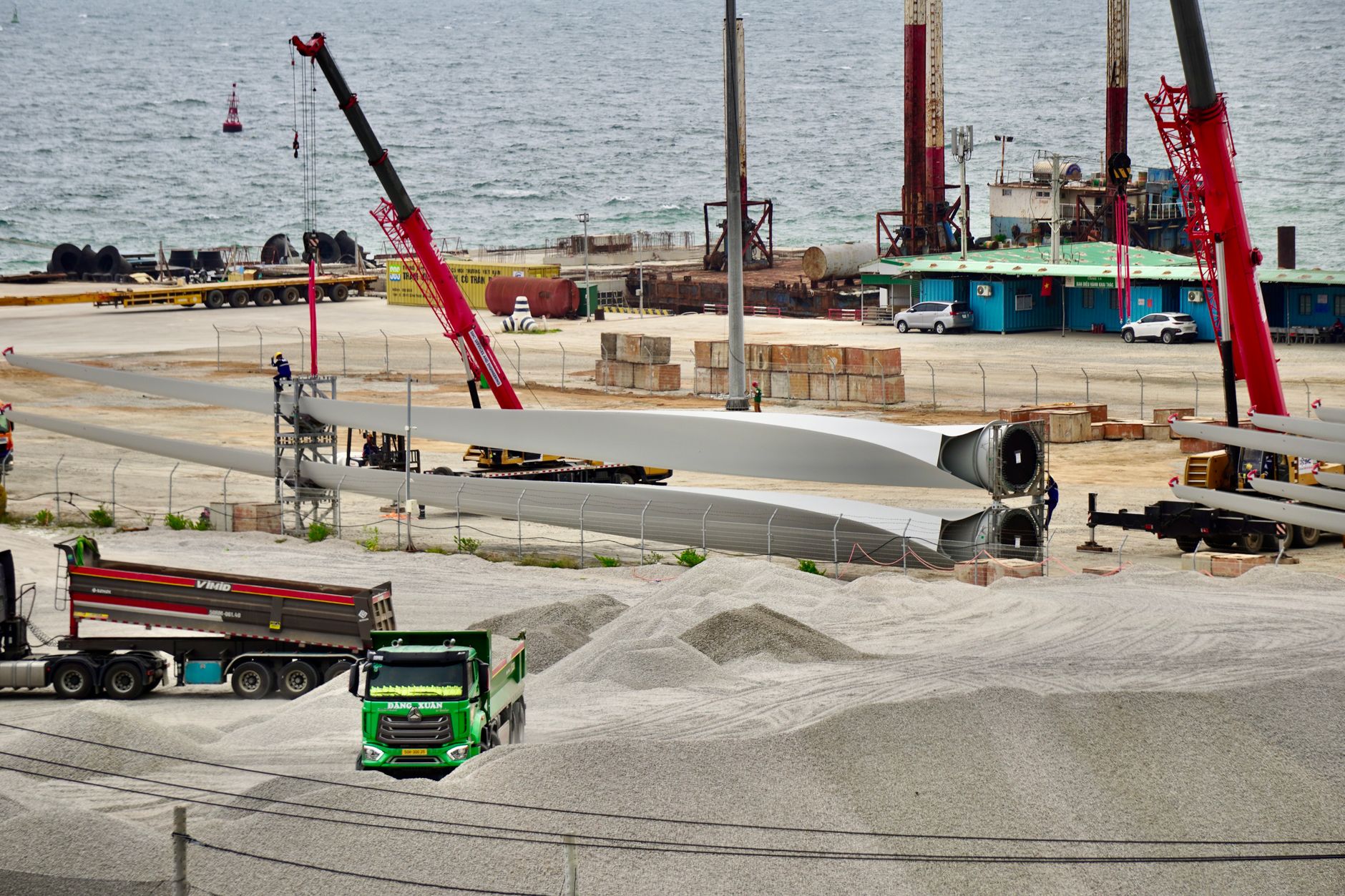
A wind turbine is, for the most part, a machine made of materials the scrap industry already knows how to handle. The tower is steel, the nacelle is largely steel and aluminium, and the generator is full of copper. When the machine reaches the end of its working life, those metals have an established path back into the supply chain. The blade is the exception. It gives the turbine its aerodynamic shape, and it is where wind turbine blade recycling becomes difficult.
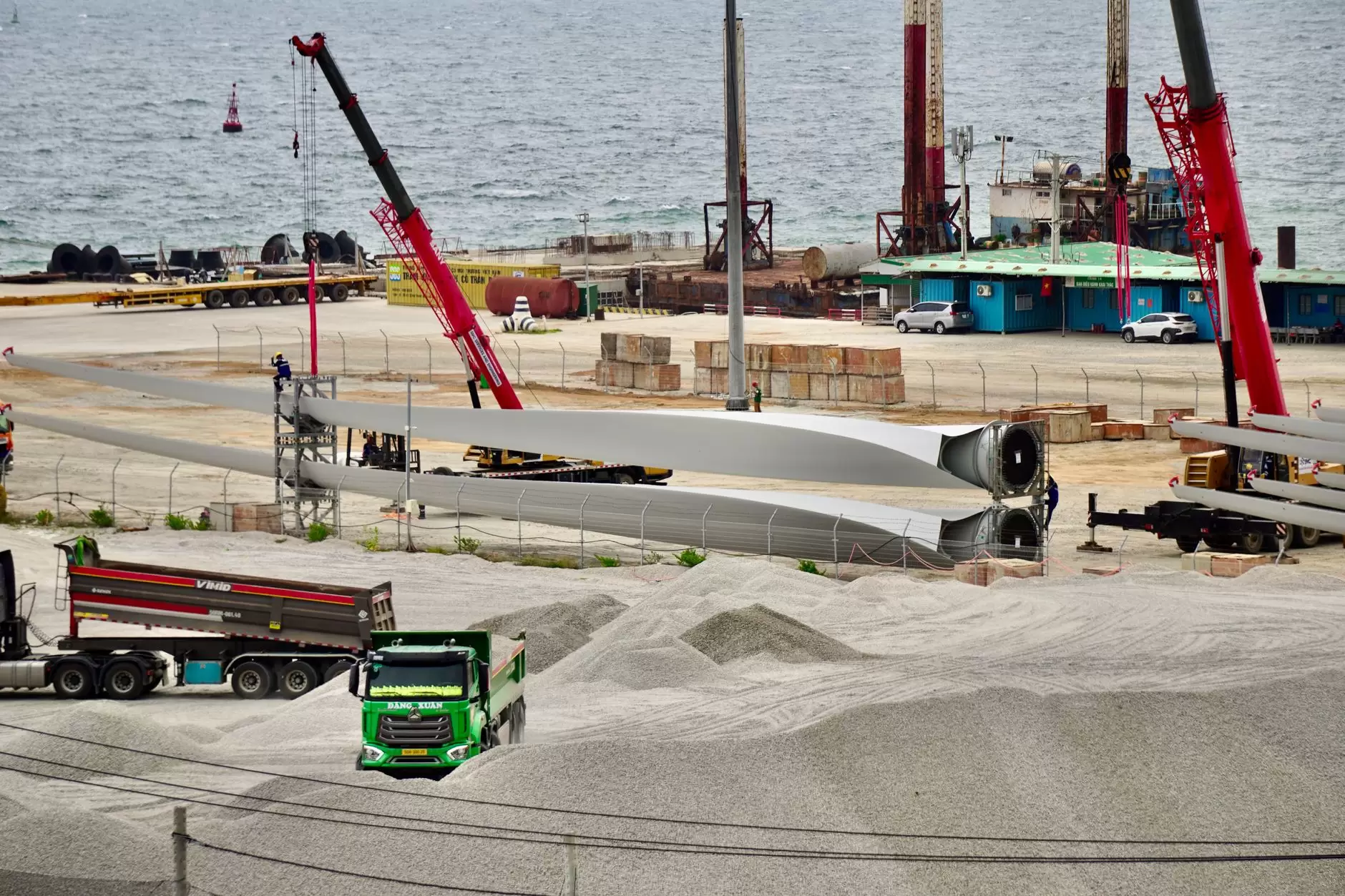
The Blade Is the Exception in a Recyclable Machine
Most of a modern wind turbine — the tower, the nacelle, the generator and the power electronics — is made from steel, copper and aluminium. These materials have well-established scrap markets and high recovery rates. The blade is different. According to Bax, wind turbine blades are predominantly made from composite materials reinforced with thermoset resins, and the complex chemical bonds that provide strength and durability also make them difficult to recycle.
The problem is not that the blade contains no recyclable material, but that the resin and the glass or carbon fibre are bonded in a way that cannot be reversed by simple melting. A metal part can be melted and re-formed without losing its fundamental usefulness. A thermoset composite cannot. The blade keeps its shape and its properties because the resin has cured into a cross-linked structure, and that structure is exactly what resists recovery.
What Actually Happens to a Blade Today
There is a difference between what is technically recyclable and what is actually recycled. In a laboratory or a pilot plant, several routes can break down blade material. At industrial scale, the available off-take is much narrower, and the routes that do exist are not equivalent. A blade that becomes a pedestrian bridge has been reused, not recycled as material.
Mechanical Grinding and Cement Co-Processing
The most readily available route in many markets is mechanical grinding, which reduces blades to small particles that can be used as a fuel or filler in cement production. It is cheap because it does not need to recover anything; the blade is consumed rather than recycled. The glass or carbon fibre is broken down and loses its structural value. This route handles volume, but it does not return the blade’s materials to the supply chain.
Pyrolysis and Chemical Recovery
Pyrolysis heats the composite in the absence of oxygen to break down the resin and leave the fibre behind. It can recover fibre, but the process is energy-intensive, and the fibre that emerges is not necessarily equivalent to virgin glass or carbon fibre. Solvolytic and chemical processes use solvents to break the resin bonds and recover cleaner fibre; several turbine manufacturers are investing in these routes. They are not yet operating at the volume needed to process the blades coming out of the ground.
Repurposing Without Recycling
A smaller but visible outlet is repurposing: cutting blades into sections for bridges, noise barriers, playground structures and similar civil works. This is a genuine use, and it is often counted alongside recycling in headline figures. But it is a small market relative to the tonnage of decommissioned blades, and it flatters the statistics. The legally defined form of reuse, as Circular Wind Guide notes, means using a product again for the same purpose it was conceived for — which a bridge is not.
One research team at the University of Georgia has demonstrated a coaxial layered fiber spinning process that produced about 100 grams per laboratory run, 100 kilograms at a mid-scale run, and 1,000 kilograms at a full-scale run. The step from laboratory to full scale in that work is real, but a full-scale production run of one tonne is still far smaller than the mass of a single decommissioned blade, which can be measured in tonnes. This gap between demonstrated recovery and industrial off-take is the central fact behind most end-of-life discussions.
The Accounting Gap Was Set at Consent
Decommissioning is usually a condition of the project consent, backed by a bond or a financial provision. This obligation is established during the development process, not when the blade reaches the end of its life. At the time many existing projects were consented, the only practical end-of-life route for a spent blade in most jurisdictions was landfill or incineration. A provision sized for landfill disposal may not cover the cost of mechanical grinding, pyrolysis, solvolysis or any of the more careful routes now being discussed.
The original project economics also matter. When a wind farm was financed, the levelized cost of electricity calculation included a cost for decommissioning, but that figure was based on the disposal options available at the time. Composite recycling at pilot scale was not a line item. The result is that the money set aside may be too small for the outcome the industry now says it wants.
The more awkward issue is who signed the undertaking. Many projects were held by a special-purpose vehicle created for that single asset. When the debt was repaid and the vehicle was wound up, the entity that promised to decommission the site may no longer exist. The current operator may have bought the project from a different owner, the landowner may hold a lease with an entity that no longer trades, and the state may become the party of last resort. This is not a hypothetical; it is a structural feature of how many renewable projects were financed.
Where the First Wave Is Most Visible
The geography of end-of-life exposure is uneven. China’s installed base grew at extraordinary speed from the early 2000s, and many of those early machines are now in or near the 20–25-year operating window that Circular Wind Guide describes as typical for wind farms. India’s first large commercial projects are not far behind. In several Asian markets, early projects were consented under decommissioning regimes with fewer prescriptive requirements than the European frameworks that developed later. Where the consent did not clearly separate developer obligation from public liability, the question of payment is already open.
Operators do not have to decommission immediately even when a turbine reaches the end of its nominal design life. Circular Wind Guide notes that decision-making for lifetime extension is influenced by technical, economic, environmental and governance aspects, and that legal requirements and standards vary by country. Extending the operating life or repowering the site can push the blade liability further into the future. Repowering replaces the old machine, but the old blade still has to go somewhere.
A widely reported projection from the University of Georgia New Materials Institute puts global wind-related waste at 789,000 tons in 2021, rising to 43 million tons by 2050. The same article reports that decommissioned blade waste is expected to reach 200,000 tons annually, with most going to landfill. These are scenarios of future waste volumes, not evidence that a recycling value chain exists to absorb them. The two statements are often run together in industry commentary, but they are not the same.
The Invoice Does Not Retire
The blade at the end of its life is not a new liability. It is an old condition attached to a project whose original economics did not anticipate the current expectations around composite recycling. The developer’s provision was sized on one set of assumptions; the bond was set on another; the operator may not have been the original signatory; and the state may inherit what is left. None of that is resolved by a laboratory result or a manufacturer’s commitment to a future chemical route.
Keep what is recycled today separate from what is technically recyclable. The thermoset resin that makes the blade strong is the same chemistry that makes it stubborn at end of life, as Bax describes. Incineration is an alternative disposal route, but a report from the University of Georgia notes that it carries risks of air pollution and emissions of toxic pollutants. The routes that recover value, such as pyrolysis and solvolysis, remain at pilot or demonstration scale relative to the volume of blades coming out of the ground.
The practical question is who holds the invoice now. The blade that stops generating still sits on a site. The money promised for its removal may be insufficient, the company that promised it may be gone, and the recycling route that would justify a higher figure exists at pilot scale rather than industrial scale. That is the end-of-life bill nobody has paid.
References
- Bax — How a Circular Approach to Wind Turbine Blades Can Make Green Energy Truly Regenerative (material composition and recyclability of thermoset composite blades)
- University of Georgia New Materials Institute — Assessing the Lifecycle of Wind Turbine Blades and the Process of Recycling its Materials by Fiber Spinning (waste projections, landfilling, incineration risk, fiber spinning process scale)
- Circular Wind Guide — Circular Strategies Overview (wind farm operating life and reuse definition)