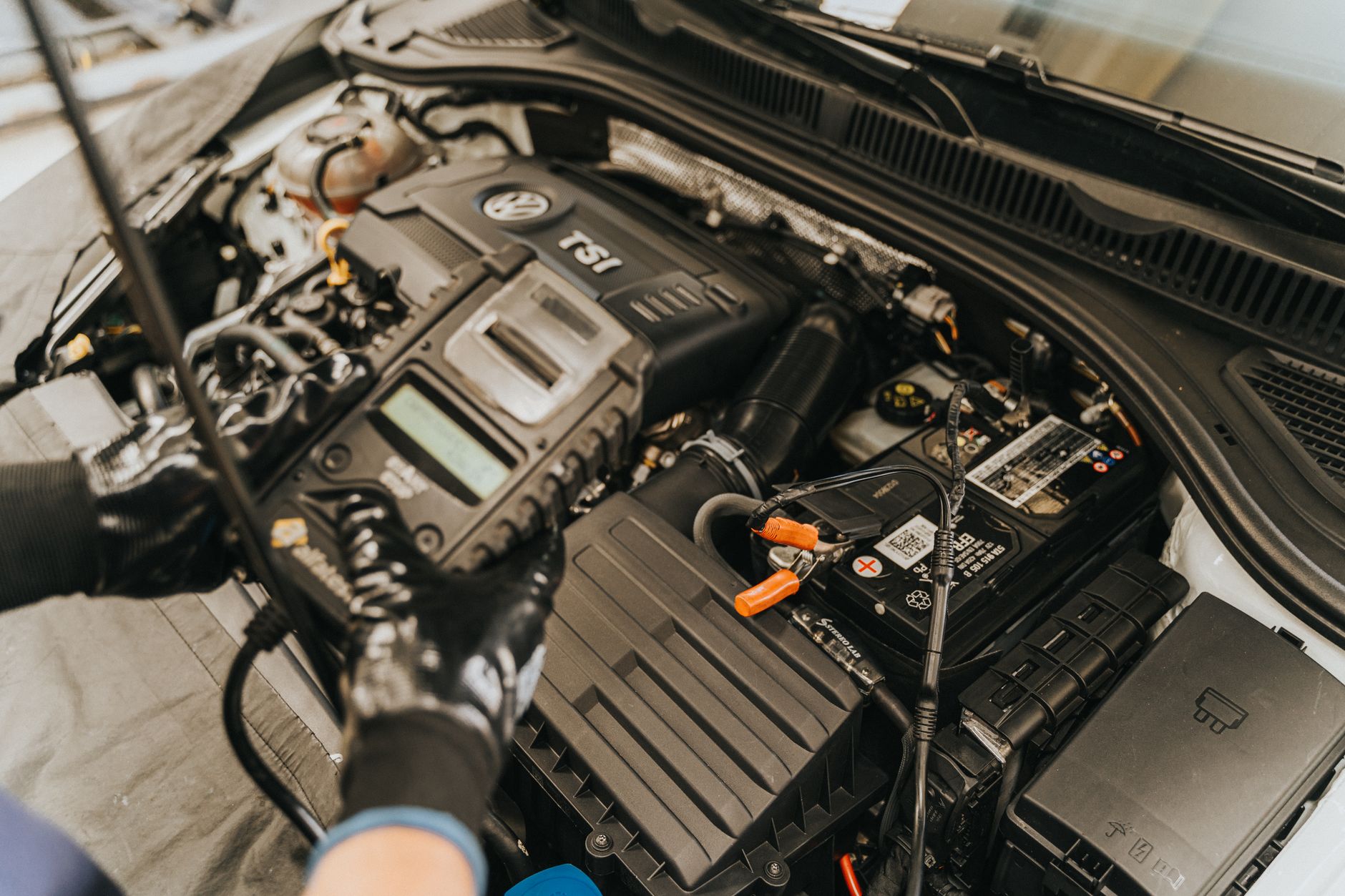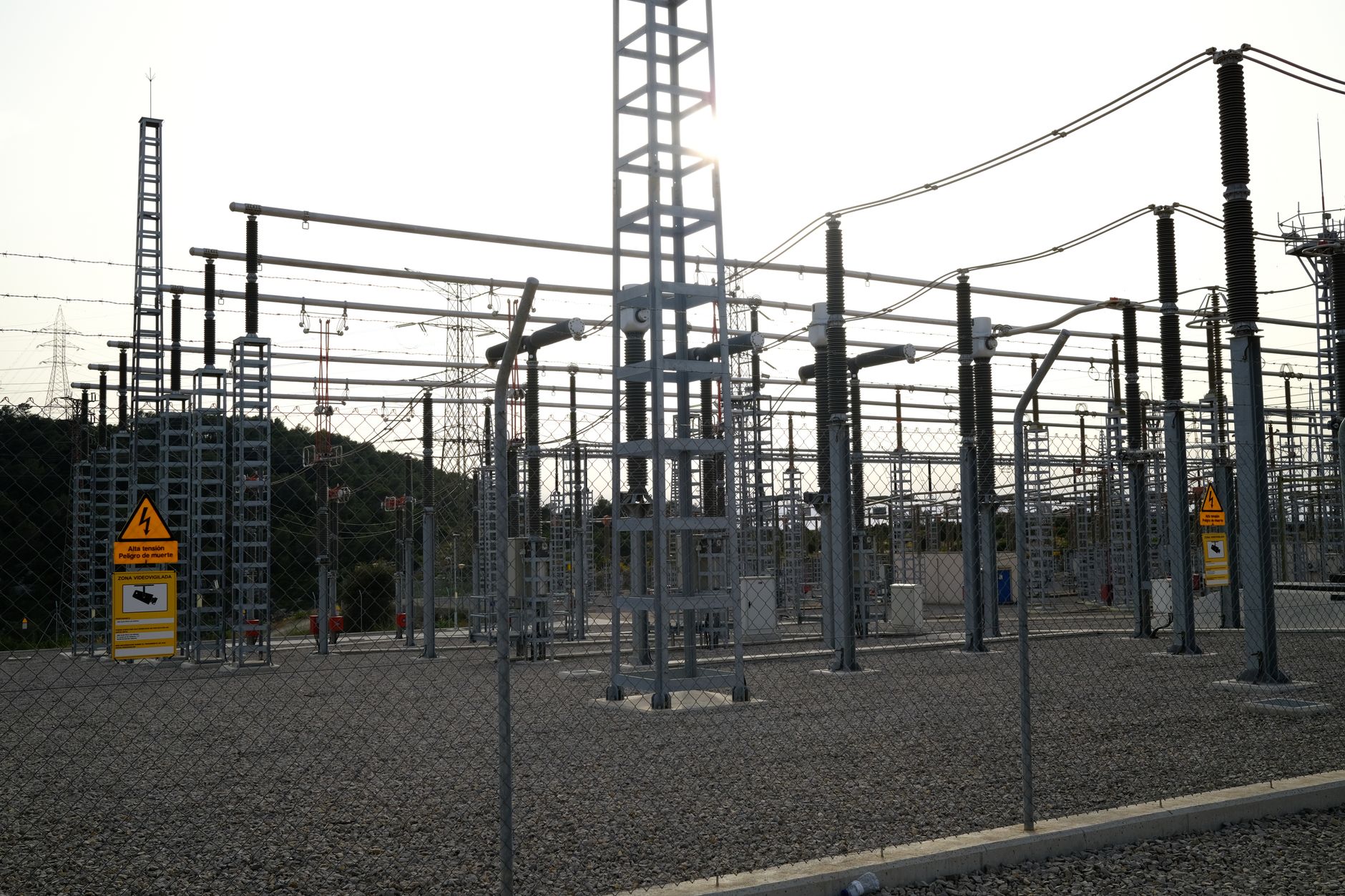
When a pack leaves the road, the route to second life EV batteries runs through a sequence of gates: return, assessment, re-manufacture, qualification, and transport. The pack arrives as a module assembly carrying a duty history, and the value of that history is released only as each step produces evidence — test results, state-of-health data, records of how the pack was worked. Each gate adds cost and narrows the field of buyers. Chemistry, safety requirements, and the standards a buyer will accept constrain what can be done at each stage. Who takes possession, what they can test, and what they are willing to warrant decide how far along the sequence a given pack travels.
The Return Transaction: Who Holds the Residual Value
The first gate is contractual, not technical. A pack leaving a vehicle belongs to whoever holds the residual interest under the original sale, lease, or buy-back arrangement. A lease with a residual value calculation may require the pack to return through the manufacturer’s controlled channel. A fleet that owns its vehicles outright can choose an independent repurposer or a recycler. The difference matters because the return transaction decides who can legally test, rebuild, and resell the pack. Ownership of the asset, not the state of the cells, is the first filter.
Assessment: What State-of-Health Can and Cannot Establish
Once a pack reaches a repurposing line, the first technical gate is characterization. Diagnostic protocols are used to extract state-of-health and remaining-useful-life information from recovered batteries, according to research at the National Laboratory of the Rockies. The aim is not a single pass/fail reading but a triage decision: whether the pack should be reused, refurbished, or recycled after disassembly. A published procedure divides the work into three stages—state evaluation, technical viability evaluation, and economic evaluation. The later stages turn on the first, because an electrically healthy pack can still fail the economic test.
What a diagnosis cannot do is recover history the pack never recorded. During vehicle use, the capacity and impedance of individual cells or modules within a pack begin to diverge. In a conventional battery of many cells hardwired in series and parallel, that divergence constrains what the pack can deliver, though the weakest cells are one influence among several: cell matching at manufacture, battery-management control, thermal conditions and the series-parallel arrangement all shape how much capacity stays usable and how quickly the pack degrades. A state-of-health reading consequently describes something closer to a ceiling implied by the weakest module than an average across the pack. For a pack with an incomplete duty history, that ceiling must be inferred from limited data, and the uncertainty becomes a cost in the next gate.
The 80 percent boundary matters most as a safety line, not a performance line. A U.S. Department of Energy factsheet states that operating batteries off-specification—energy storage service instead of electric vehicle use—and beyond their design lifetime, stated as below 80 percent state-of-health, imposes a “significant burden” to ensure the system is operated safely throughout the second-life period. A repurposer has to decide whether a pack below that threshold can run a gentler stationary duty or whether the added monitoring and protection exceed the value of the remaining capacity. That decision is economic as much as technical.
Re-Manufacture: Teardown, Matching, and Cost per Delivered Kilowatt-Hour
If a pack passes the assessment, the repurposer chooses a configuration. Published work considers direct pack use, stacked packs, direct module use, pack refurbishment with modules, and pack refurbishment with cells. Each option trades engineering effort against usable capacity. Direct pack use preserves the original enclosure and management system but carries the aged-cell mismatch. Teardown to modules allows matching of similar capacity and impedance, which is why the diagnostic data from the first gate matters. Automated disassembly and refabrication methods are under development in national laboratory programs, aimed at integrating reusable cells into new energy systems.
The finished product is a stationary storage unit rather than a refurbished vehicle pack. It needs a new or adapted battery management system, a new enclosure, and integration with an inverter suited to grid service. This is where the comparison to a new pack of the same delivered capacity turns. A second-life unit may cost less to acquire but more to test, rebuild, and warrant. The relevant denominator is cost per delivered kilowatt-hour over the duty the buyer runs, rather than cost per nameplate kilowatt-hour. How much of the remaining capacity is usable in that duty depends on more than the duty itself: state of charge, power limits, thermal conditions, battery-management behaviour and accumulated degradation all constrain it. The day-to-day economics of battery storage show why two identical capacities can earn very differently.
Substitution is uneven across stationary roles. In applications with shallow cycling, modest depth of discharge, and flexible footprint, a second-life pack can substitute for a new grid battery with less penalty. In duties requiring frequent, deep cycles or compact power density, the same pack may deliver less of its nameplate capacity and degrade faster. Format and footprint also matter: an EV pack was packaged for a vehicle, not a containerized grid asset. For bulk energy shifting, pumped storage hydropower and other long-duration assets compete for the same role. The warranty a buyer can actually obtain often reveals the substitution boundary more honestly than the nameplate label.
The stack’s earning pattern also shapes the decision, because a second-life asset’s value depends on the markets it can reach. How grid-scale batteries make money from regulation to black start determines which duties a repurposed unit can profitably serve. Under a tolling agreement, the market risk sits with whoever manages dispatch and price exposure, not automatically with the asset owner. The repurposer’s test record becomes the evidence for those decisions.
Qualification and Transport: Rules That Attach to the Finished Unit
A repurposed pack is not automatically a grid-connected product. In many markets it must be qualified against the same electrical energy storage system standards that apply to new equipment. The International Electrotechnical Commission publishes standards covering safety requirements for grid-integrated electrochemical storage, and a repurposing line has to show its rebuilt unit meets those requirements. Certification attaches to the design, the assembly process, and the test record that travels with the unit. Where the regulator has not published text specific to second-life packs, the line still has to establish and document state of health as a design obligation.
Transporting a pack that still holds charge falls under a separate set of requirements, set by dangerous-goods transport rules rather than product standards. Lithium-ion packs with residual energy are generally treated as dangerous goods for shipment, with the specific obligations depending on the jurisdiction, the carrier, the condition of the pack, and how the consignment is classified. National requirements commonly trace back to the UN Model Regulations, though implementation differs by market and mode. Charge level, terminal condition, and documented test results all bear on whether the finished unit can be shipped, and a repurposer that cannot document the pack’s condition may be unable to move it to the installation site at all.
The Recycler’s Floor and the Real Comparison
A repurposer is not the only bidder for a retired pack. A recycler can pay for the recovered metal content immediately, and that bid sets a floor under the pack’s value. If the repurposer cannot beat the recycler’s offer after covering testing, teardown, rebuilding, qualification, and warranty costs, the pack goes to recycling. That is why the comparison that matters is cost per delivered kilowatt-hour with the testing and warranty burden inside it—never cost per nameplate kilowatt-hour. A low acquisition price can disappear under the cost of proving what the pack can do.
That floor also disciplines claims about second-life supply. A projection of retired pack volumes is not a supply chain, and an announced repurposing plant is not operating capacity. The recycler’s floor, combined with the cost of qualification and warranty, is a better measure of how many packs can clear the sequence of gates than a volume forecast. Long-duration storage technologies sometimes set a competing benchmark for the same stationary duties, further squeezing the space a second-life pack can occupy economically.
What Binds: Liability and the Test Record
At the end of the sequence, the unit is not simply a collection of used modules. It is a test record and a warranty. The liability that travels with a pack whose original builder no longer warrants it does not disappear when the pack is repurposed; it transfers to whoever signs the new warranty. A repurposer’s product is therefore as much a promise about remaining performance as it is a physical assembly. If a module fails three years later, the warranty defines who pays for the replacement and the integration cost.
The pack’s value is not what its remaining chemistry suggests in the abstract, but what a repurposer can demonstrate, qualify, ship, and stand behind in a stationary duty. The sequence of gates—return, assessment, re-manufacture, qualification, and transport—decides whether the pack ends up in a stack or a shredder. Each step adds cost and evidence, and only the evidence survives to create a product.
References
- National Laboratory of the Rockies — “Closing the Loop: How NREL’s Advanced Diagnostics Enable a Circular Battery Future.” https://www.nlr.gov/news/detail/program/2025/closing-the-loop-how-nrels-advanced-diagnostics-enable-a-circular-battery-future
- National Laboratory of the Rockies Research Hub — “Procedure for Assessing the Suitability of Battery Second Life Applications after EV First Life: Article No. 122.” https://research-hub.nlr.gov/en/publications/procedure-for-assessing-the-suitability-of-battery-second-life-ap/
- U.S. Department of Energy — “Recycling and Second-Use Selections Factsheets.” https://www.energy.gov/sites/default/files/2022-11/Recycling%20and%20Second-Use%20Selections%20Factsheets%2011-16.pdf
- International Electrotechnical Commission — “Electrical Energy Storage Systems — Safety Requirements for Grid-Integrated Electrochemical Storage.” https://webstore.iec.ch/en/publication/88974